Inside the Michigan State Capitol Building Dome
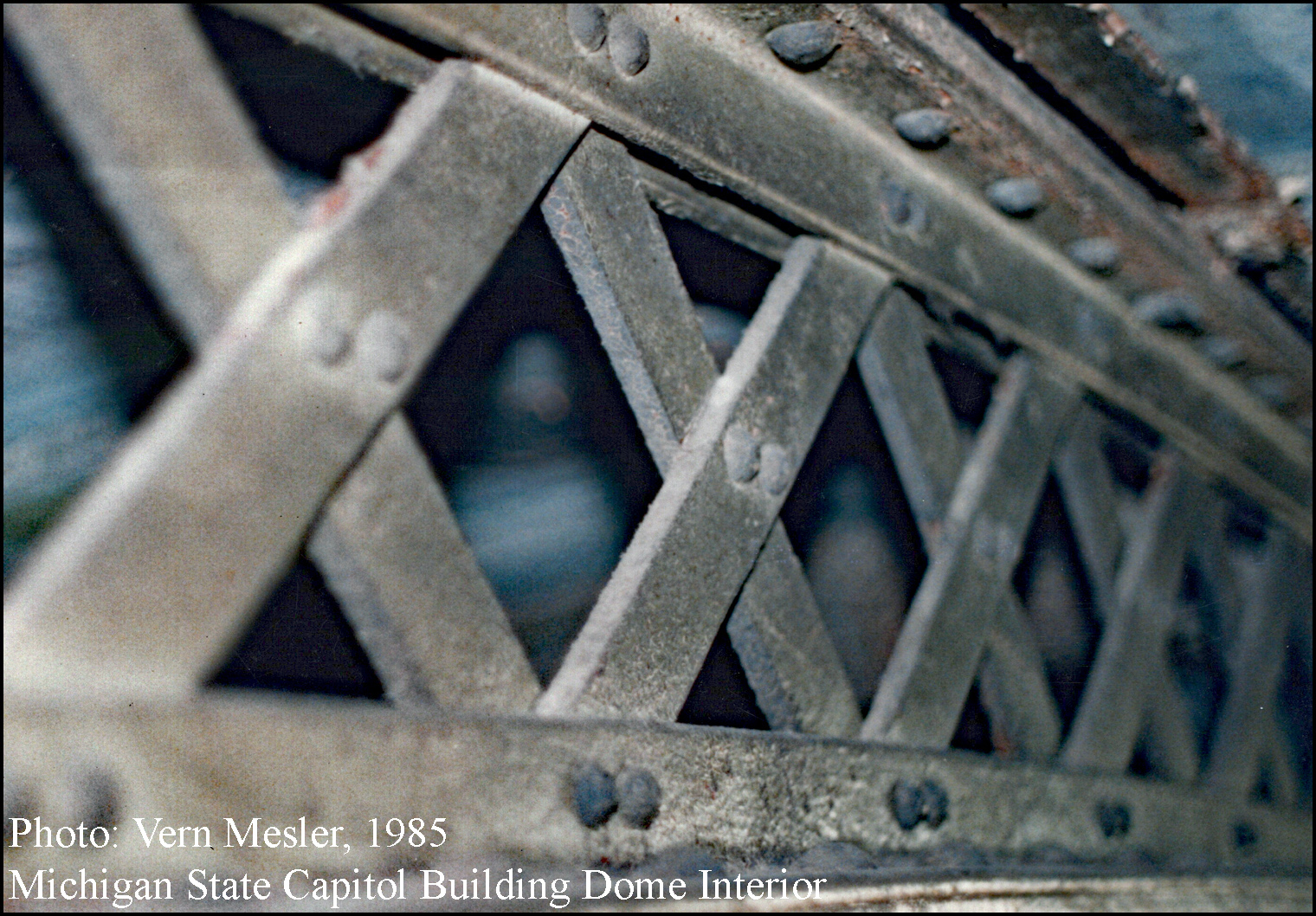
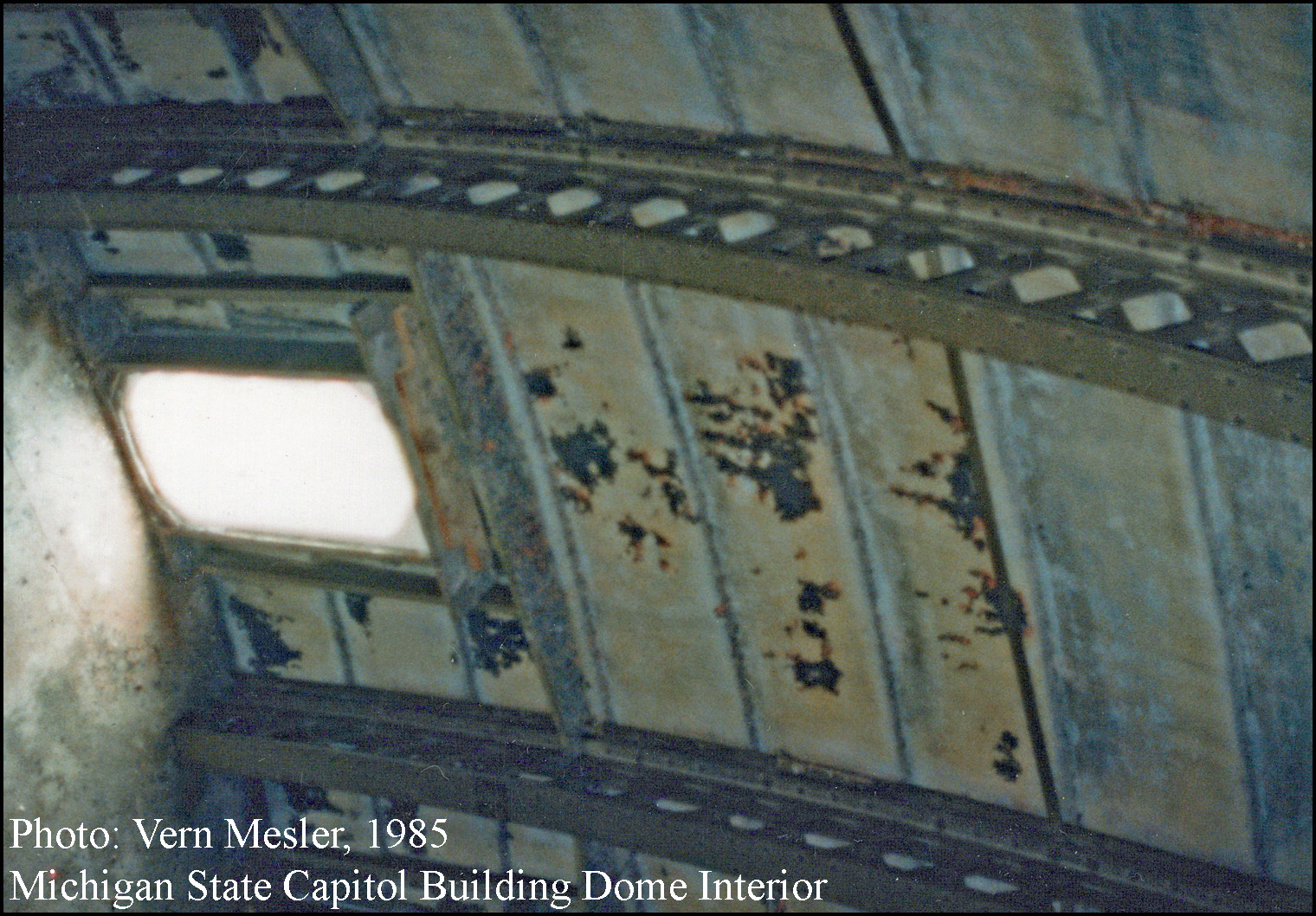
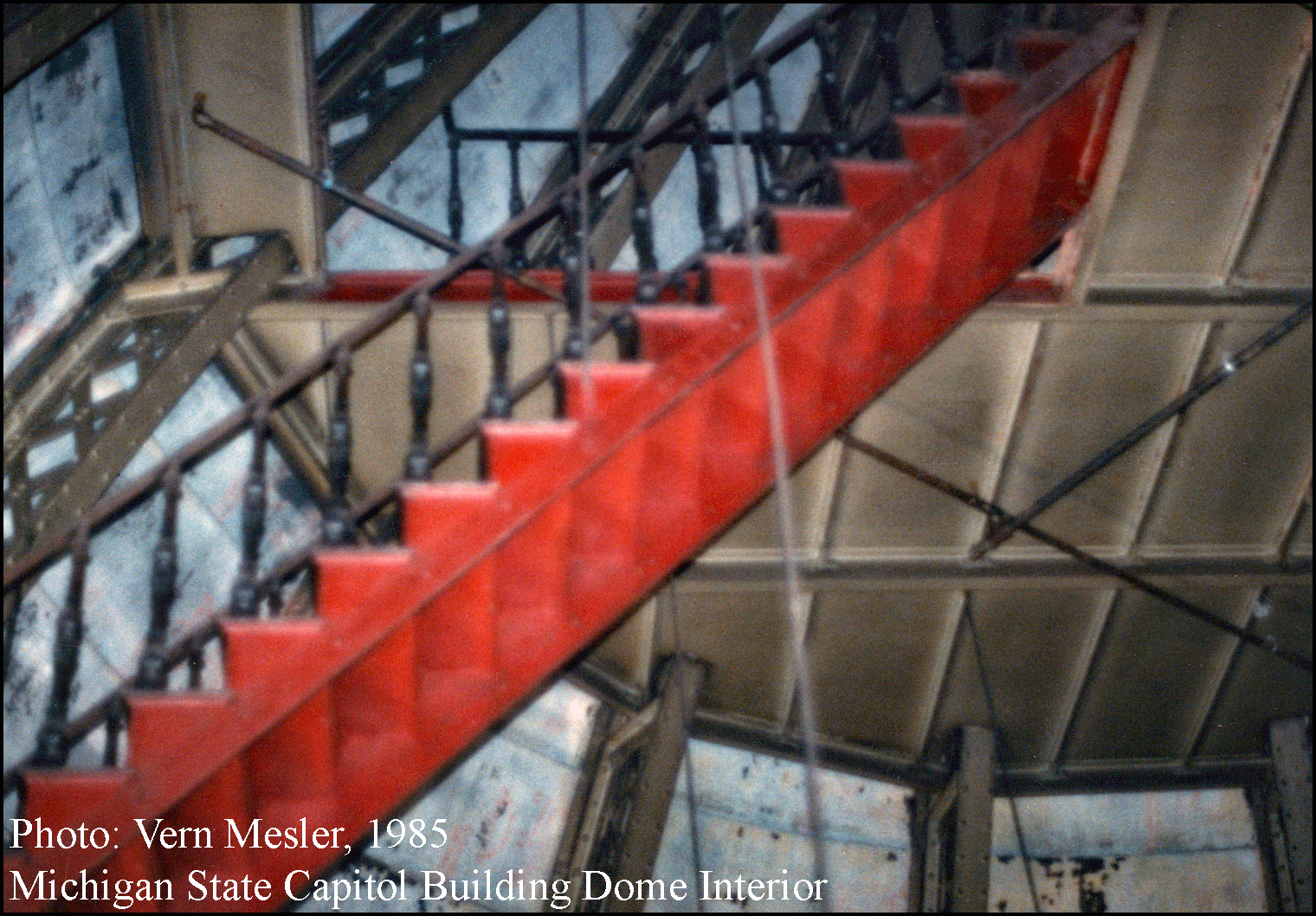
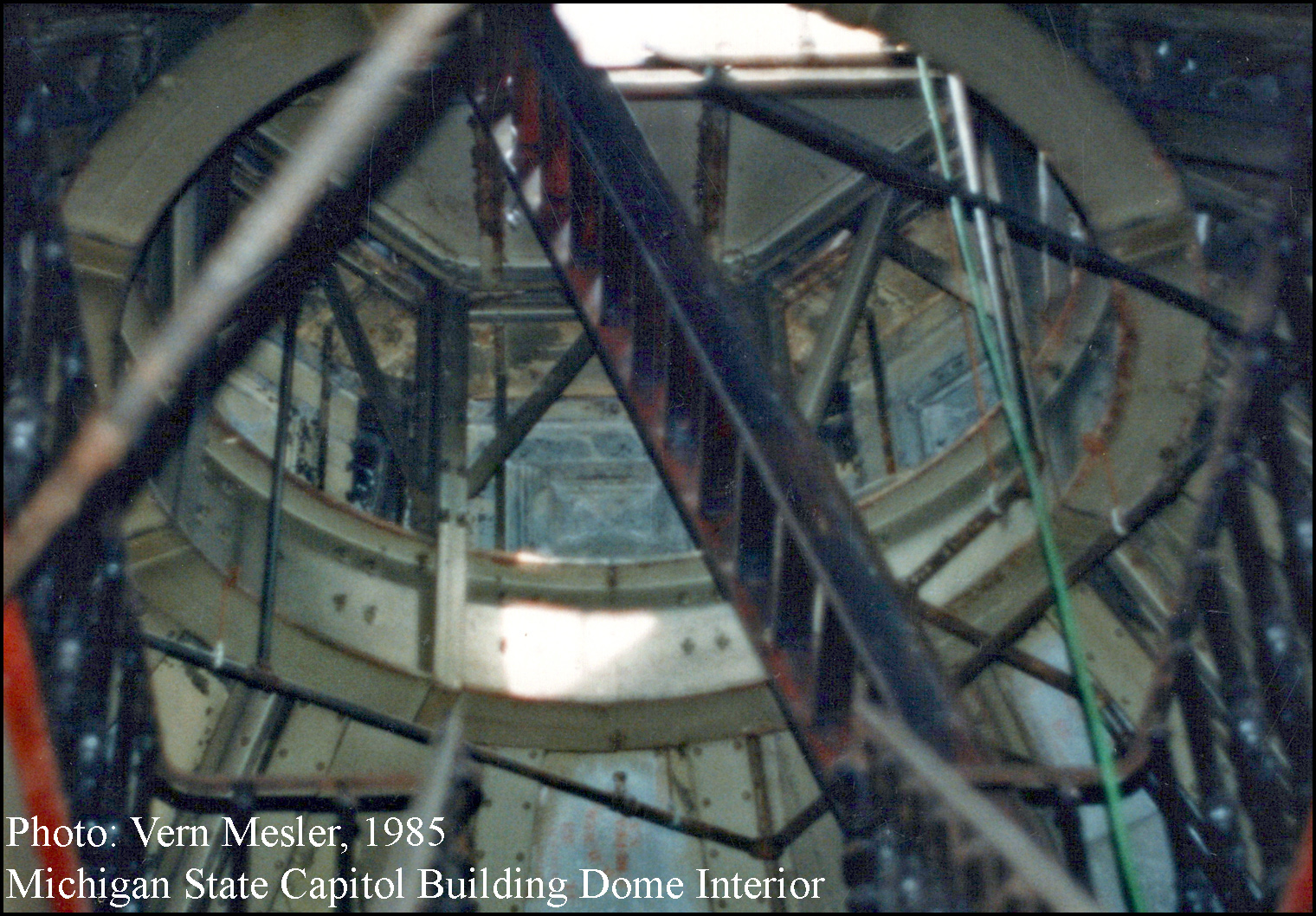
In 1985 I was working on an idea for a wall sculpture at Lansing Community College, and I had an opportunity to inspect the interior metal framework of architect Elijah Myers’s dome for the 1871 Michigan State Capitol Building.
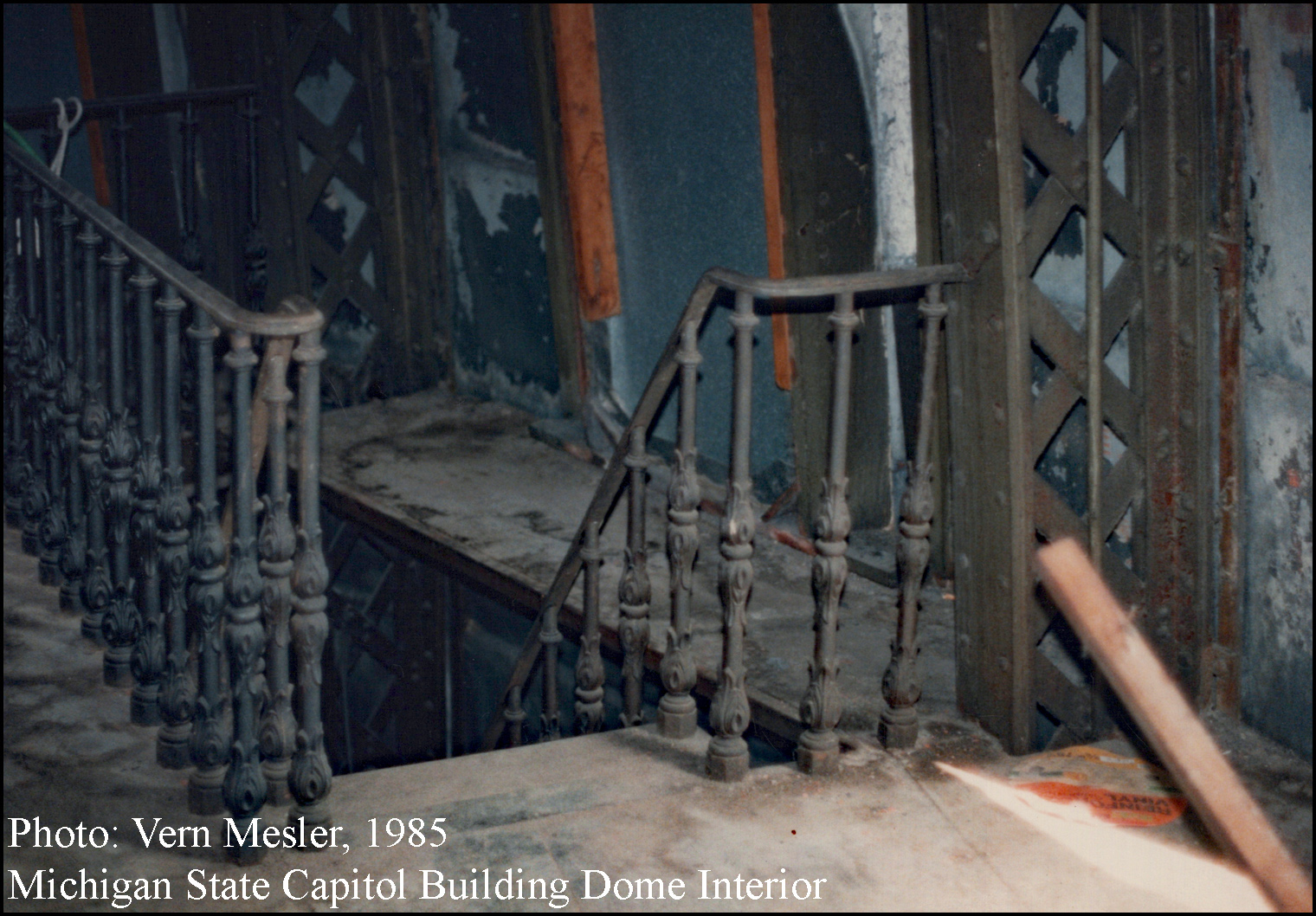
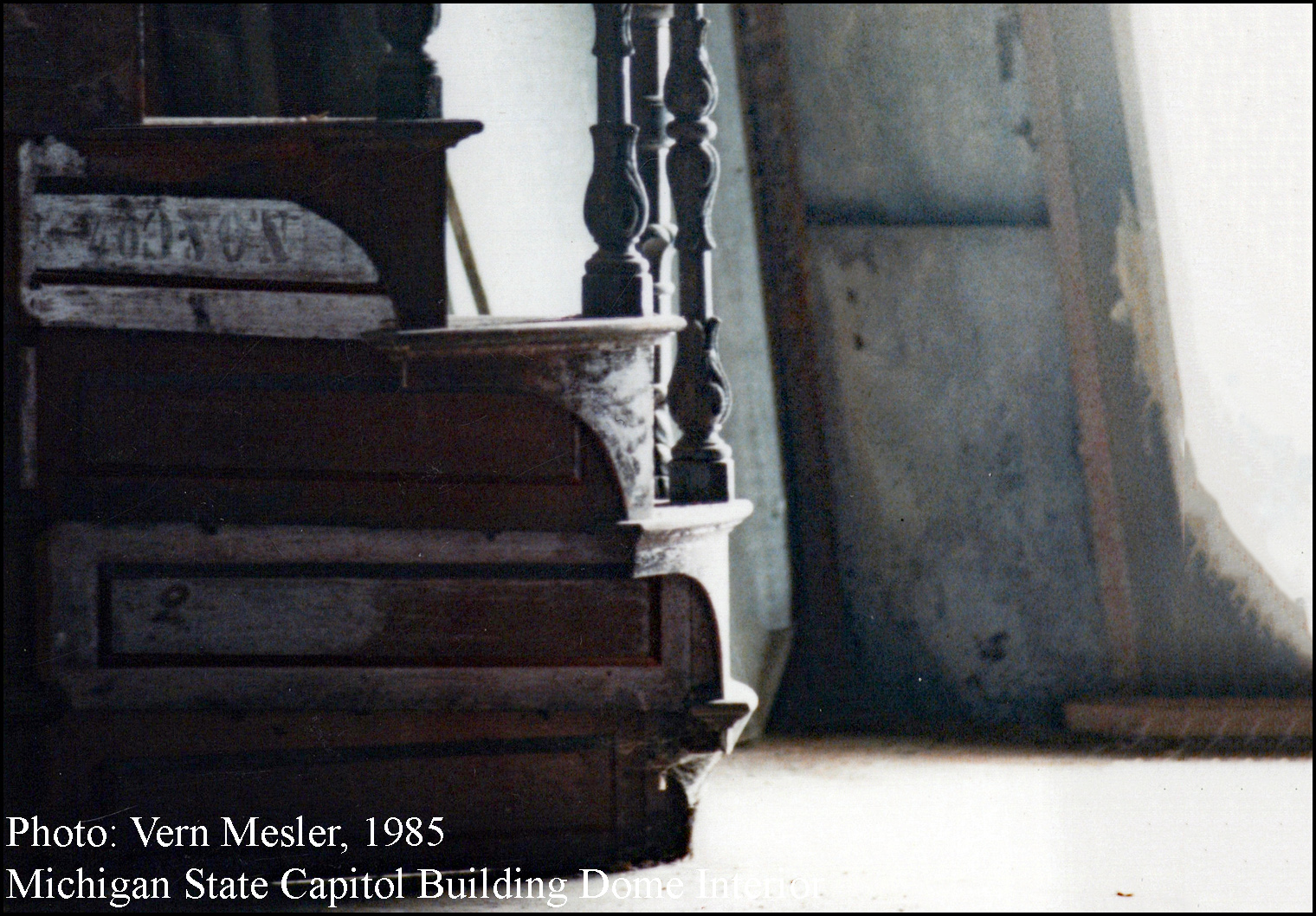
At the time, Christman Company personnel were walking the hallways, offices, and spaces with clipboards holding copies of the original capitol drawings to determine what was original and what was not. I asked a state capitol building attendant nearby what these Christman personnel were noting, and she said if there was a door and it did not appear on the original capitol drawing it would be removed and the wall restored to its original appearance. I then asked her for permission to inspect the interior metal framework of the dome, which she gave as she pointed to a nondescript door that led to its interior. As I opened the door and stepped inside, I saw an unpainted brick wall alongside a cast iron stair leading to a second floor. No restoration had begun here. It was dust covered and appeared to be used for some storage, and most of the framework was unpainted and neglected. As I moved around the raw nineteenth century iron, it was as if I had stepped back in time. I felt the presence of the craftsmen who had fabricated the dome. It would be twelve years before I gained an intimate knowledge of iron wrought into riveted trusses when I began restoring five historic riveted truss bridges for the Calhoun County Historic Bridge Park.
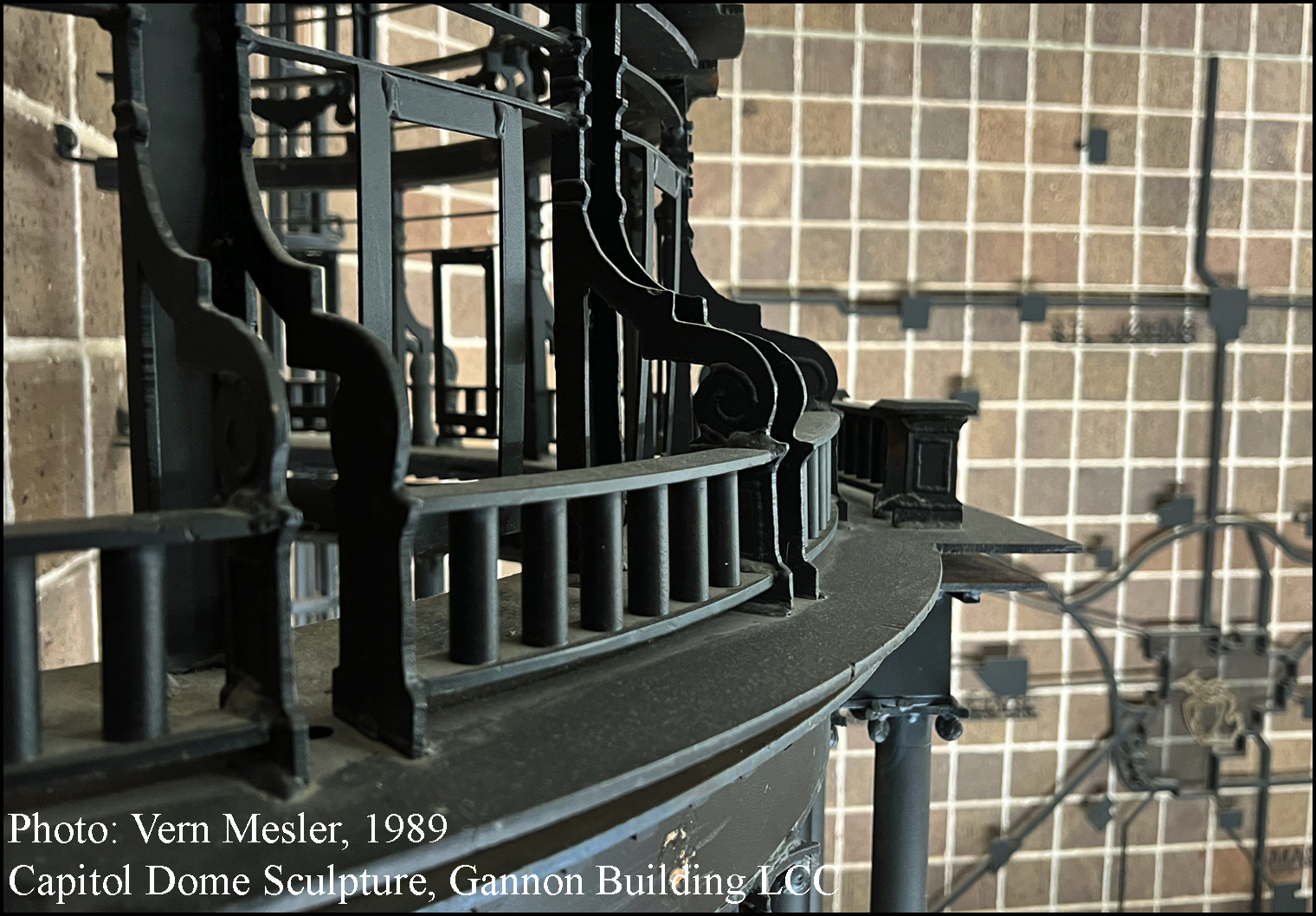
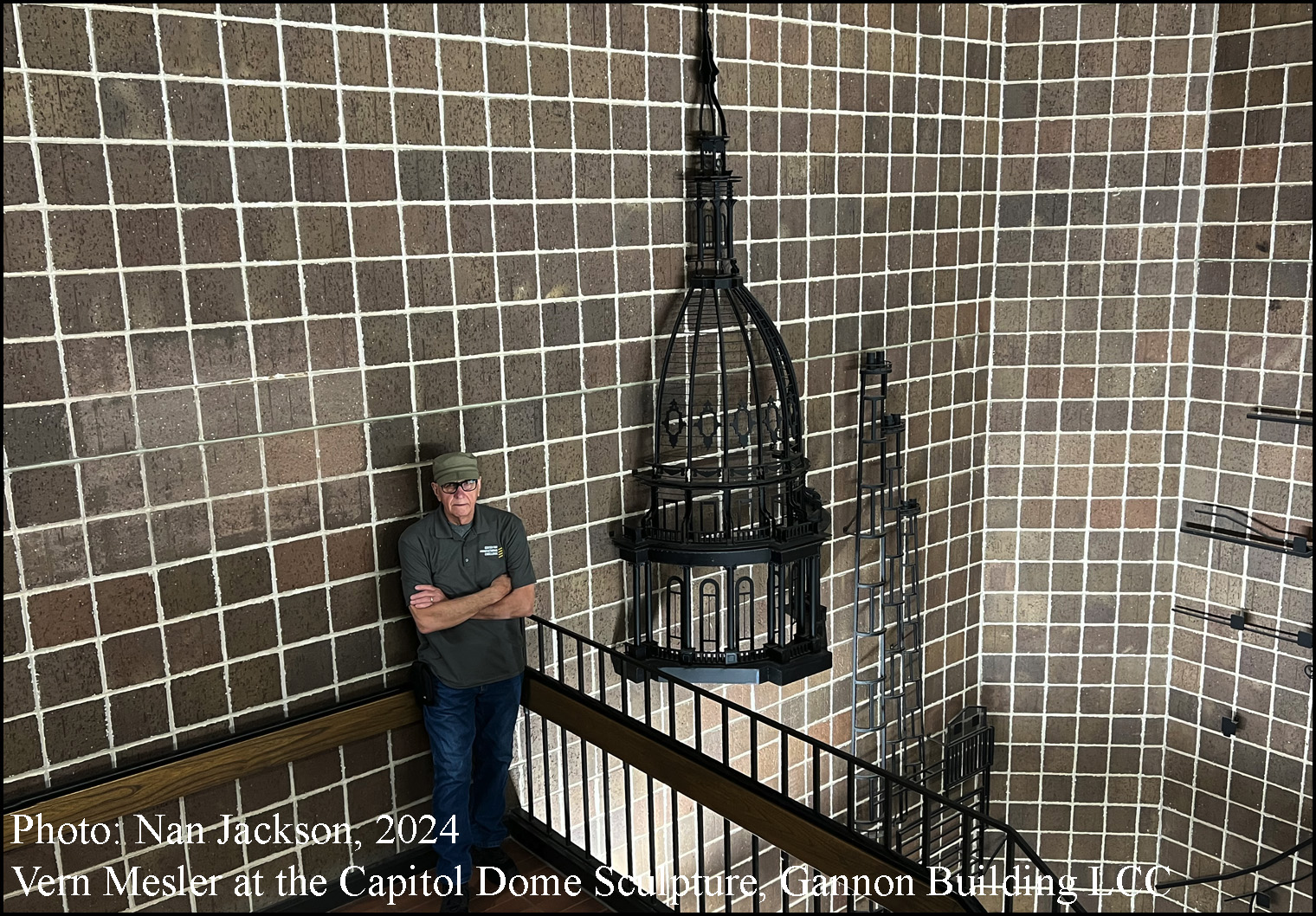
From this experience inside the capitol dome I had a greater appreciation for Elijah Myers and his innovative use of iron for the structure of the dome. It was both a challenge and a pleasure to design a metal sculpture that would represent his iron framework.
Michigan Capitol Dome Sculpture for Lansing Community College
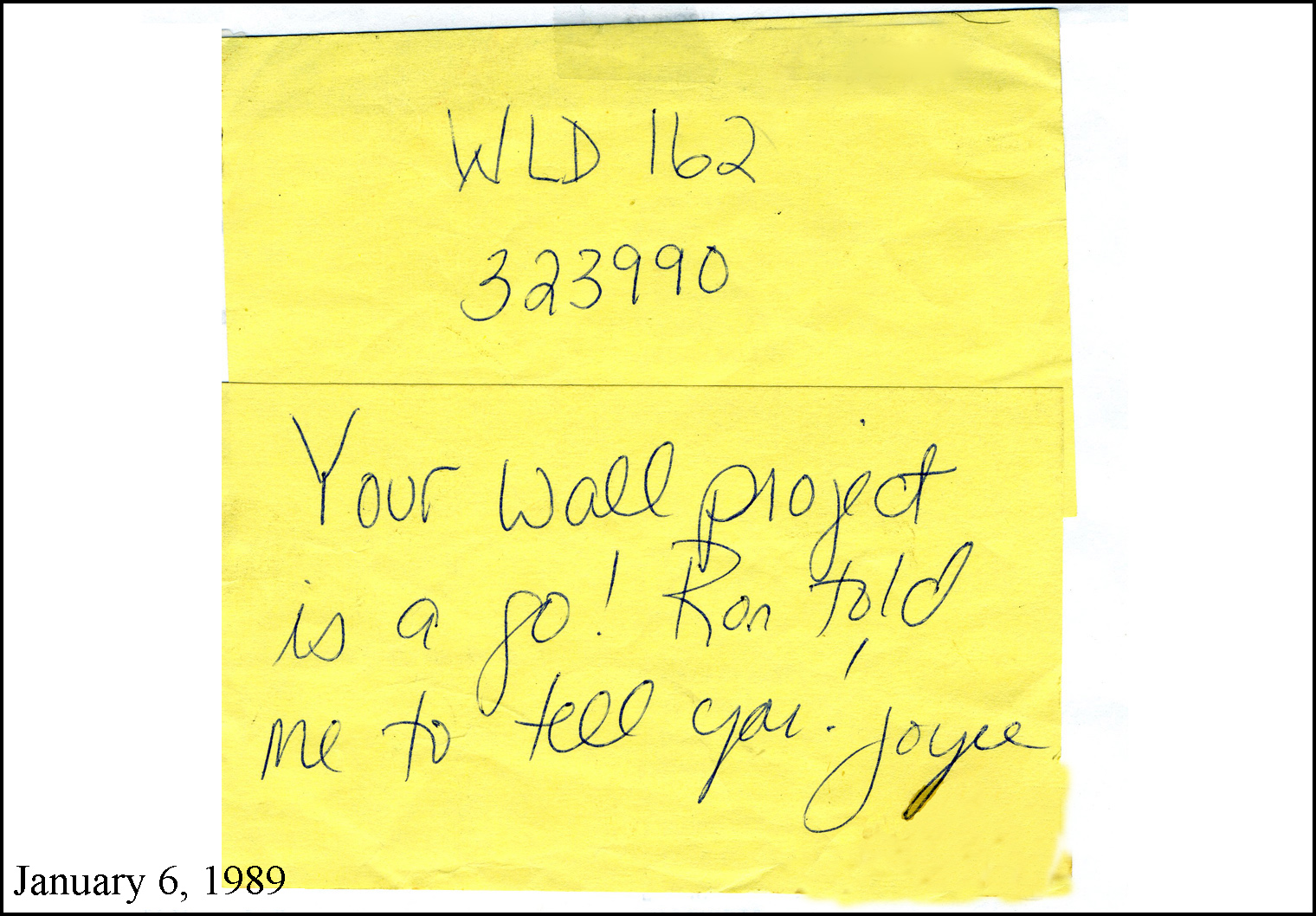
On January 6, 1989, I received a yellow post-it note from the office of William Darr, Dean of the Division of Technology and Applied Sciences at Lansing Community College, that my proposal for a wall sculpture was approved. Dr. Philip Gannon, President of Lansing Community College, had initiated the idea of a wall sculpture in the stairway of the Gannon building.
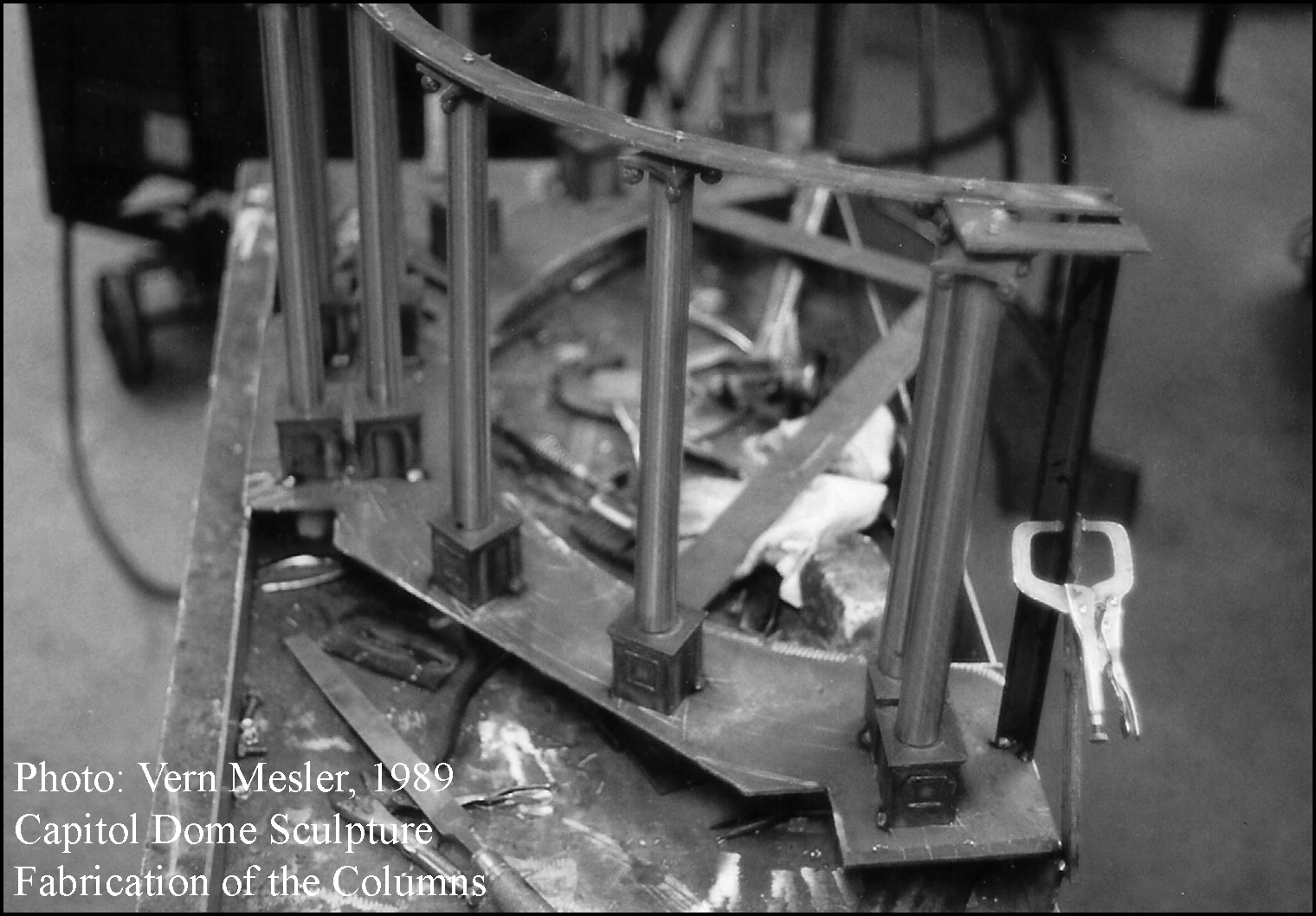
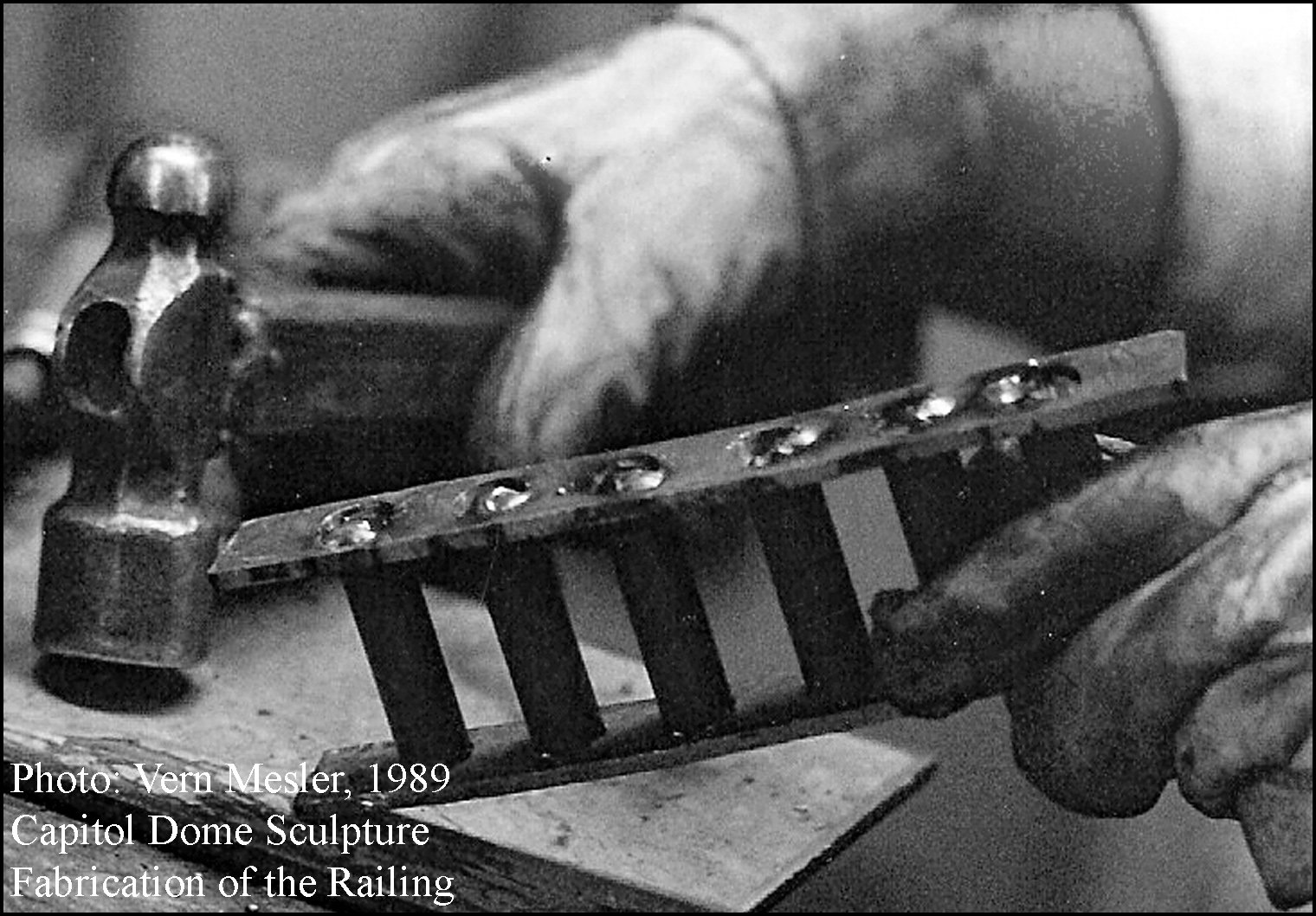
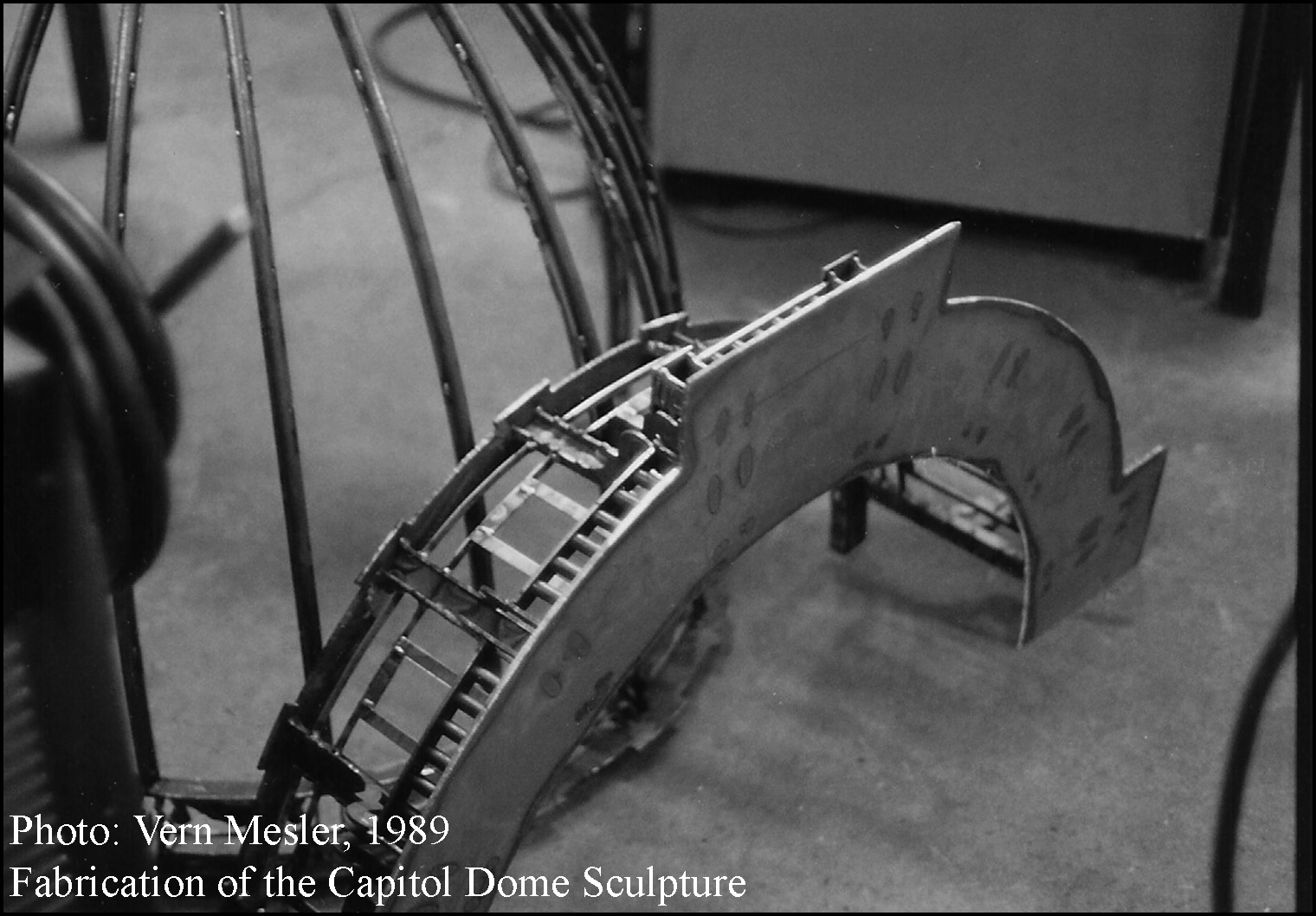
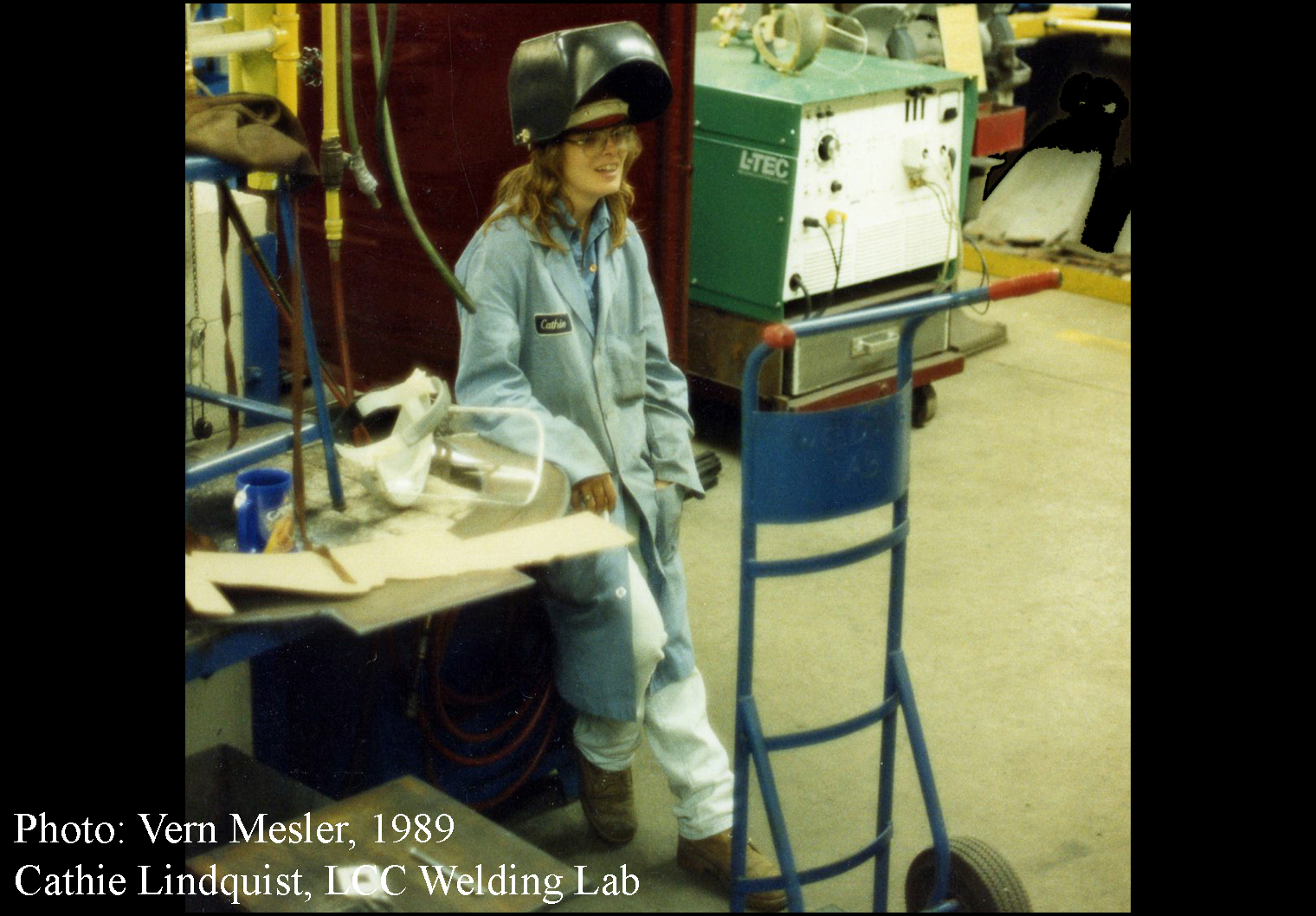
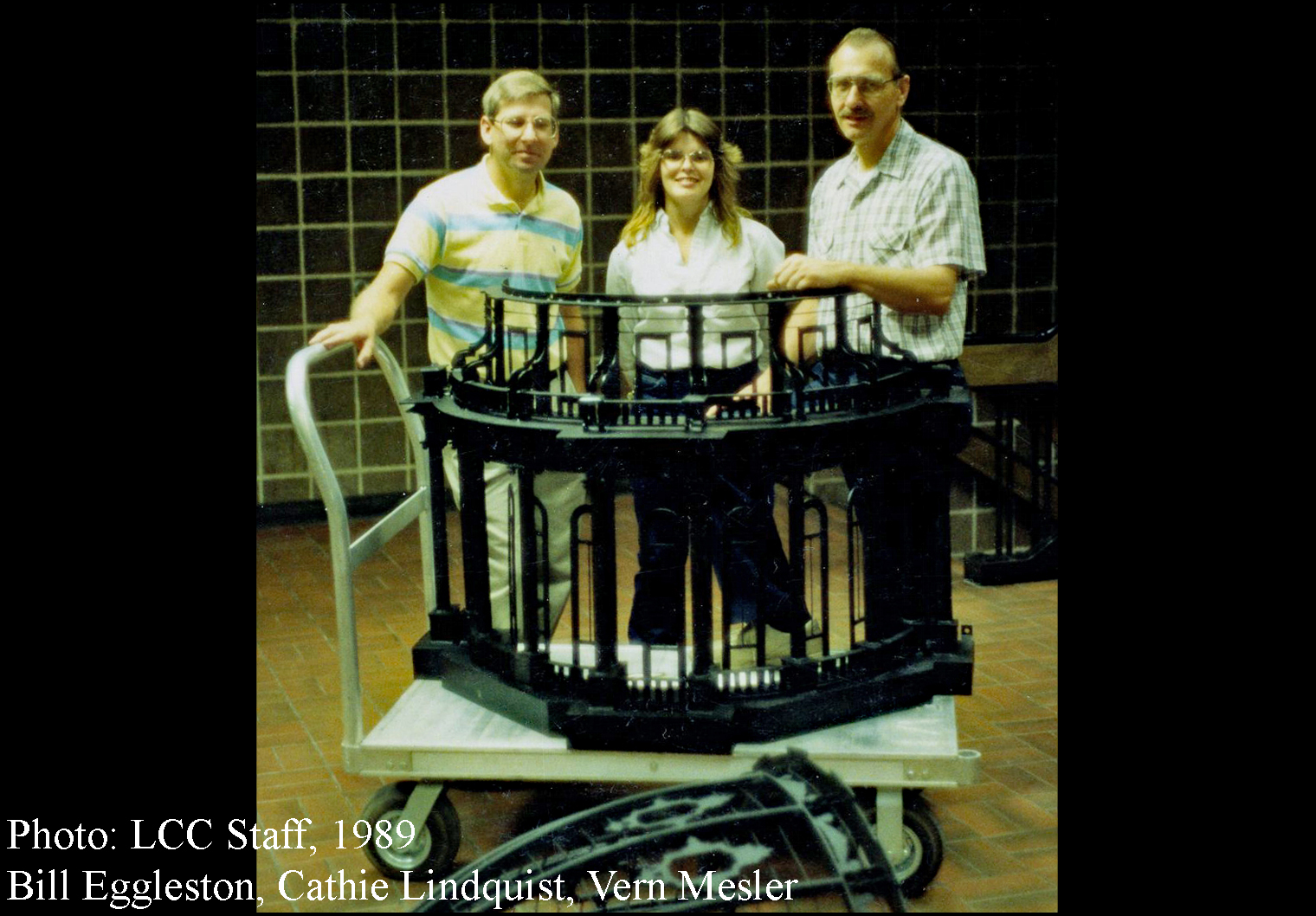
Fabrication of the wall sculpture began in the spring of 1989 and continued during the summer months. Cathie Lindquist, a Lansing Community College welding instructor, assisted me in the fabrication of the capitol dome sculpture.
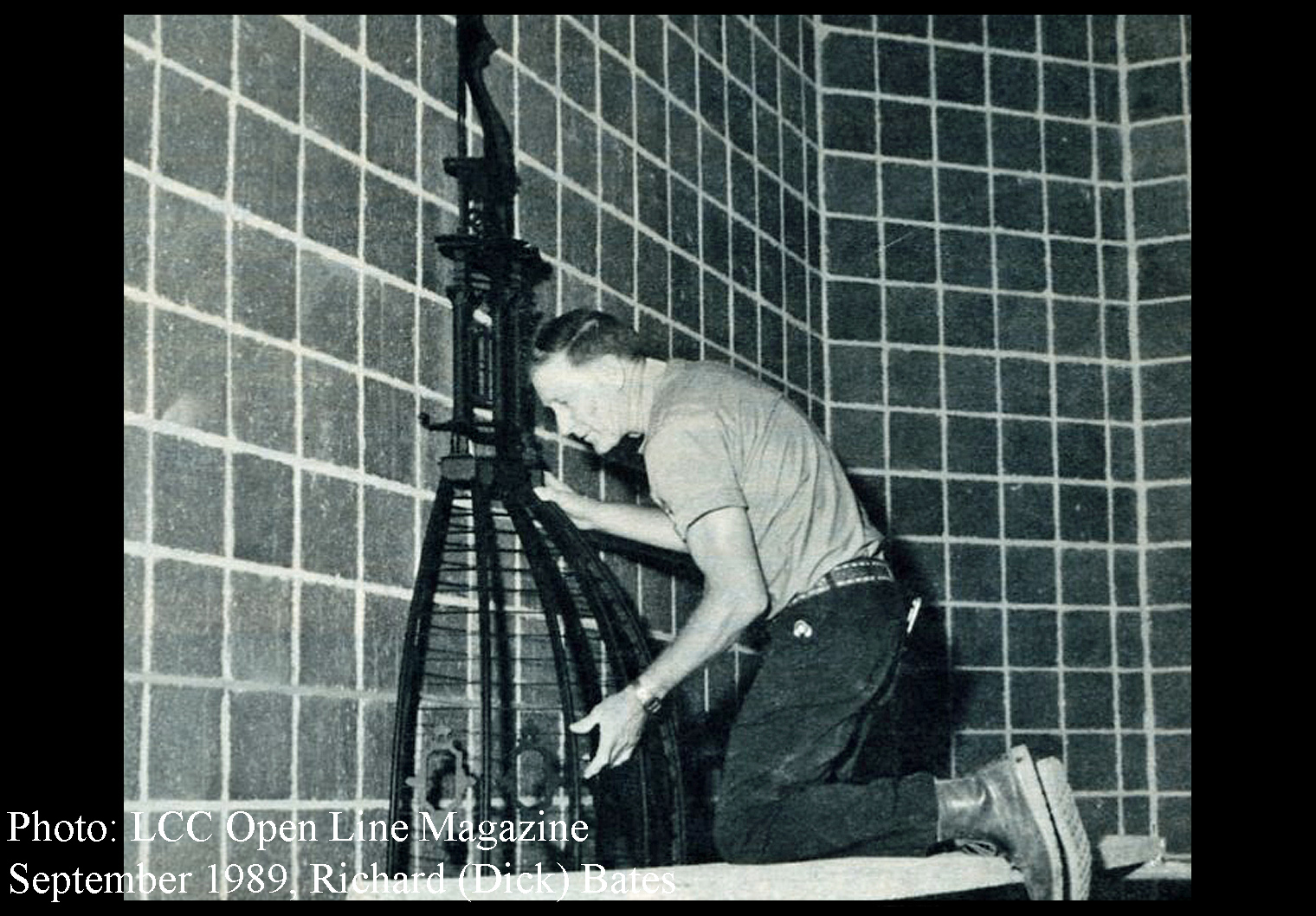
By the fall of 1989, five metal sculptures were secured to the wall in a prominent stairwell of the Gannon Building. Richard (Dick) Bates from Maintenance took special care in attaching the capitol dome sculpture, as illustrated in the September 1989, LCC Open Line Magazine.
Writing this article, I realize there is a much greater story to tell of Elijah Myers’s 1871 Michigan State Capitol Building featuring his iron fabrication and the craftsmen who wrought the iron for this timeless building.