A tour with cousins from Healdsburg California
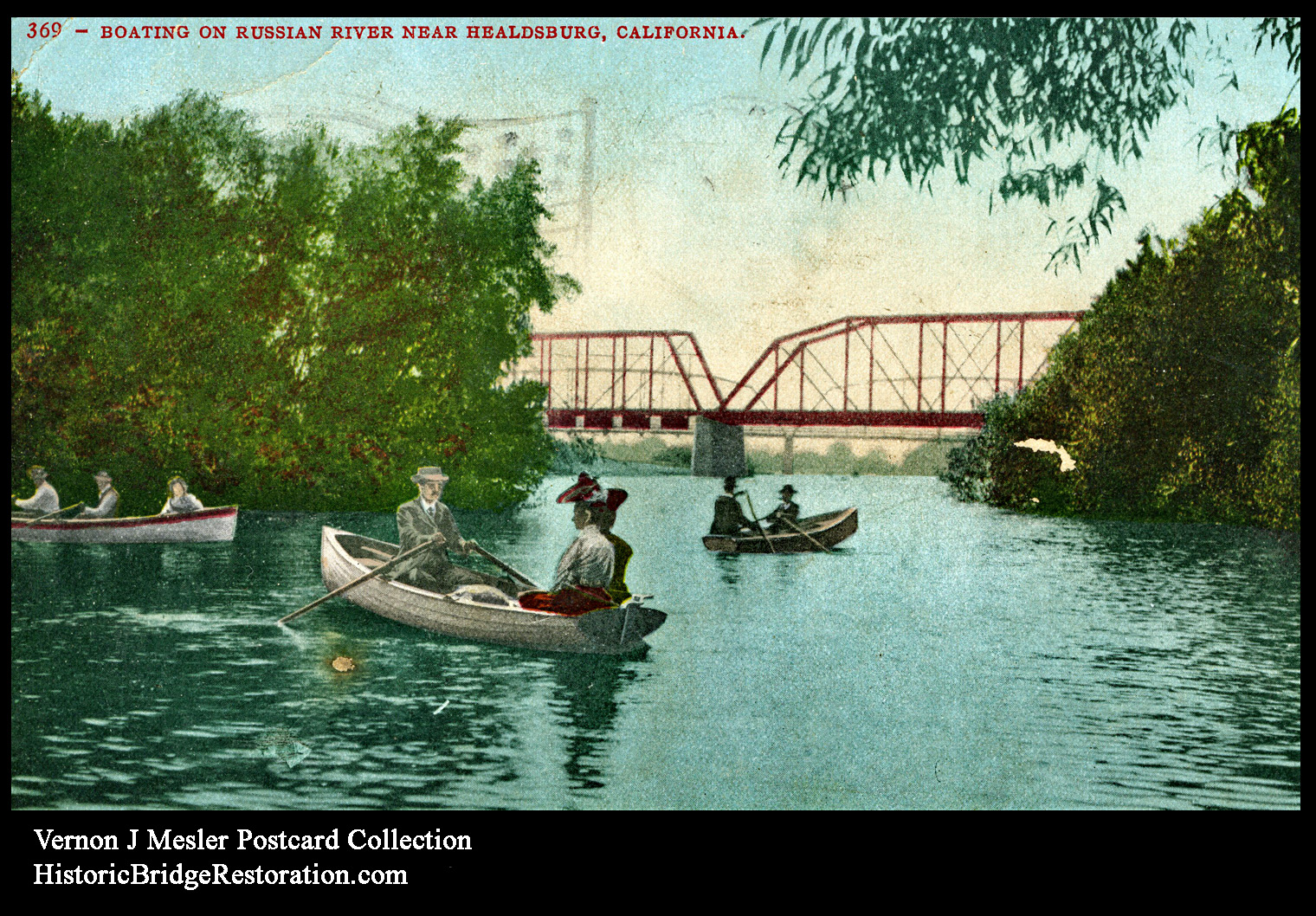
In 1937 the Golden Gate Bridge opening ceremonies and festivities began with Pedestrian’s Day. At the time, the Golden Gate Bridge was the longest, largest, and fastest cable spun bridge in the country, its towering Art Deco towers complementing its natural surroundings. Thousands of residents participated in the 1937 Pedestrian Day ceremonies by walking across the bridge. Many would have driven to the event in their Fords, Chevrolets, Buicks and other popular USA-made coupes and sedans. Those who came from communities north of the Golden Gate likely drove across riveted steel truss bridges fabricated years before the Golden Gate Bridge, and many would have come from Healdsburg, in Sonoma County.
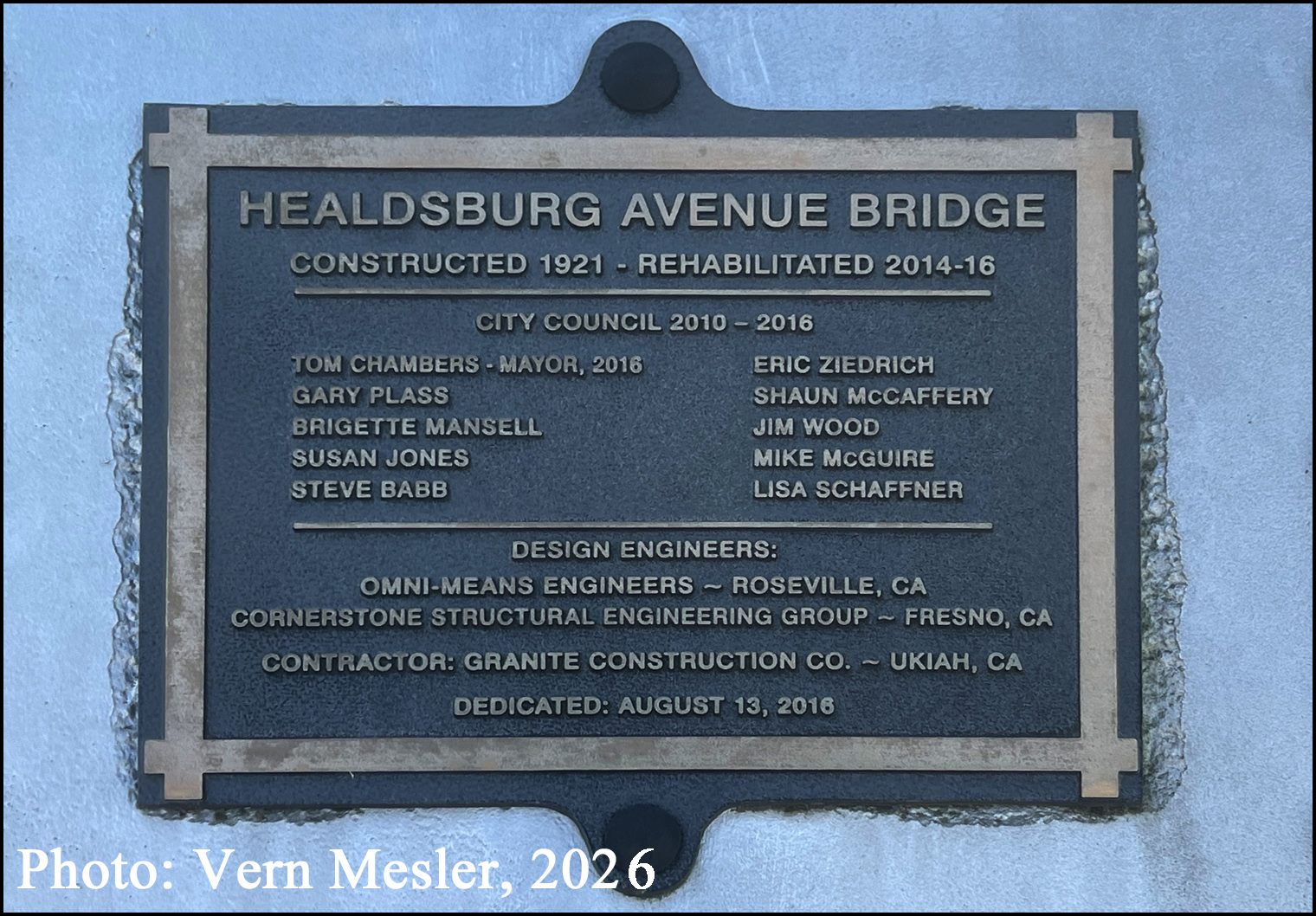
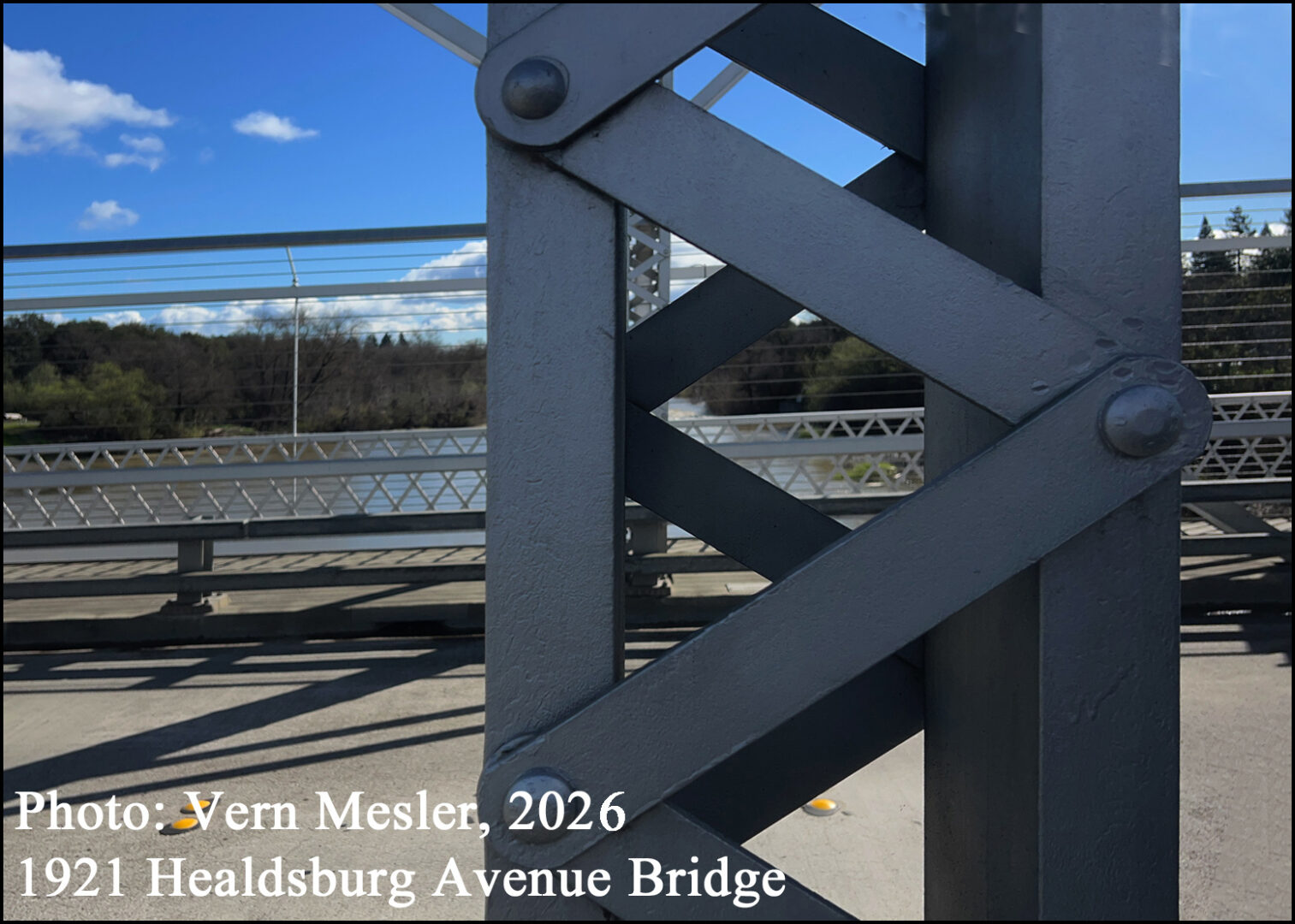
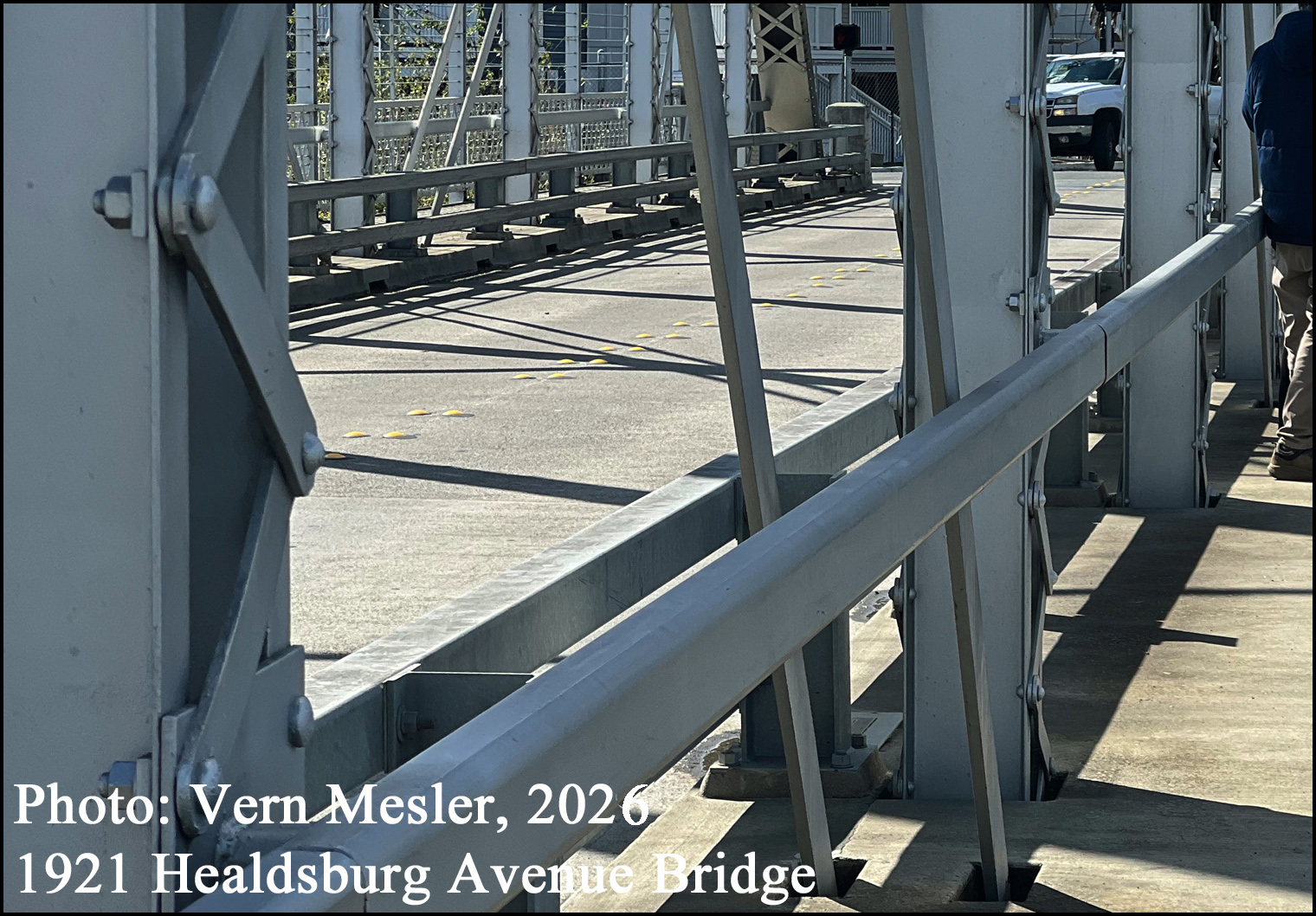
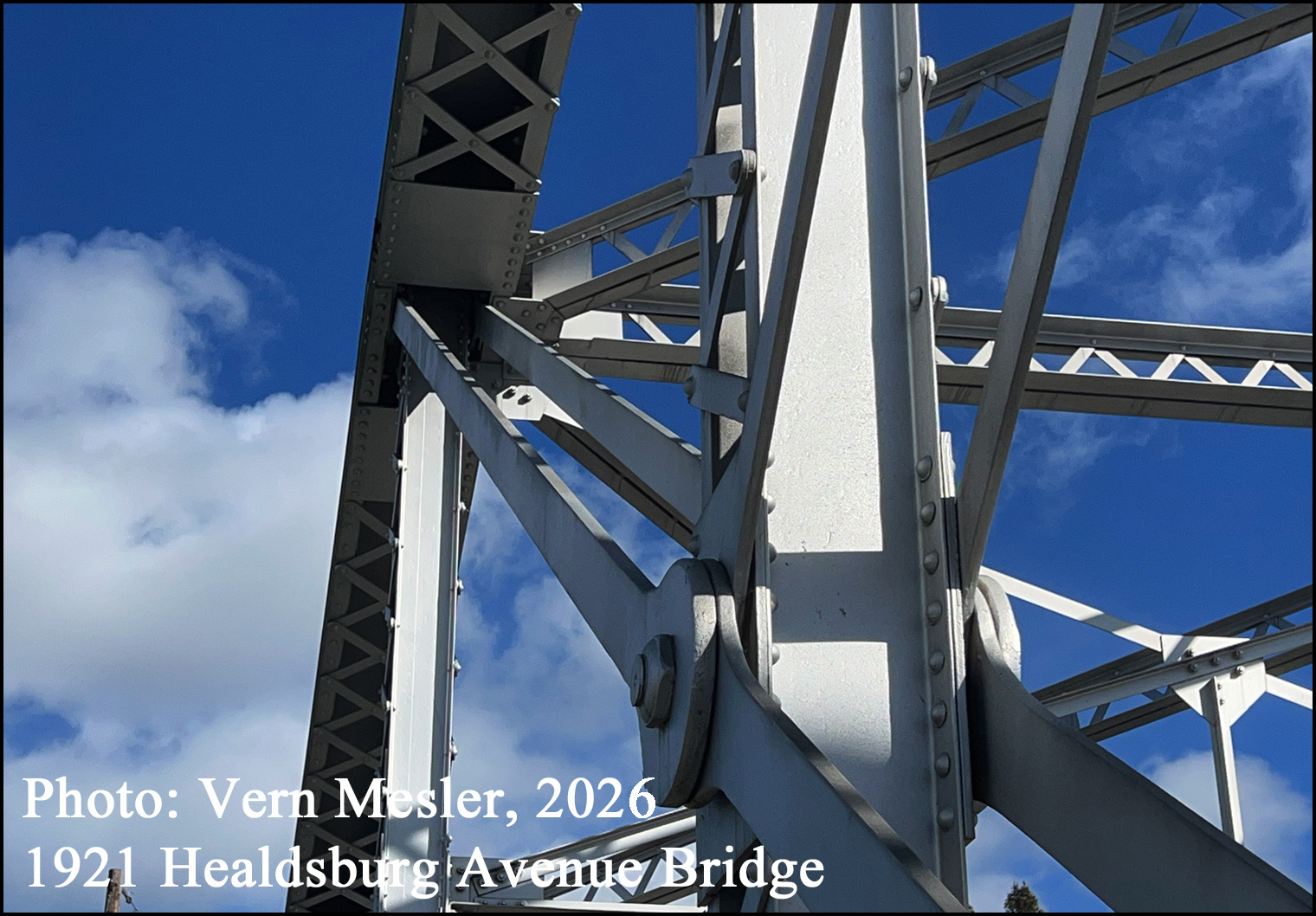
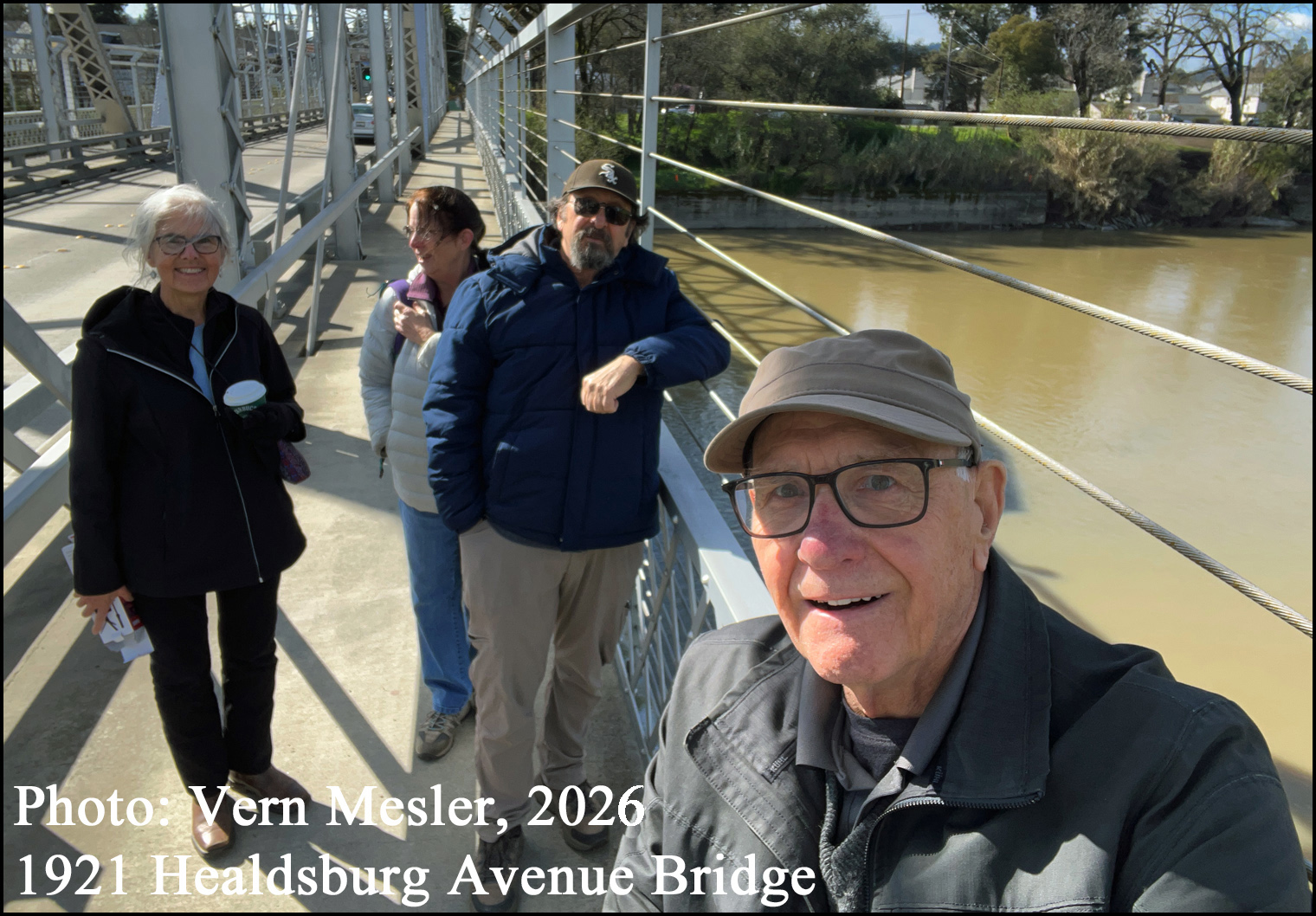
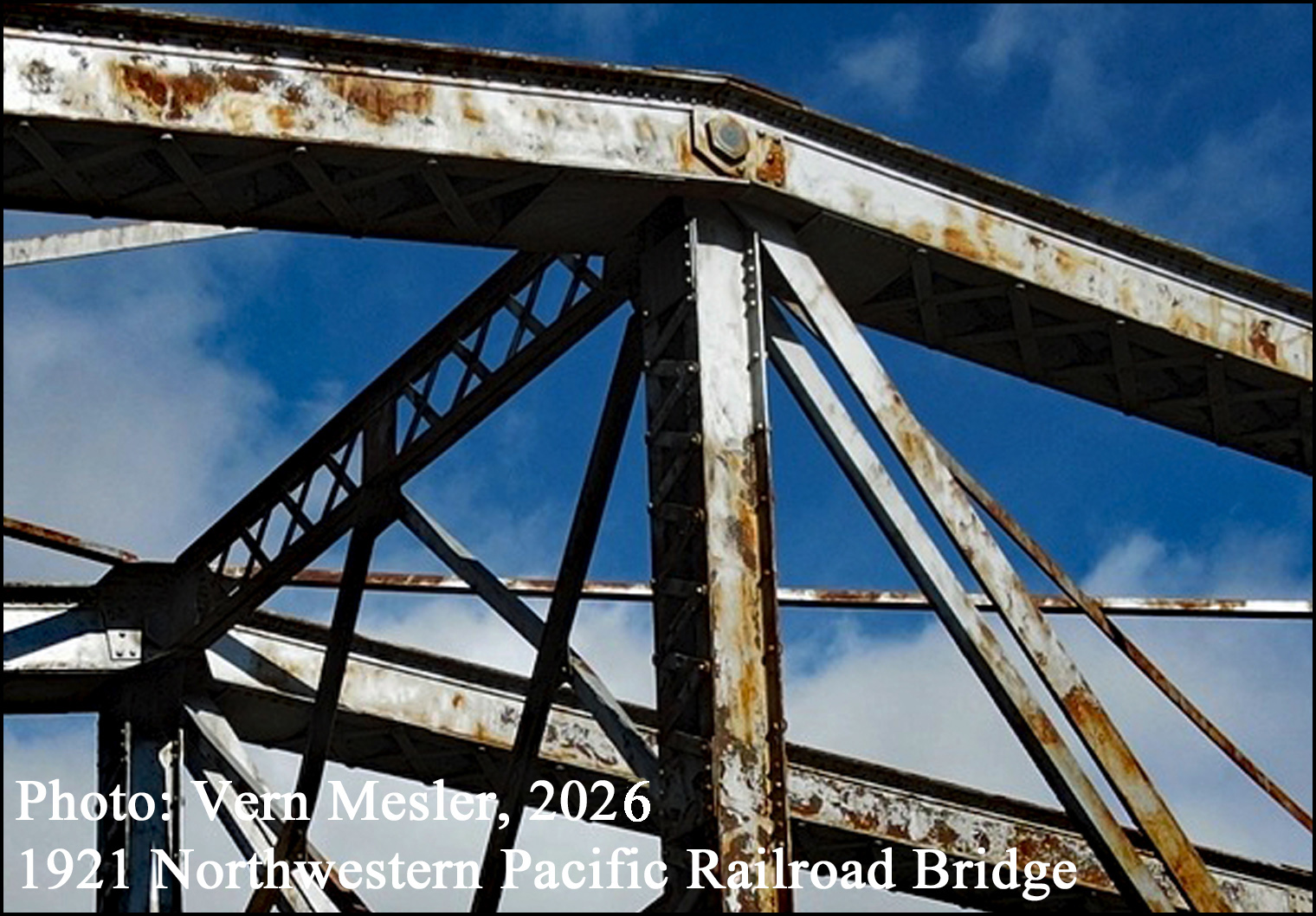
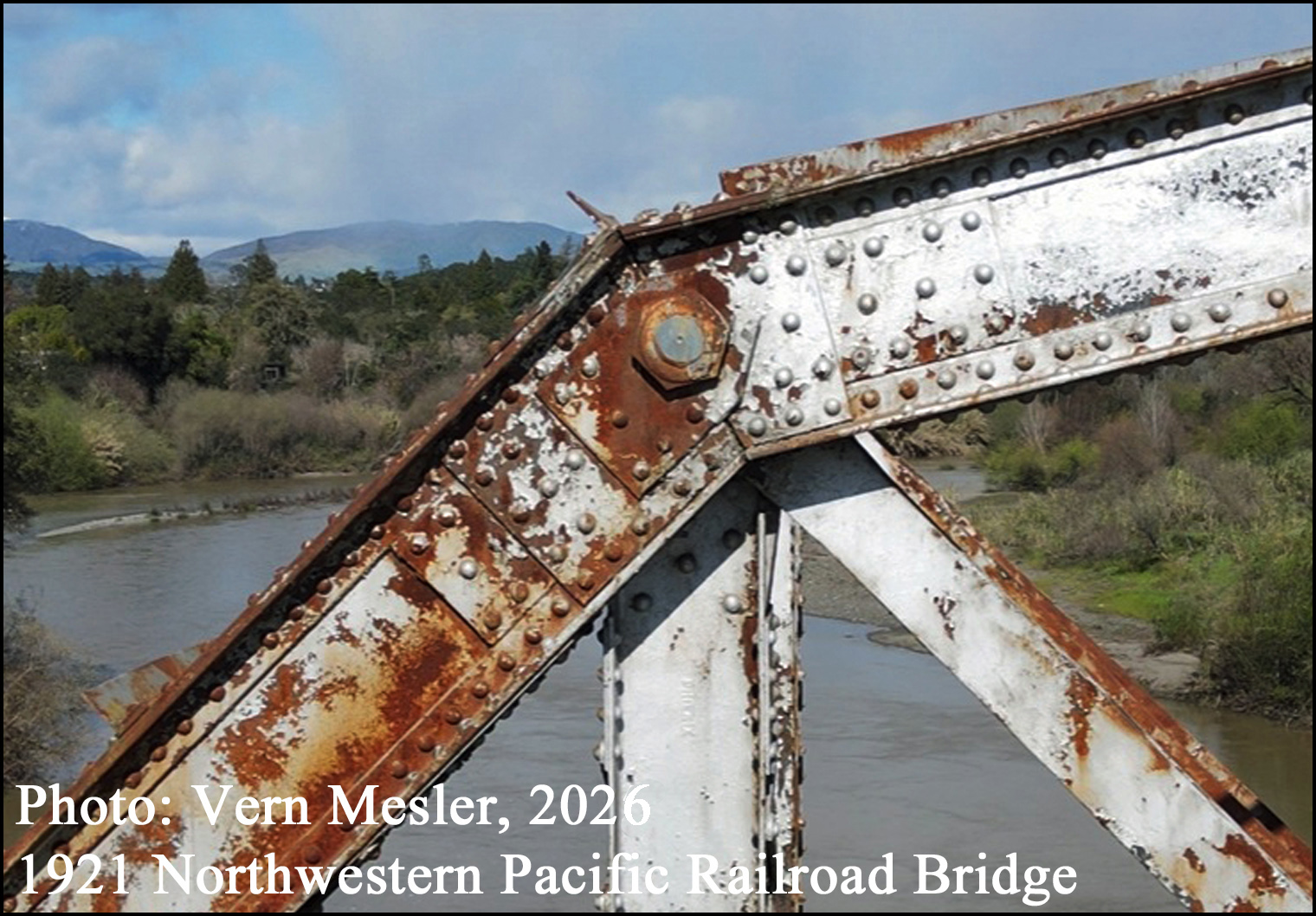
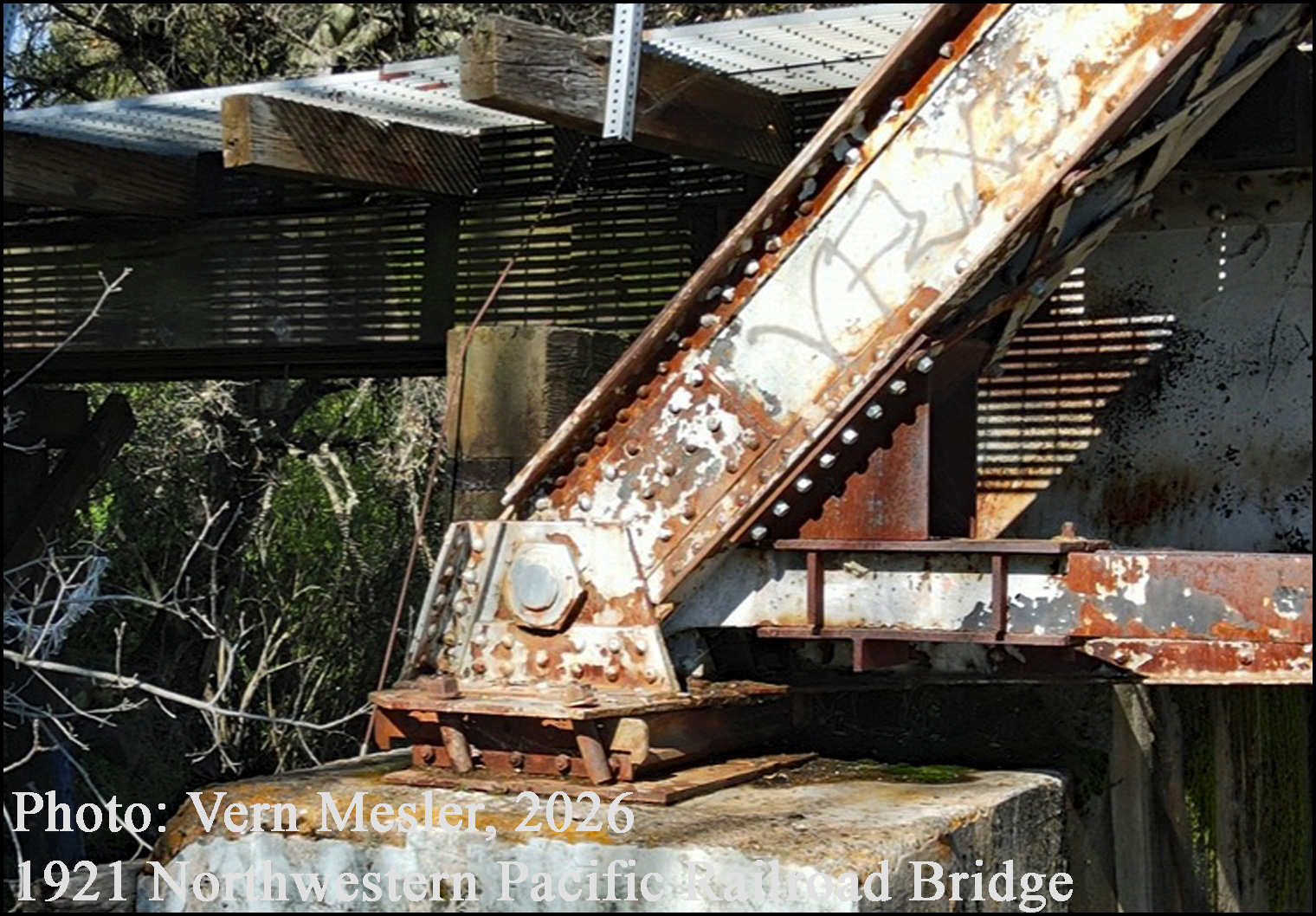
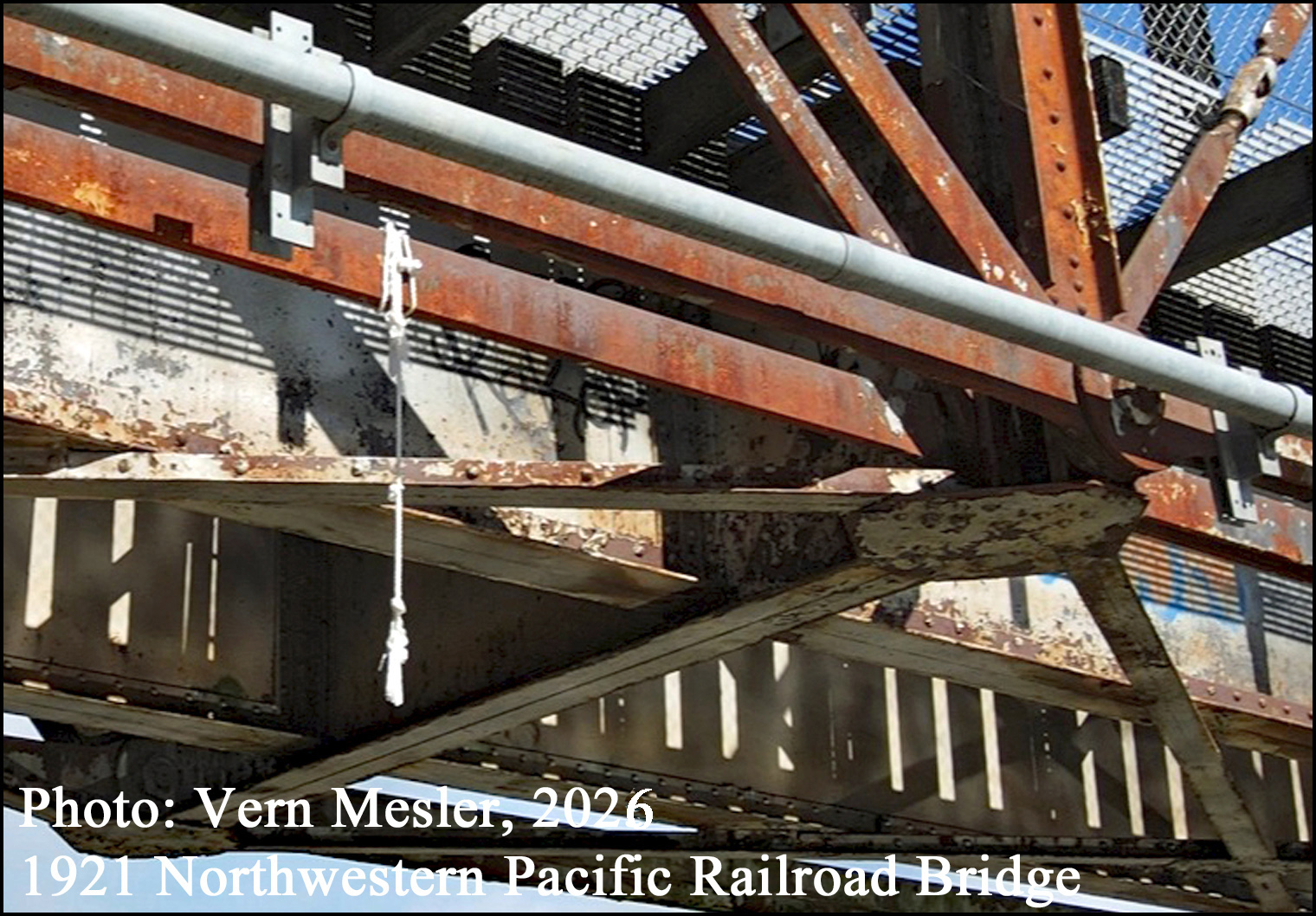
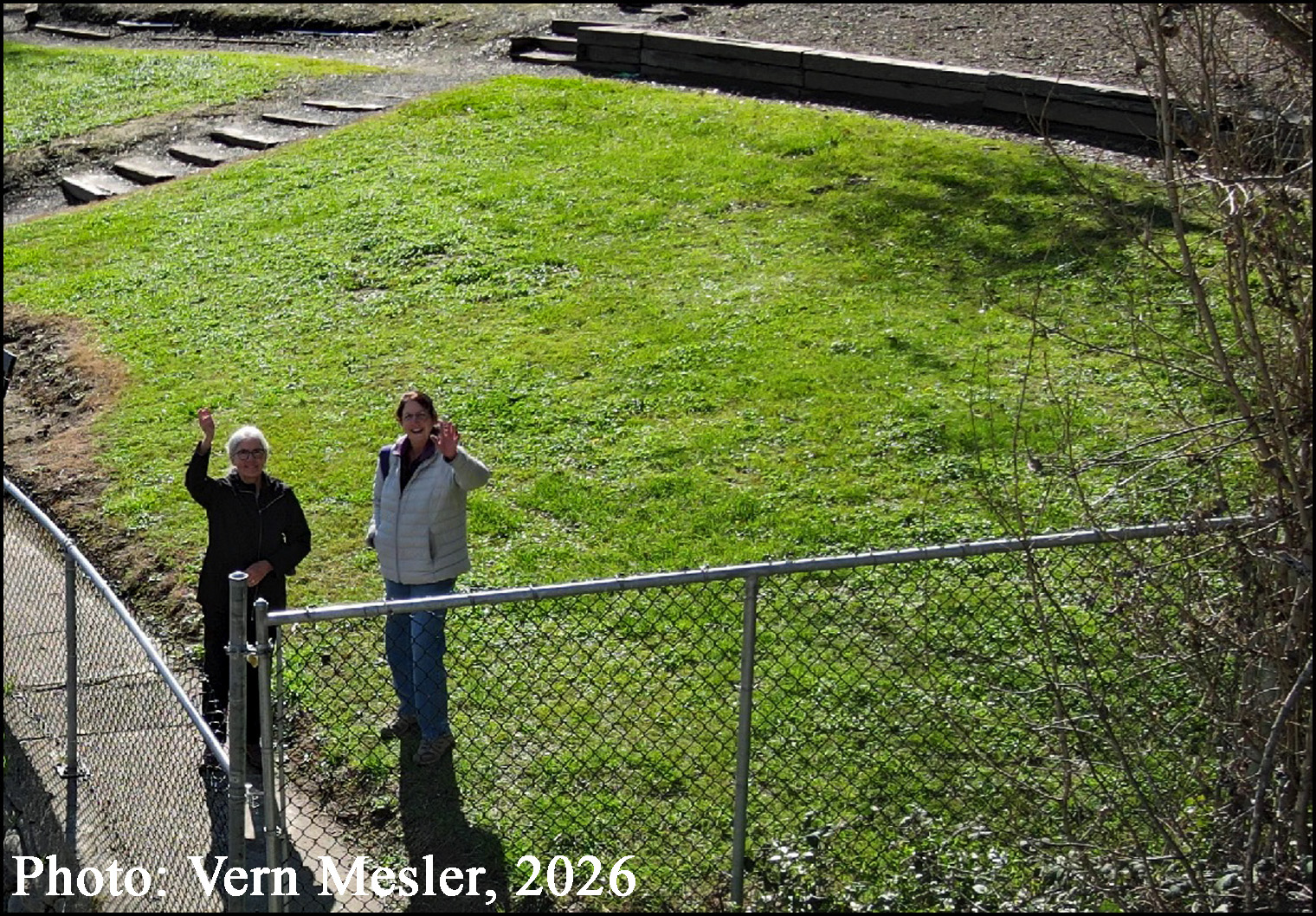
Our cousins’ Historic Bridge Tour began at a Healdsburg Starbucks coffee shop. First on our tour was the 1921 Northwestern Pacific Railroad Bridge, inaccessible to pedestrians but viewable from a small riverfront park. Next was the adjacent Healdsburg Avenue Bridge (also known as Healdsburg Memorial Bridge) that was built in 1921 to carry vehicle traffic on the Redwood Highway across the Russian River. Leaving Healdsburg, we traveled along Sonoma County roads passing fields of grape vines attached to the familiar rows of wire trellis. Along the way our cousins provided an informative narrative of grape varieties, wineries and the history of the region’s vineyards.
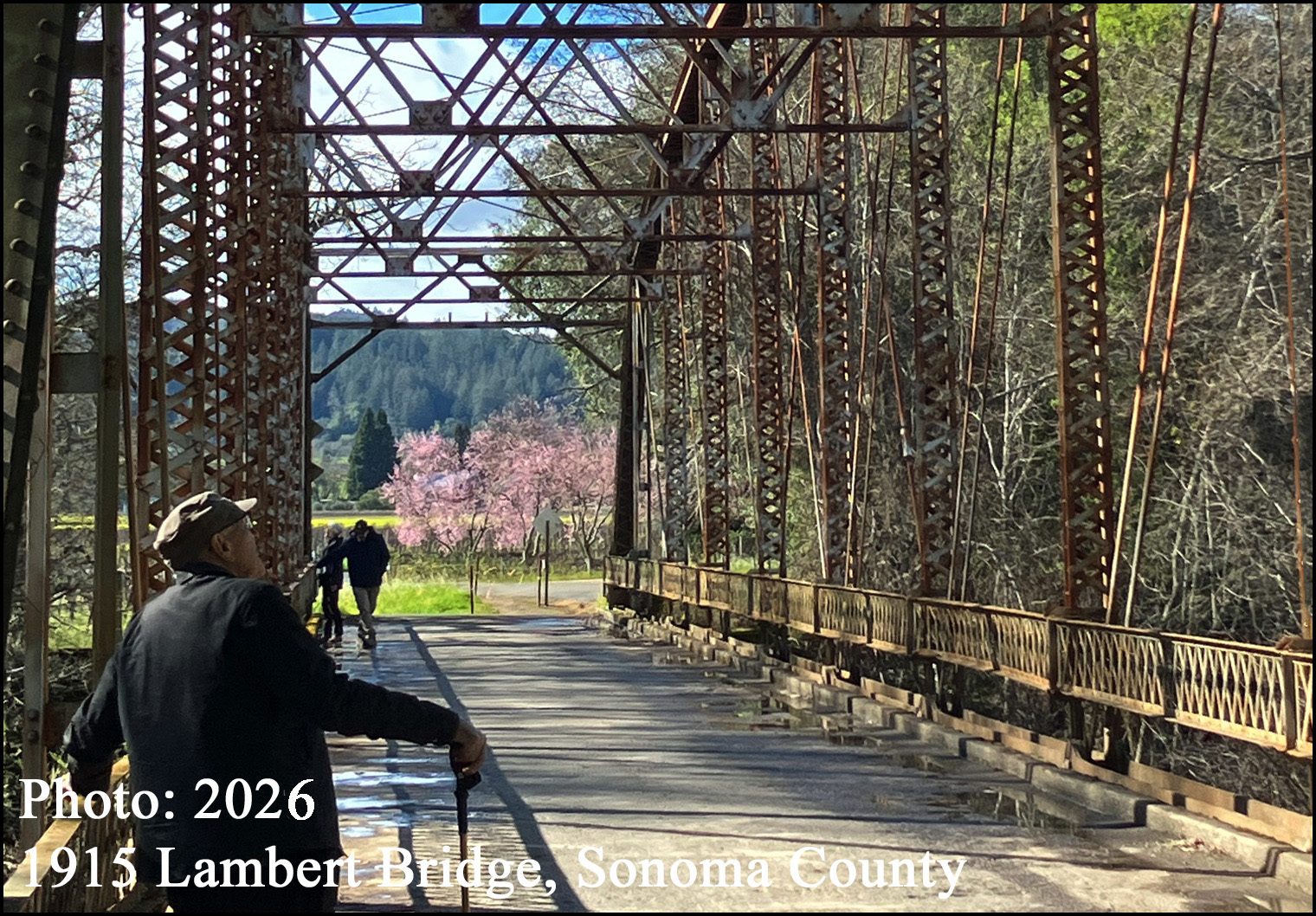
Sonoma County’s two-lane Lambert Bridge Road winds through acres of trellised grape vines. Spanning Dry Creek is the road’s namesake, the 1915 Lambert Bridge. As we approached the bridge from the east, the Passalacqua Winery and Dry Creek Vineyard came into view.
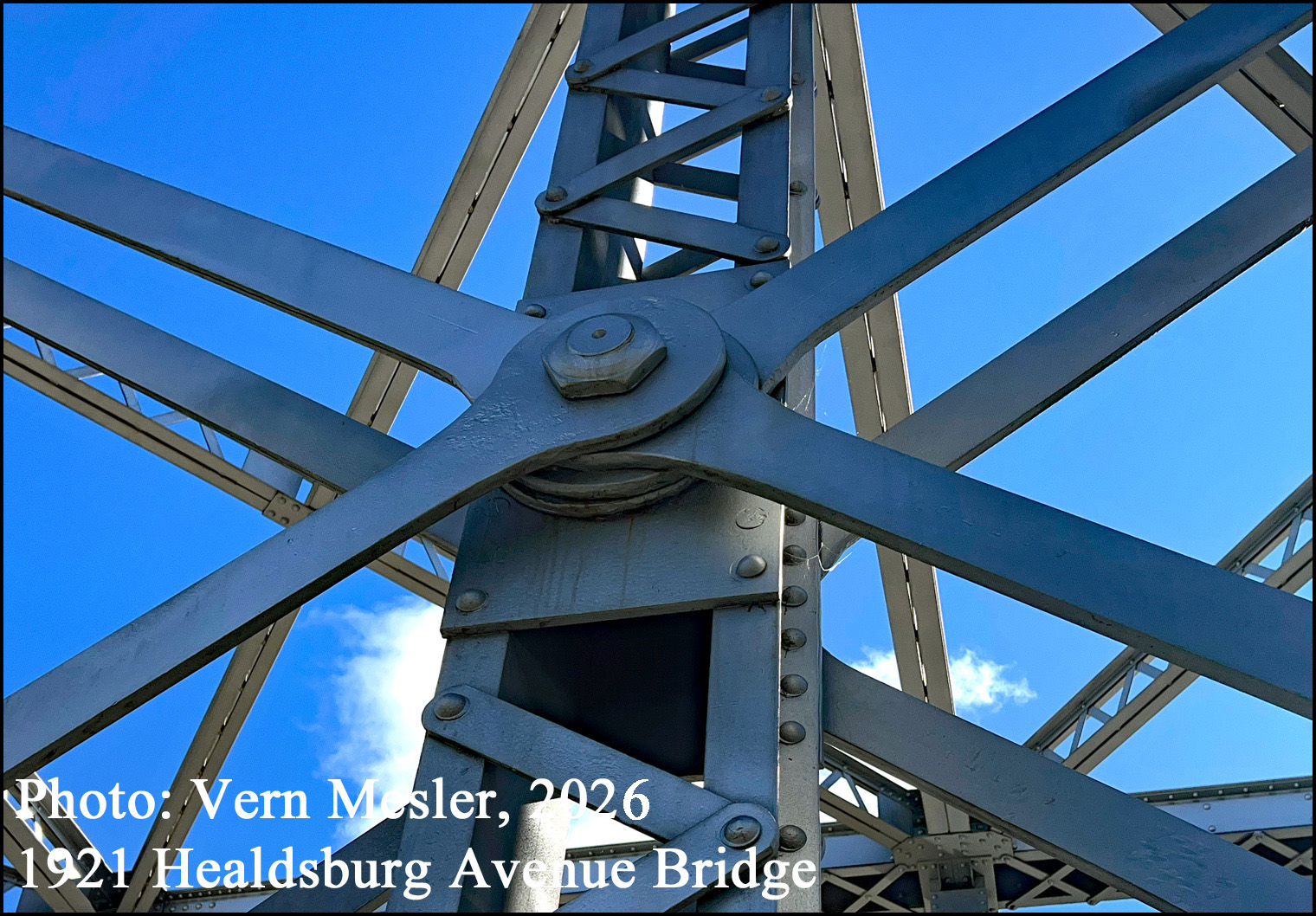
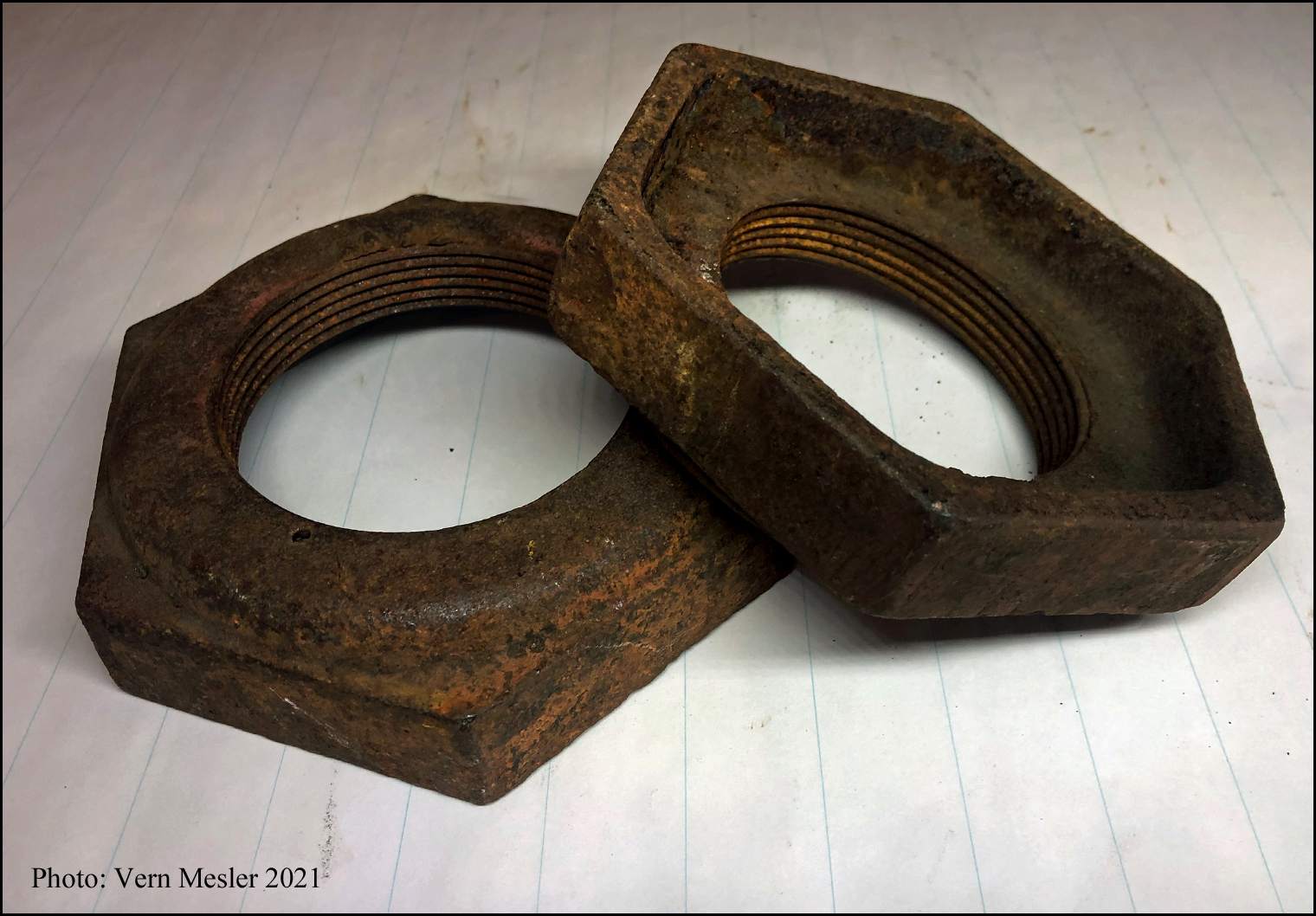
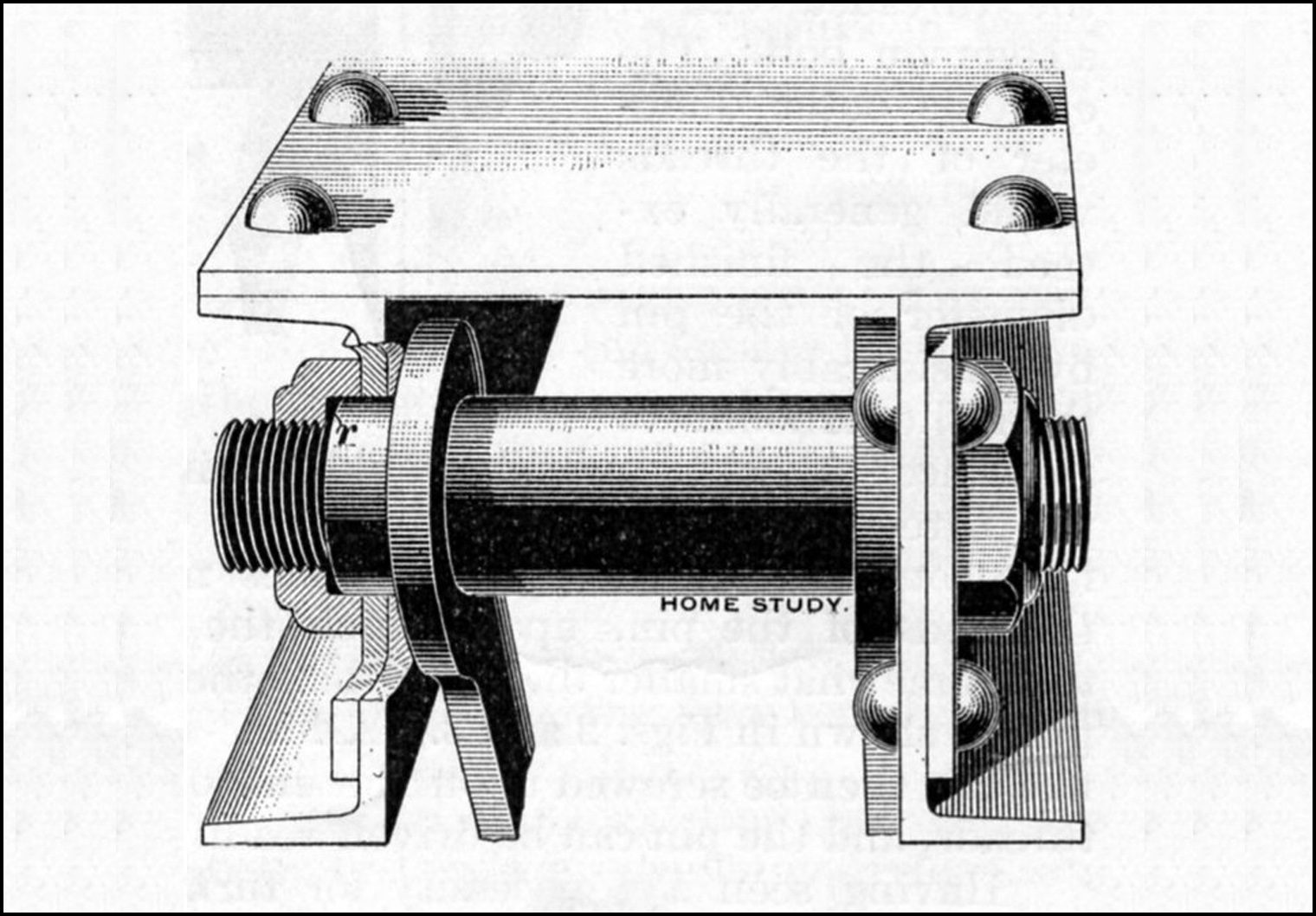
Lambert Bridge (and all the historic bridges on our cousins’ list of historic bridges) are pin-connected truss bridges. These pins are specially designed bridge pins that I consider one of the most historically significant features of a historic metal truss bridge. These bridge pins are more than a simple threaded pin and nut, and the function of a bridge pin and the accompanying nut is more complex than might appear when first observed. The reason for the distinctive shape of the nut was made clear from a book I purchased at an antique store many years ago, an 1896/1897 Home Study Course that explained the function of what are called recessed nuts, a combination of nut and washer in one piece: “Recessed nuts are used upon chord pins in pin connected bridges, in order that a perfect bearing may be afforded for each member connected upon them.” Visit my website for the full text from the Home Study section on Chord Pins
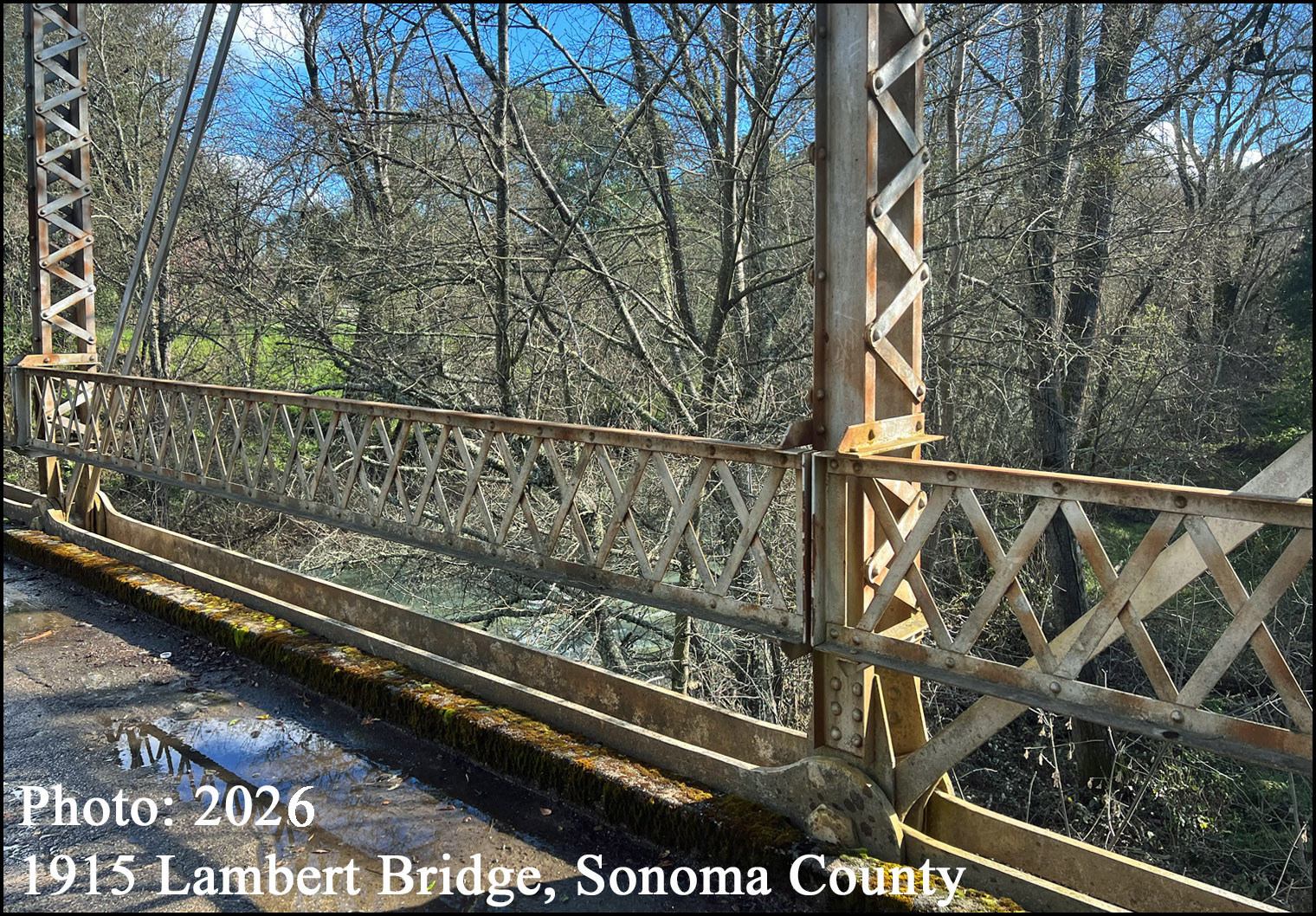
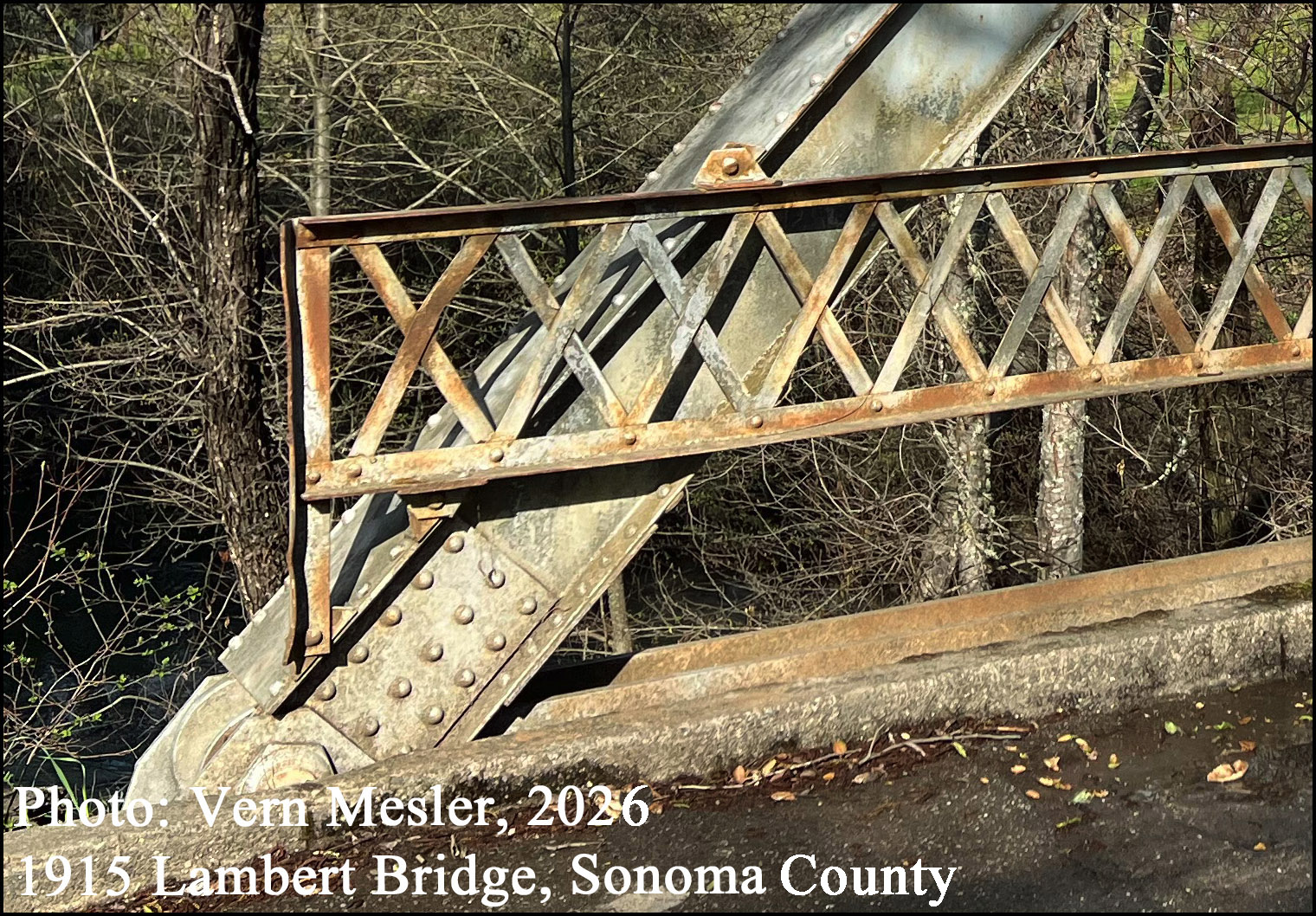
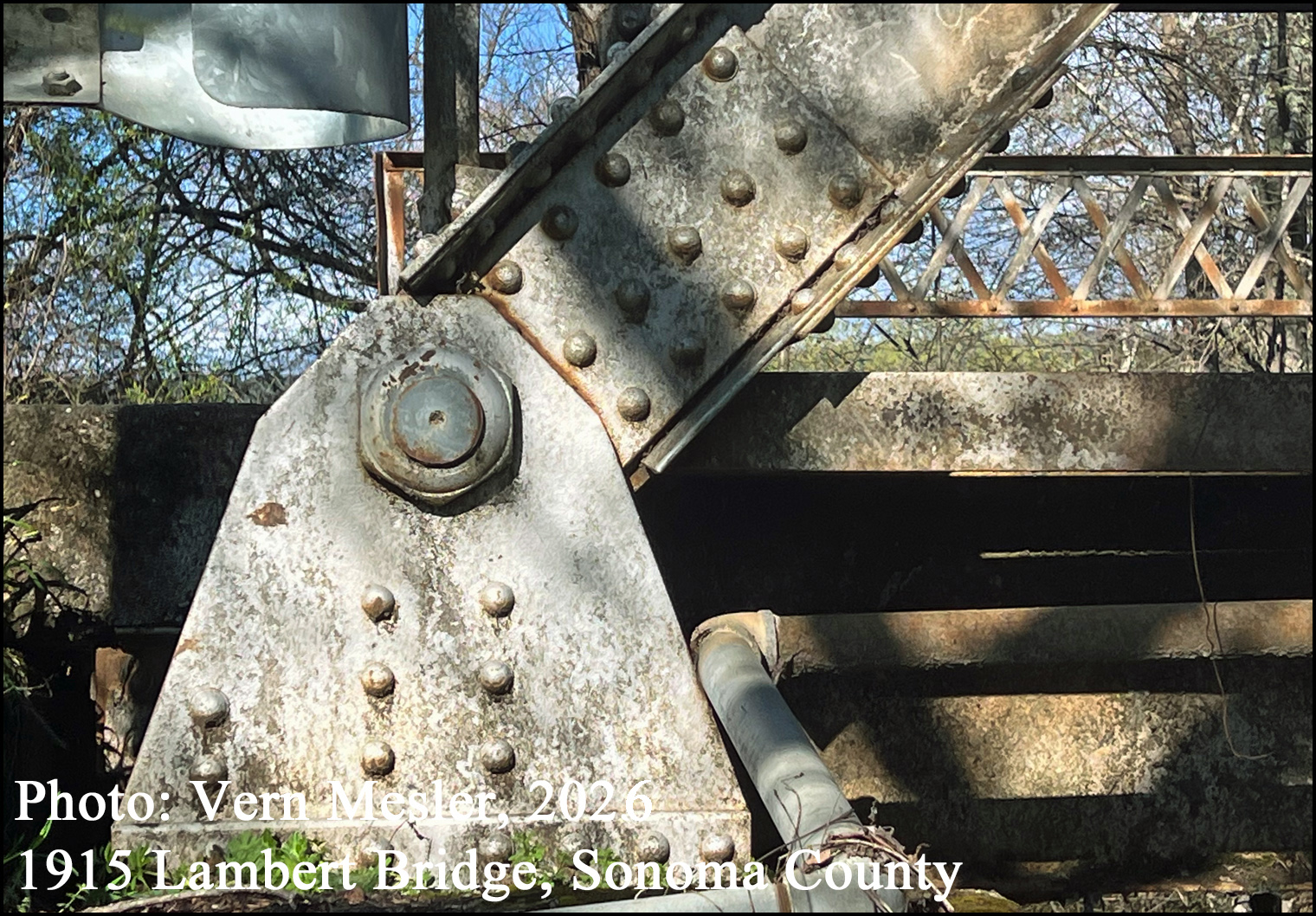
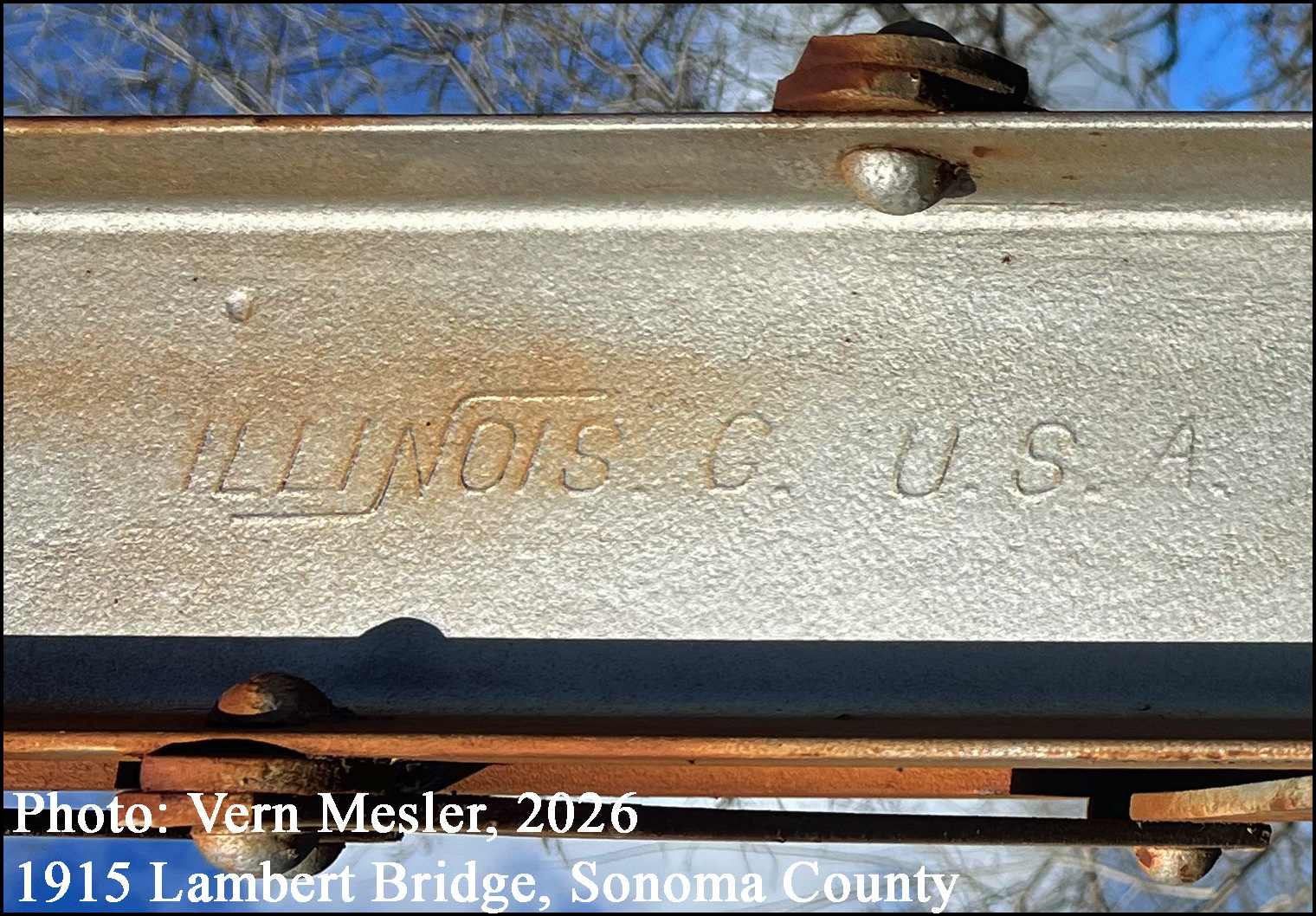
Our cousins’ Historic Bridge Tour continued for several more historic bridges, but Lambert Bridge was the one I found to be the most interesting, and I hope to do an in-depth study of the bridge in the near future. This historic bridge was scheduled for demolition, but a 2020 engineering study indicates that the bridge might remain open to bicycle and pedestrian traffic after a replacement bridge is constructed. (https://www.opacengineers.com/projects/Lambert#)
Our Sonoma County Historic Bridge Tour with cousins Erica and Scott came to an end with a stop near the Wohler Bridge Fishing Access to view the rehabilitation of the historic multi-span Wohler Bridge over the Russian River. Thanks to our cousins from Healdsburg, we had a very enjoyable experience touring some of Sonoma County’s historic bridges.
Vern Mesler, 2026