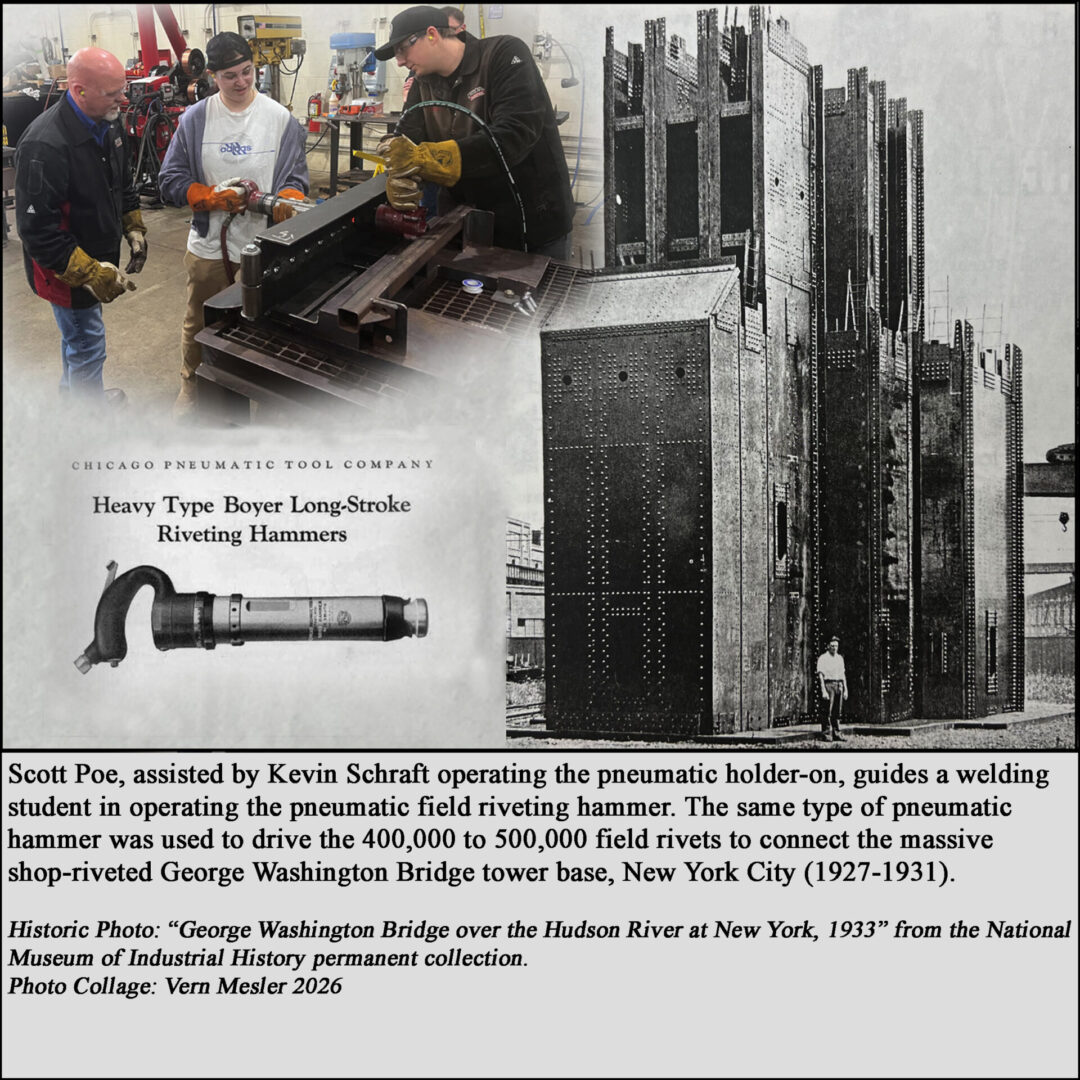
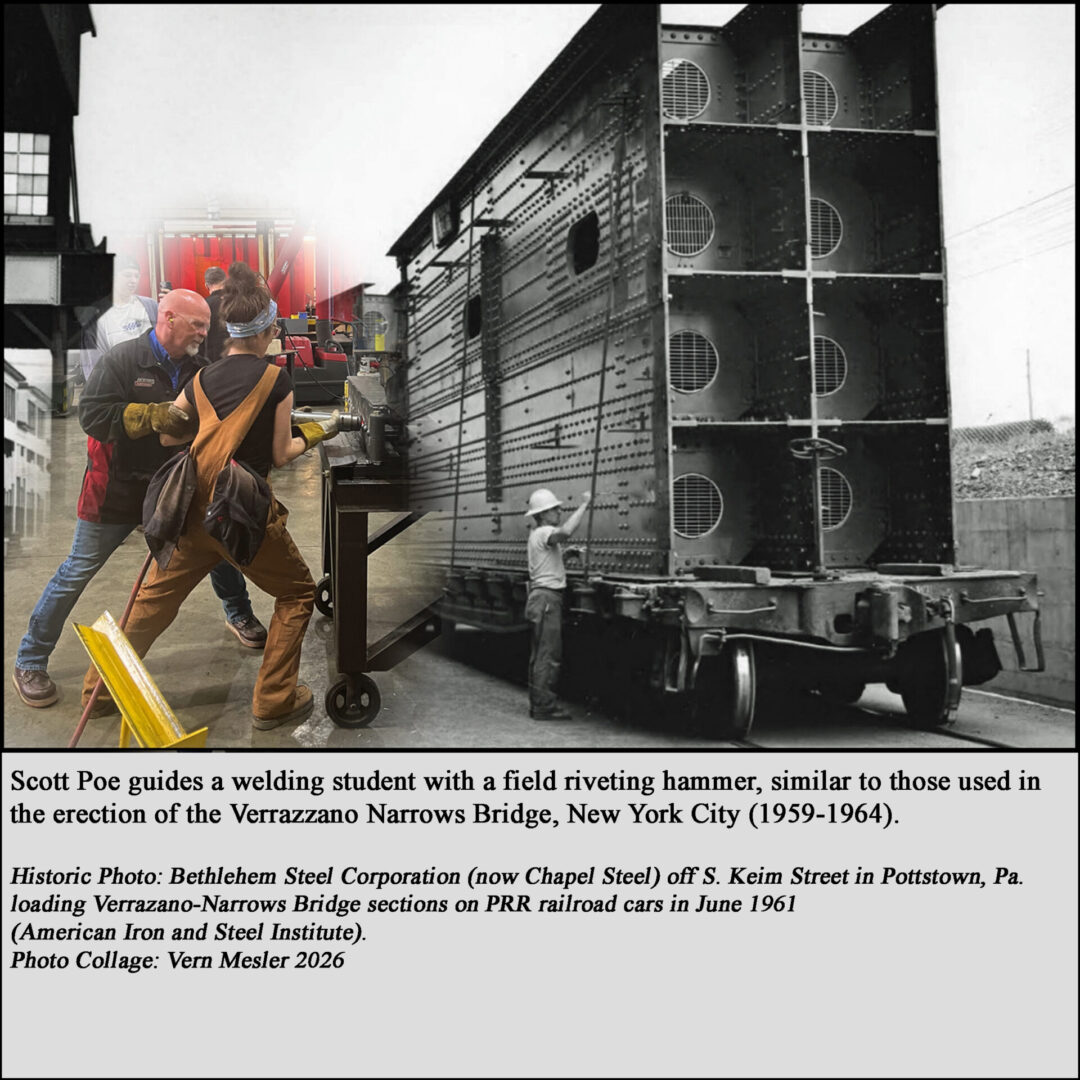
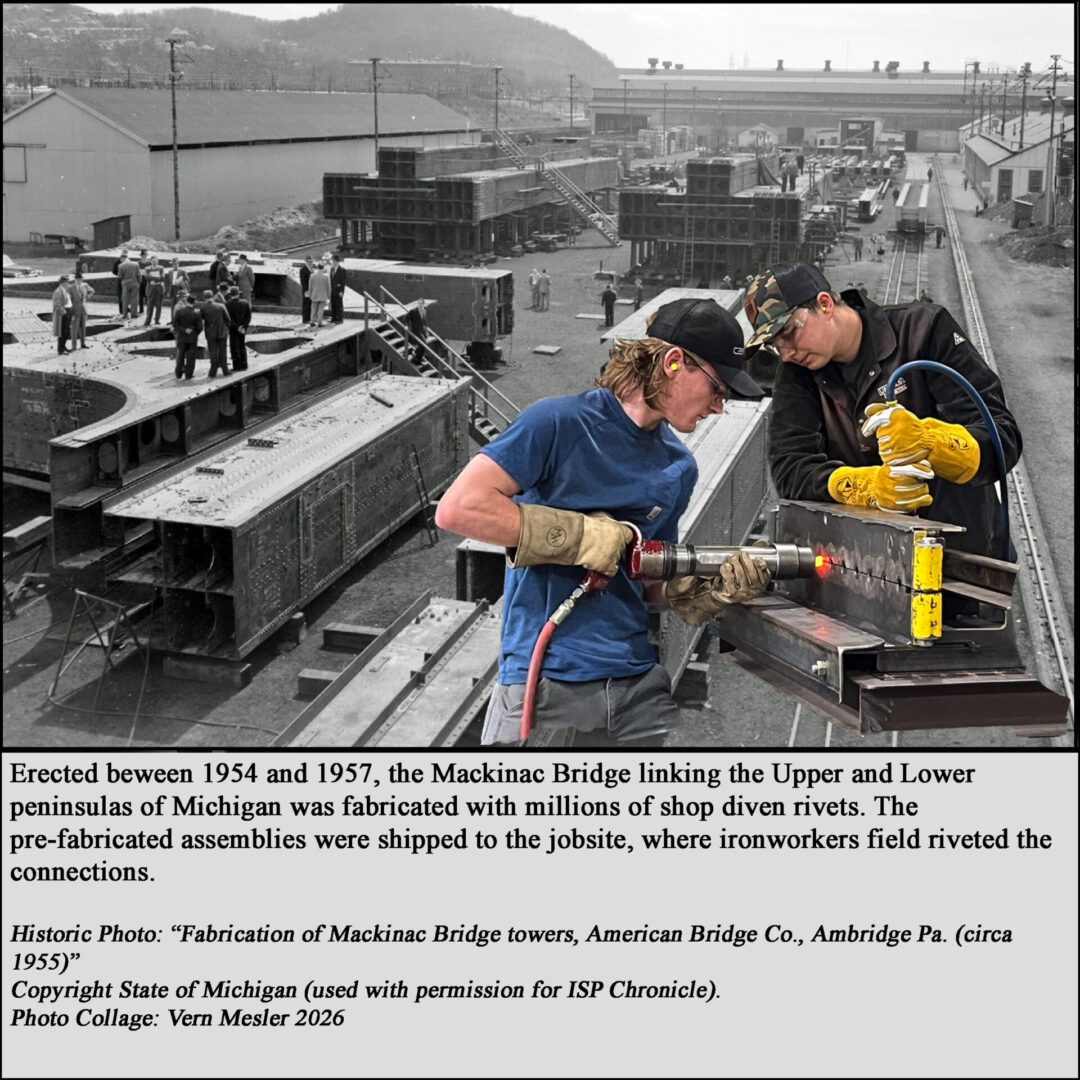
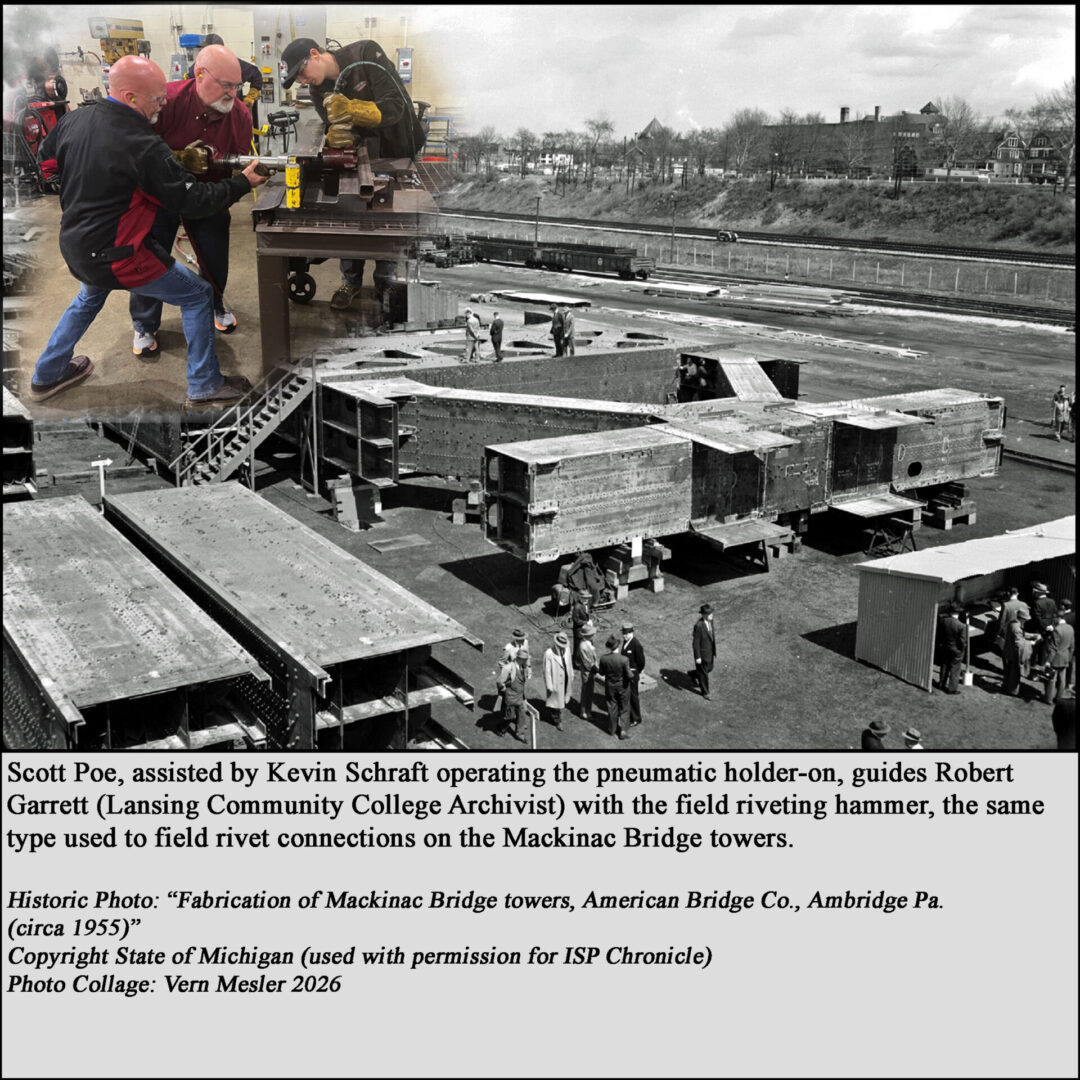
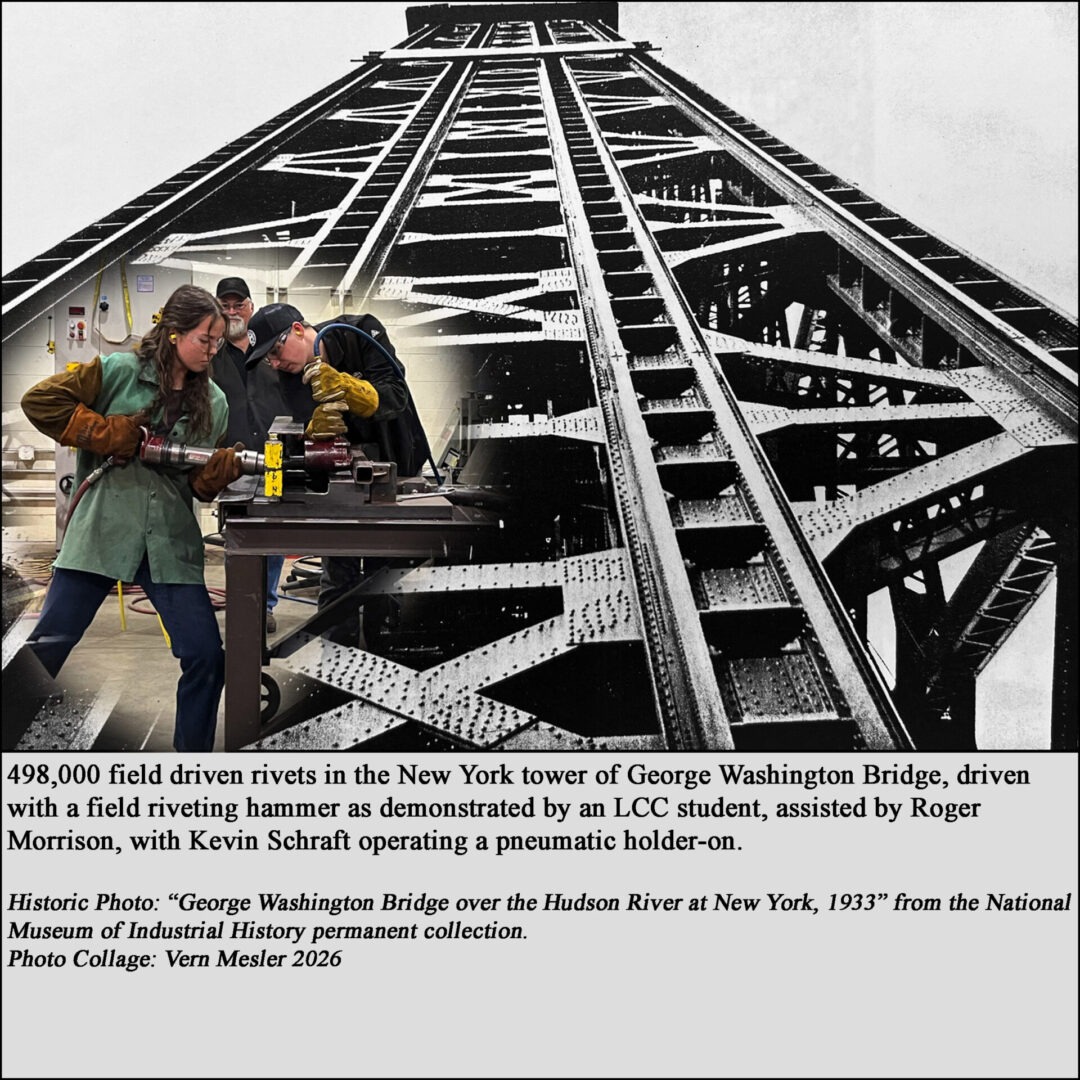
Walls of rivets in buildings, ships, and bridges. Many are still an essential part of the transportation infrastructure of the United States and other countries. Shop-riveted with power driven pneumatic and hydraulic riveters, rivets are first heated and then, under the immense compressive force of a shop-riveter, they are driven to perform under heavy and fundamental stresses. These shop-riveted sections would be shipped to a job site where ironworkers with field riveting hammers would drive forge-heated rivets to connect the tons of shop-riveted assemblies.
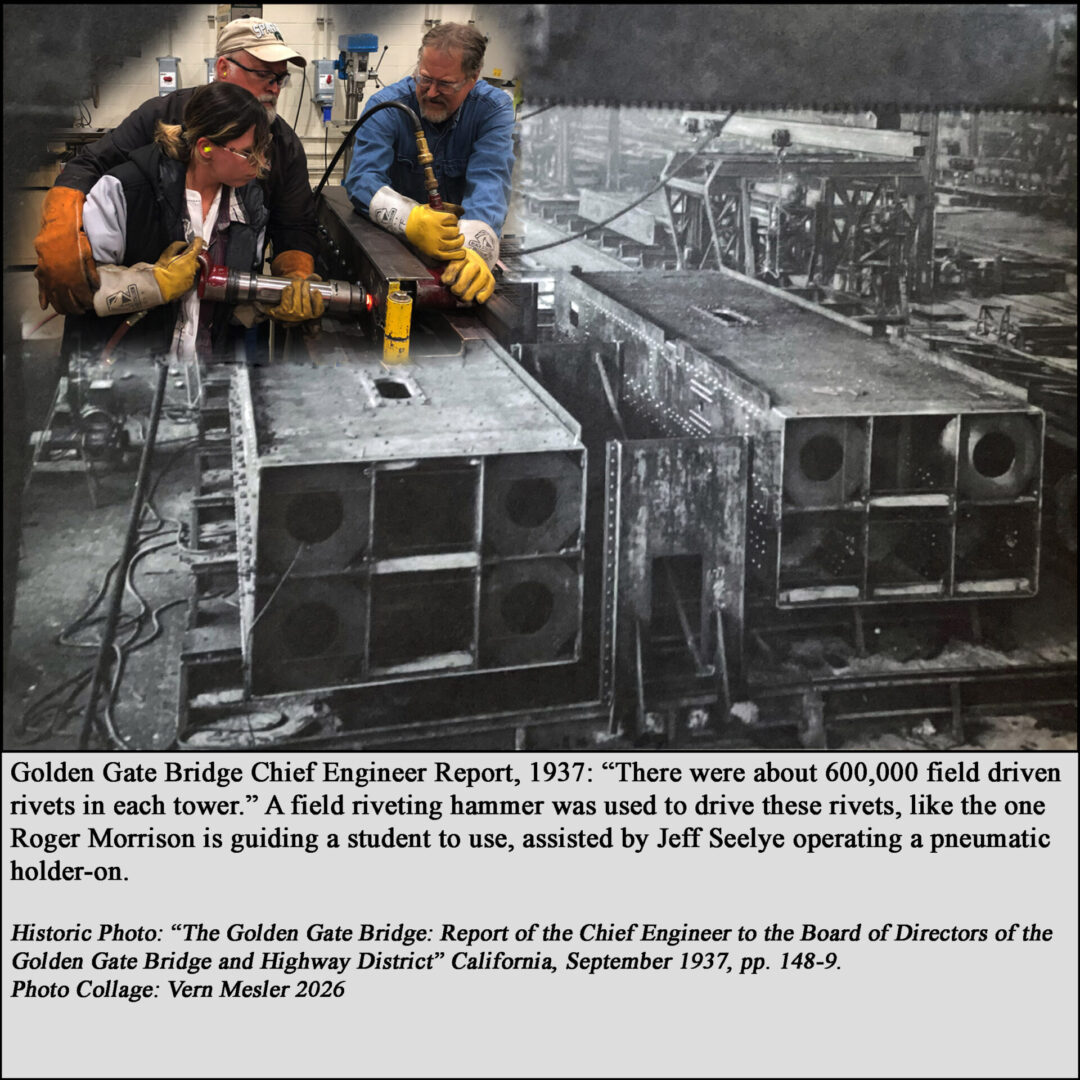
Lansing Community College advanced welding students once again have the opportunity to operate the industrial field riveting hammer. Under the guidance of LCC craftsmen instructors Scott Poe, Roger Morrison, Jeff Haynes, Jeff Seeley, and Kevin Schraft, these students experience the feel and power of the industrial field riveting hammer that was used to field-rivet shop-riveted assemblies.
While the industrial recorded history of shop and field riveting has been distorted and sometimes falsely recorded, it is possible for students to recognize, after operating a field riveting hammer, the impossible task of driving 5,000,000 to 15,000,000 rivets in large suspension bridges and buildings. Engineering reports written at the time of construction of the Golden Gate Bridge and the George Washington Bridge correctly state their towers as having 500,000 to 600,000 field-driven rivets. Over time, the word “field” has been dropped when writing about the construction history of these famous bridges, leading readers to believe the towers of these bridges have far fewer rivets and ignoring the millions of shop-driven rivets.