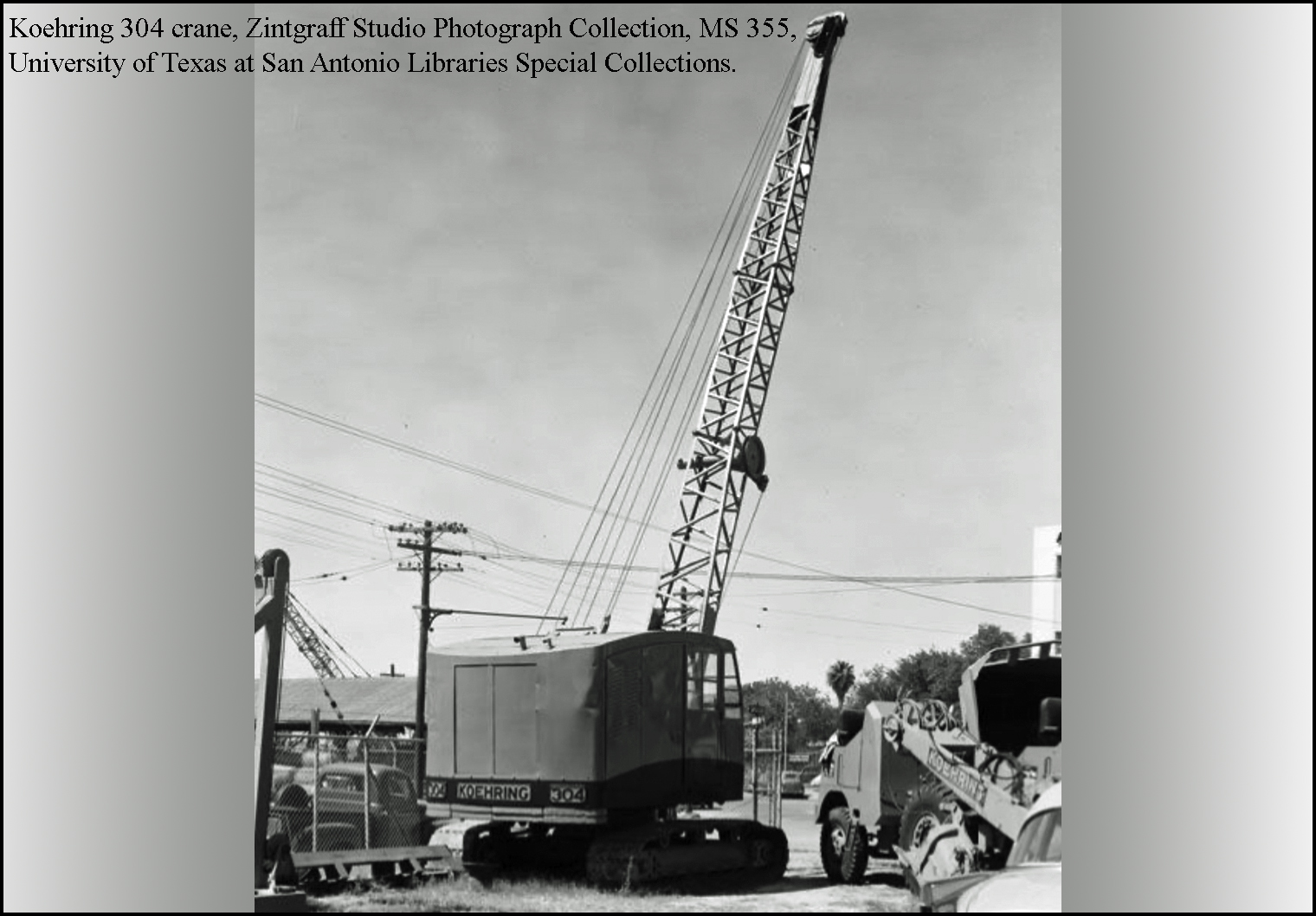
As a steel fabricator and in my work in the preservation of historic truss bridges, I’ve worked with many types of industrial cranes and recognize the vital role the mobile crane and its operator has in the handling of iron and steel. I had one memorable experience as a young steel fabricator working with a retired crane operator and an early twentieth century crawler crane that contributed to my long appreciation of skills of those who operate mobile cranes. Remembering the event, I did not recall the model of the crane but through a search in Google Books I found a War Department Technical Manual for a 1940 Koehring crawler crane that brought back memories of the sights and sounds of the crane in writing of my experience with Vic the crane operator.
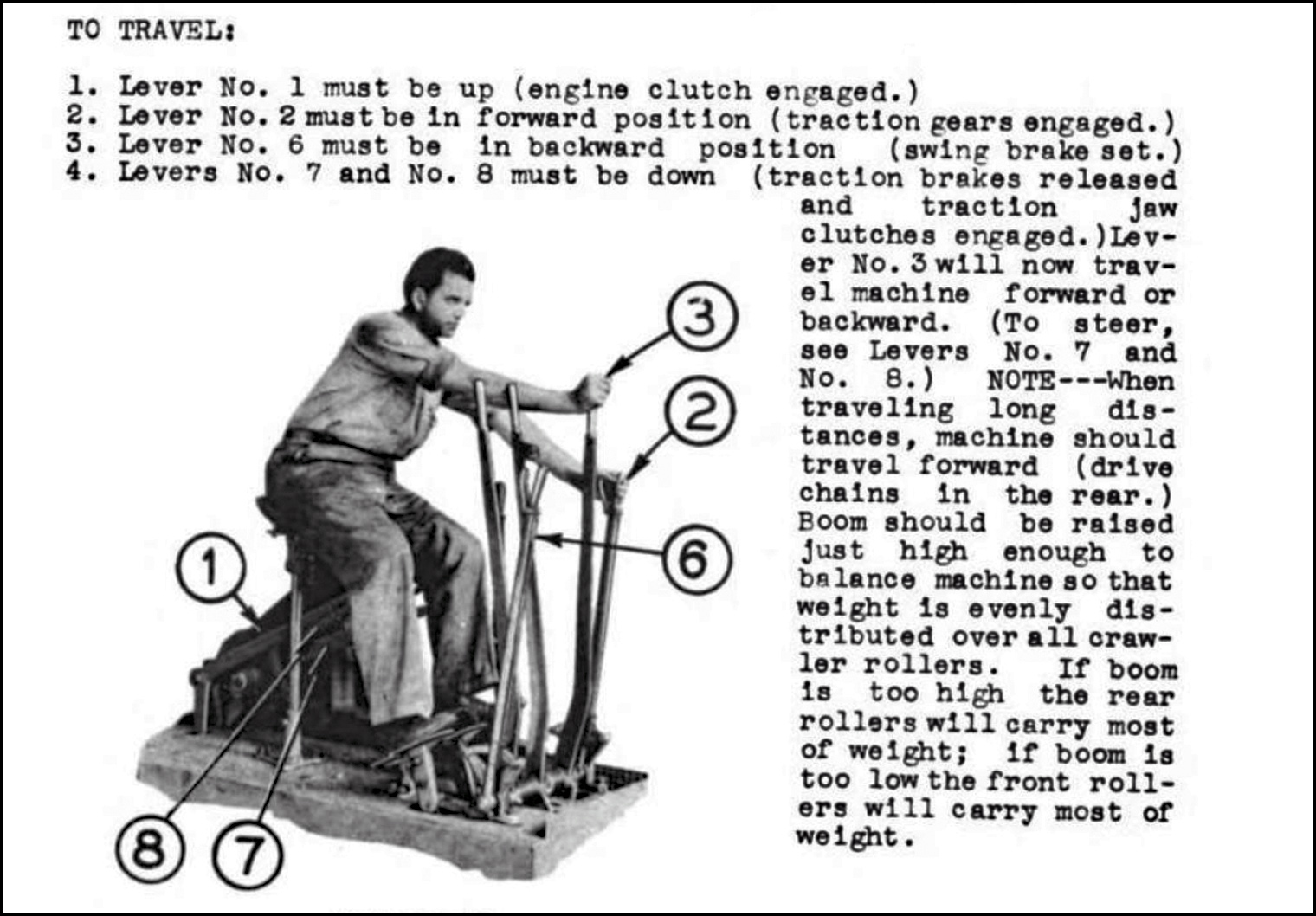
It was Spring 1968, and the fabrication company I was working for had a shipping storage yard of fabricated steel ready for delivery to multiple erection sites. The one crane and loading crew were working overtime to keep up. One morning the plant manager drove by a local construction company and spotted a crane setting in their storage yard, He stopped in the office and asked if he could rent the old crane. “We have no problem renting it to you but there is only one man in the state of Michigan that can operate it, and he’s retired. Maybe he’ll work for you. Give him a call.” The plant manager did call, and Vic, the crane operator, agreed to work. The crane was delivered to the company’s shipping yard, and on a Monday morning Vic arrived for work. I was reassigned from my fitter’s position, given a clipboard and assigned a loading crew. Along with Vic we loaded truck trailers.
On each side of the crane were metal doors that opened into the engine area, and every morning Vic would pull out an old oil can and perform the required lubrication. Afterwards he would pull out a large crank (similar to an engine crank used to start an early automobile but much larger), insert it at the base of the engine, position the crank and apply his full weight to turn it clockwise a half turn. The engine would start with a familiar cranking, rattling, smoke, gas fumes, and finally the steady rhythmic sound of a well-oiled engine.
Vic would have his lunch in the employee parking lot, and I joined him there. Vic was a big man in bib coveralls, seventy-two at the time, and the car he was driving, a compact, didn’t seem to fit him (his wife’s car, as he mentioned later). As a retiree, Vic had a garden and bought in his daily harvest, his big red tomatoes especially memorable. One afternoon Vic showed me a copy of an early 1900s Sears and Roebuck catalog his kids had given him for his birthday, a gift he was especially proud of, maybe because he used to flip through the pages wishing to purchase many of the products listed there. As a teenager he asked his mother for written permission to work at the Panama Canal, which was still under construction at the time. His mother refused. Vic would eventually find work at another historic construction project: building roads in the Rocky Mountains. With tractors, graders, horses, and a new gas-powered crawler crane on site. As Vic recalled, the steel boom of the new gas-powered crane didn’t hold up to the rugged Rocky Mountain terrain. One day the boom bent. A crane is not of much use with a bent boom, and certainly no crane service was readily available in the Rocky Mountains at the time. Craftsmen are often challenged with job site situations that require their innate cumulative industrial knowledge for a fix. As told by Vic, the boom was lowered on an embankment, timbers were placed under the bent boom and set ablaze, heating the steel enough to straighten it. Later, timbers were attached alongside to stiffen the boom. It must have been quite a sight, the paint on the boom blistering and cracking, the smell of timber ablaze, the sounds of labor among the old forest.
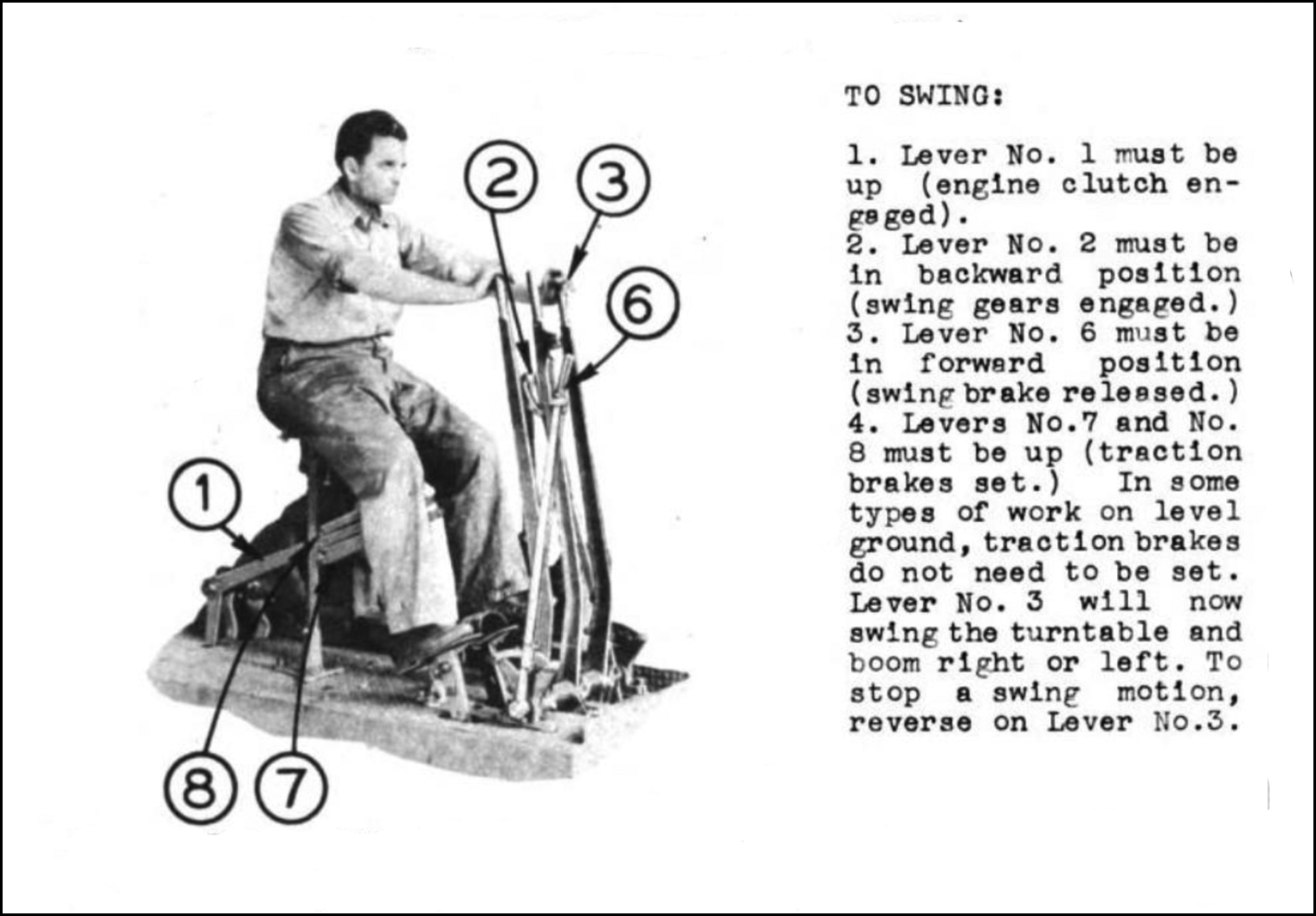
It’s been over fifty years since I worked with Vic, the crane operator. From memorable mental images and shop notes it is a pleasure to write this story. After my yard assignment, I was sent back inside the fabrication shop fitting up steel, one of the positions I enjoyed most in steel fabrication. I never saw Vic again. His crane was shipped back and probably scrapped out after this last chapter in its long service history.