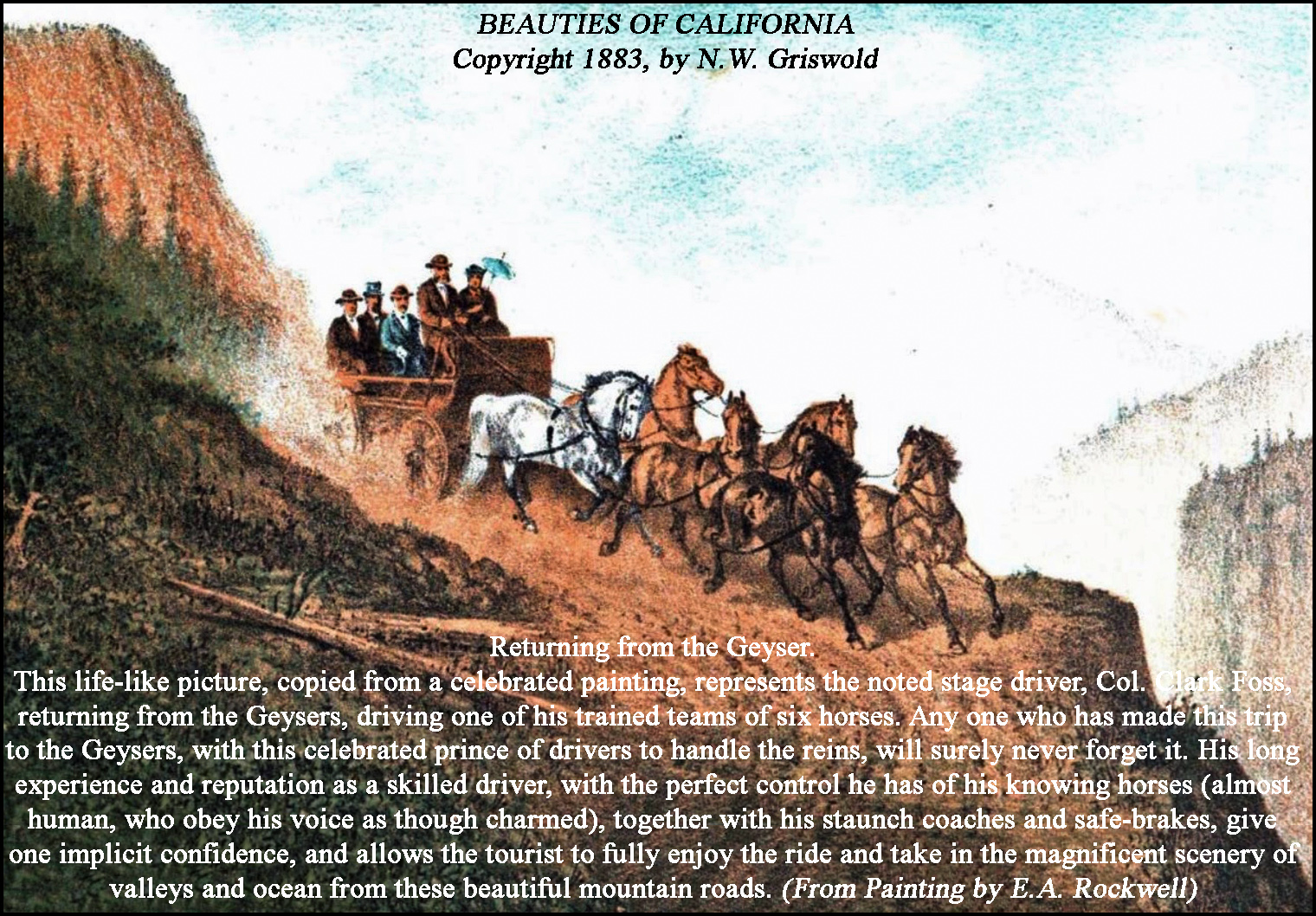
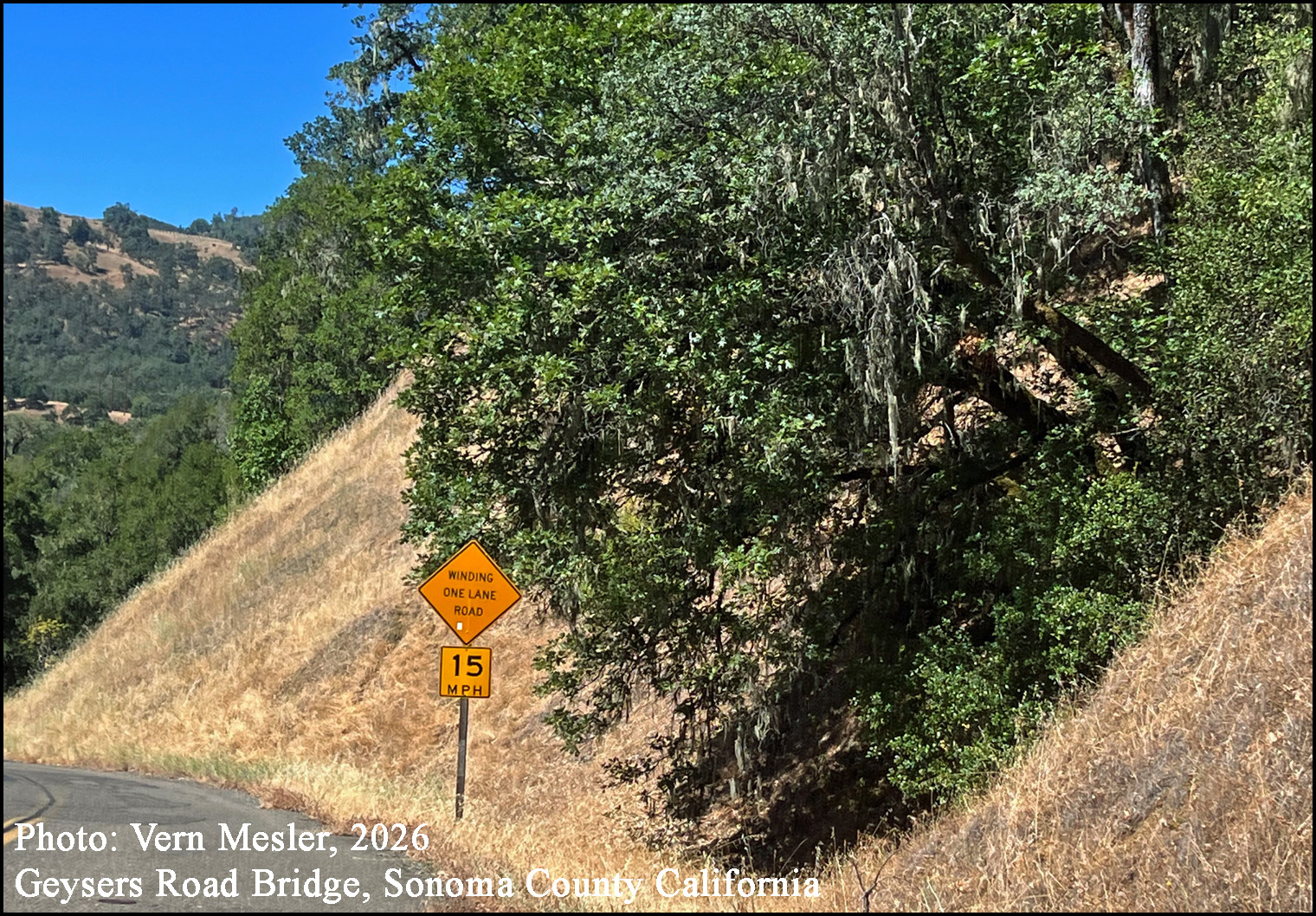
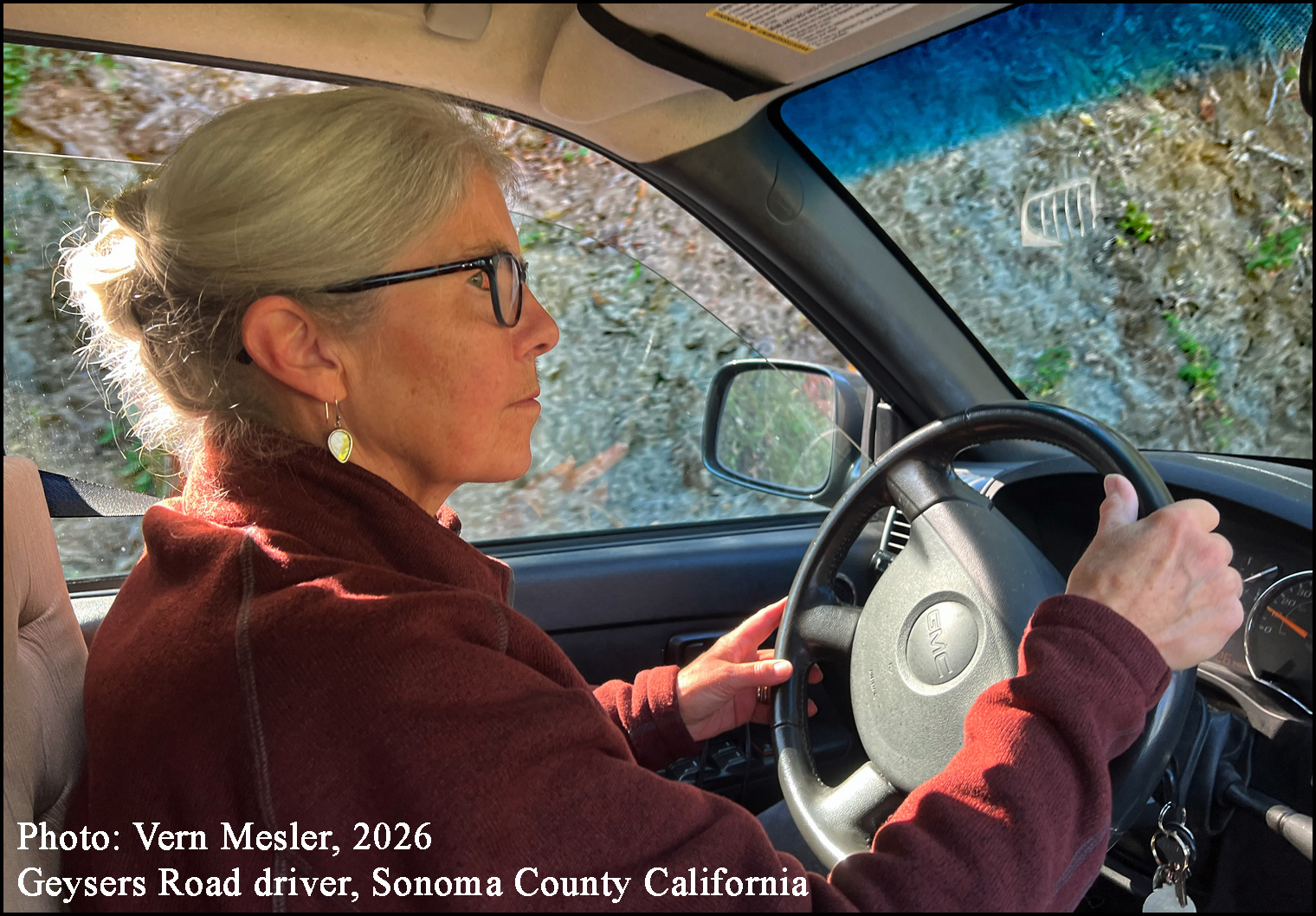
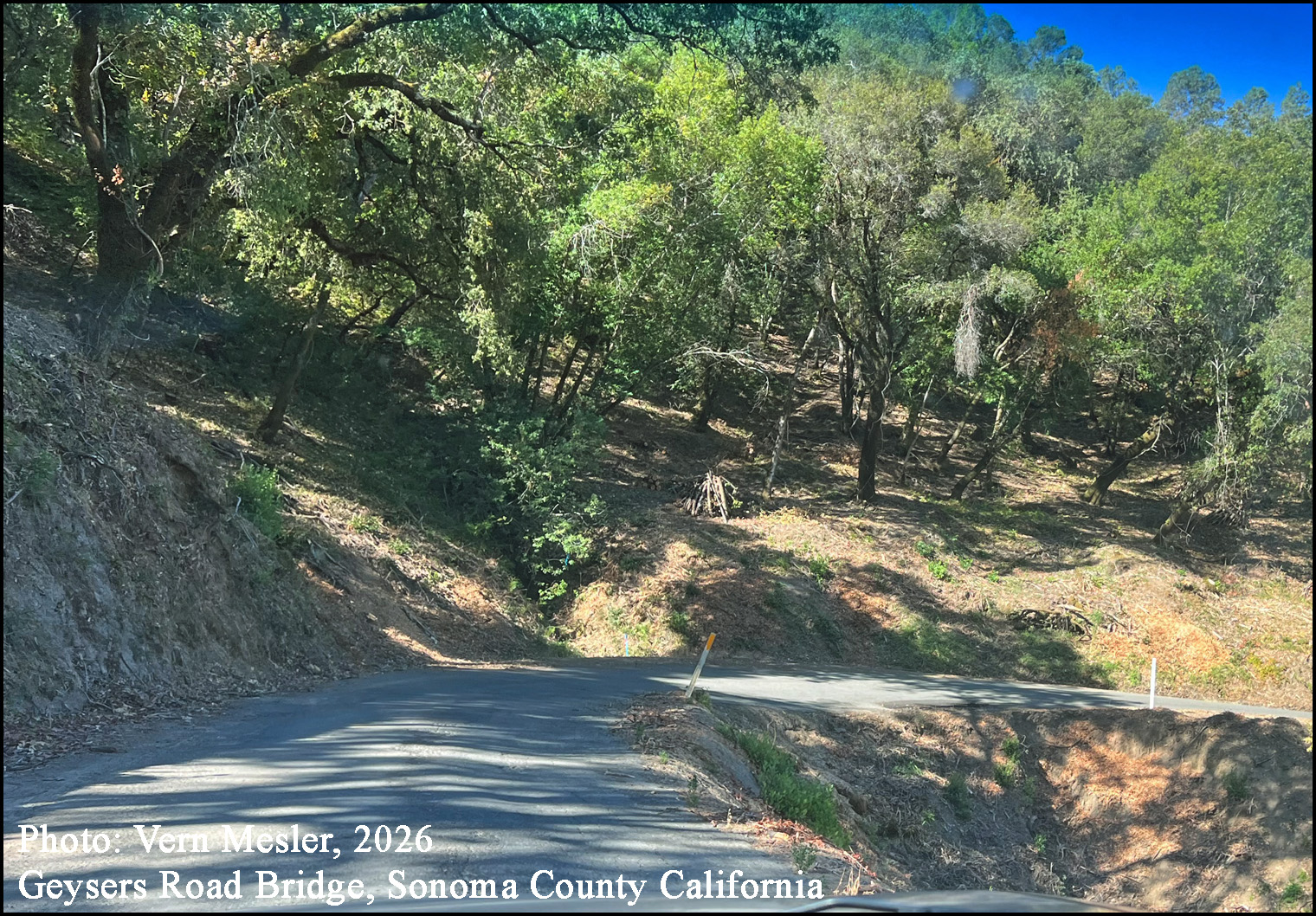
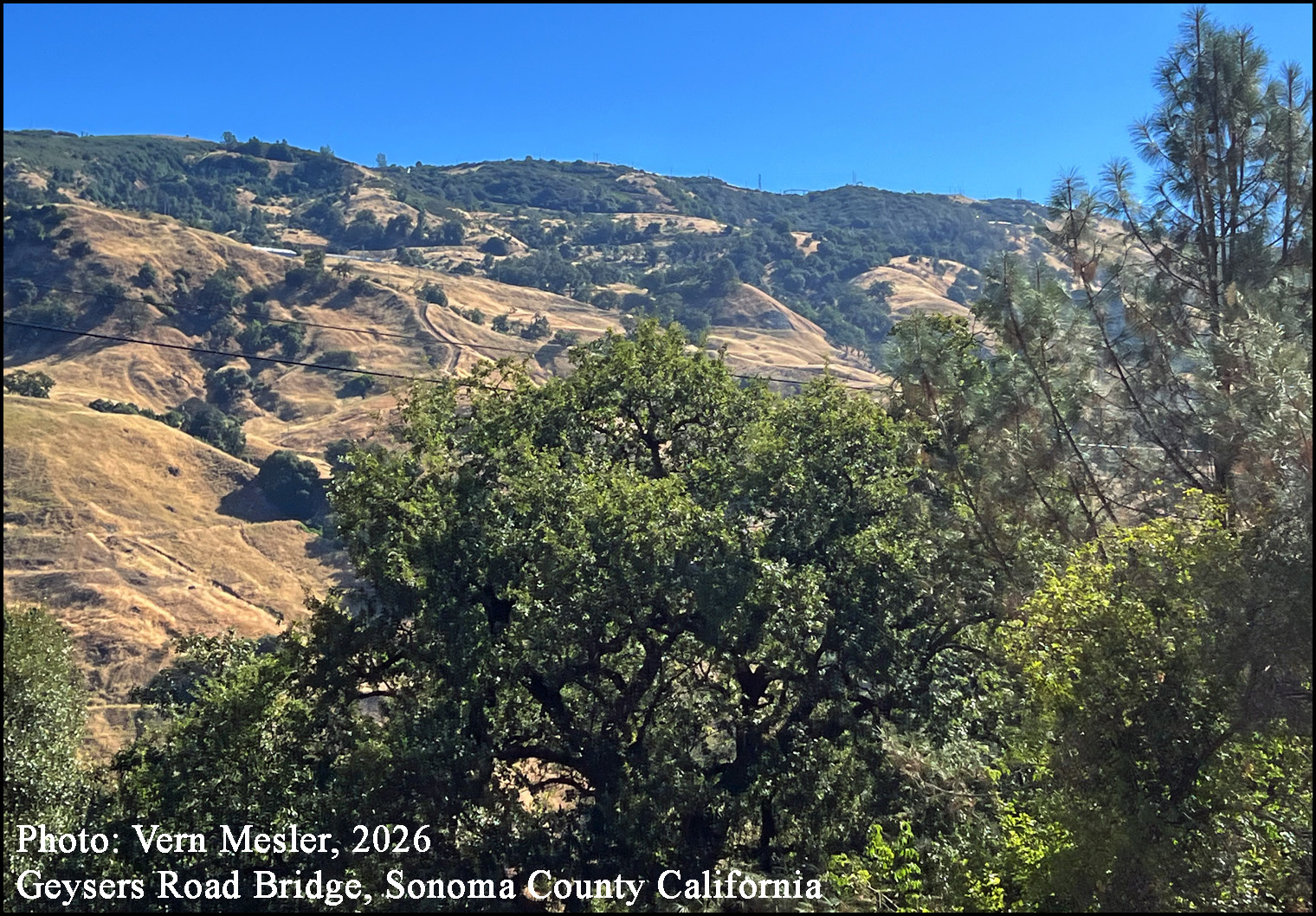
When stagecoach driver Col. Clark Foss drove his trained team of horses along Geysers Road in the 1880’s it had one-lane sections, sharp curves, steep grades, and ravines dropping hundreds of feet. While our team of horses resides under the hood of our 2011 GMC Canyon pickup, the sharp curves, steep grades, and ravines remain on Geysers Road in 2026. Our destination was the Geysers Road Historic Bridge spanning Big Sulphur Creek in Sonoma County, California.
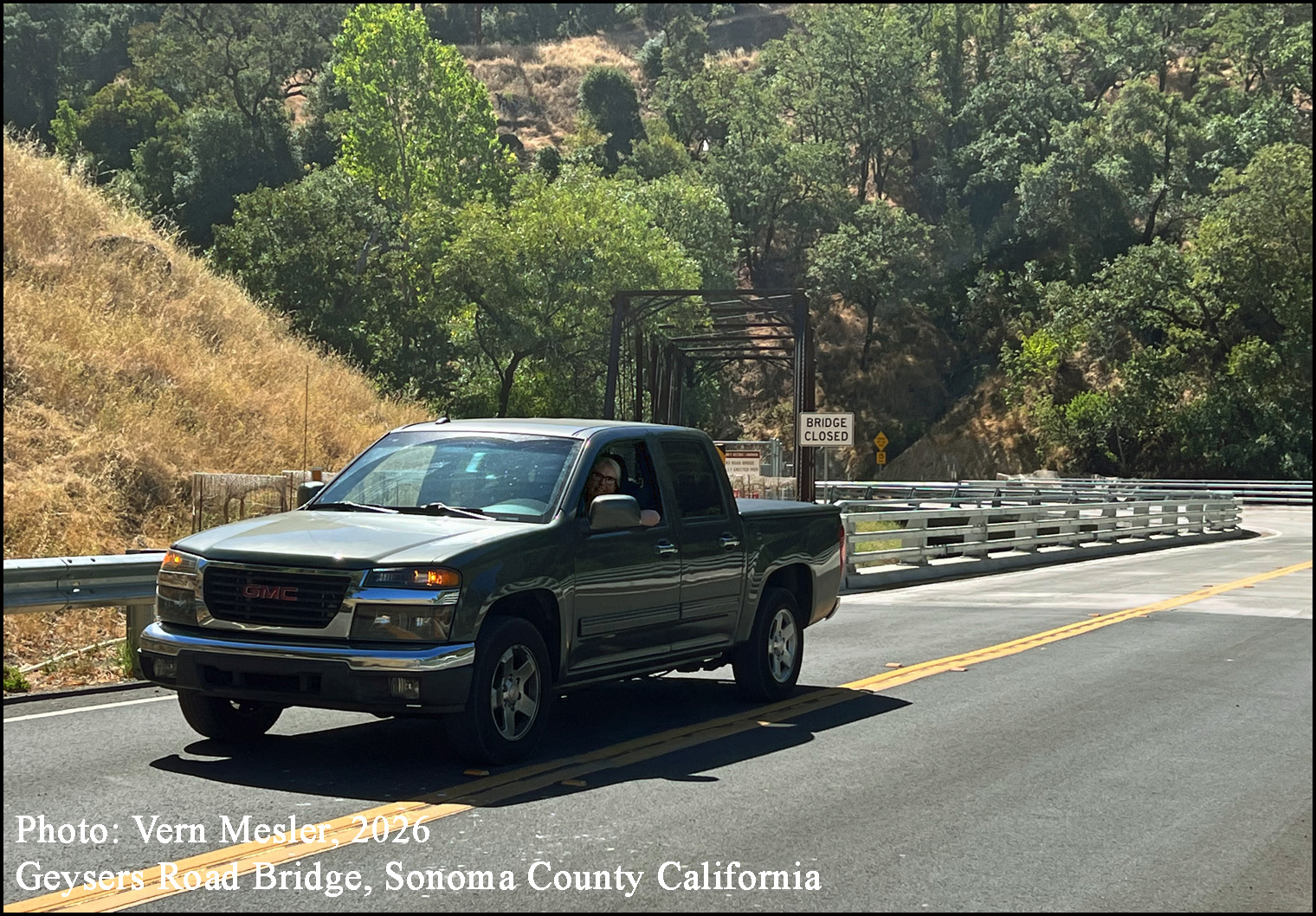
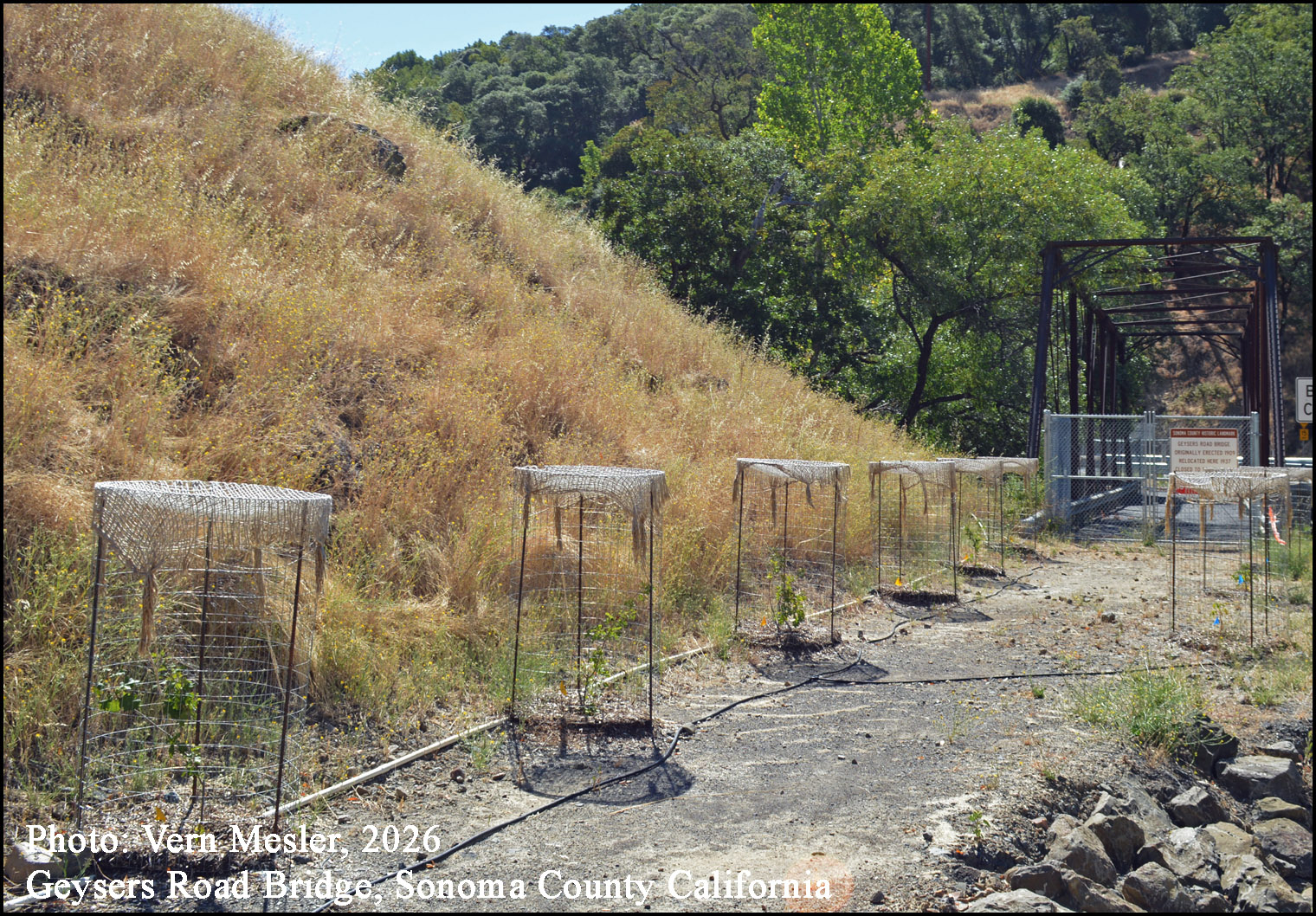
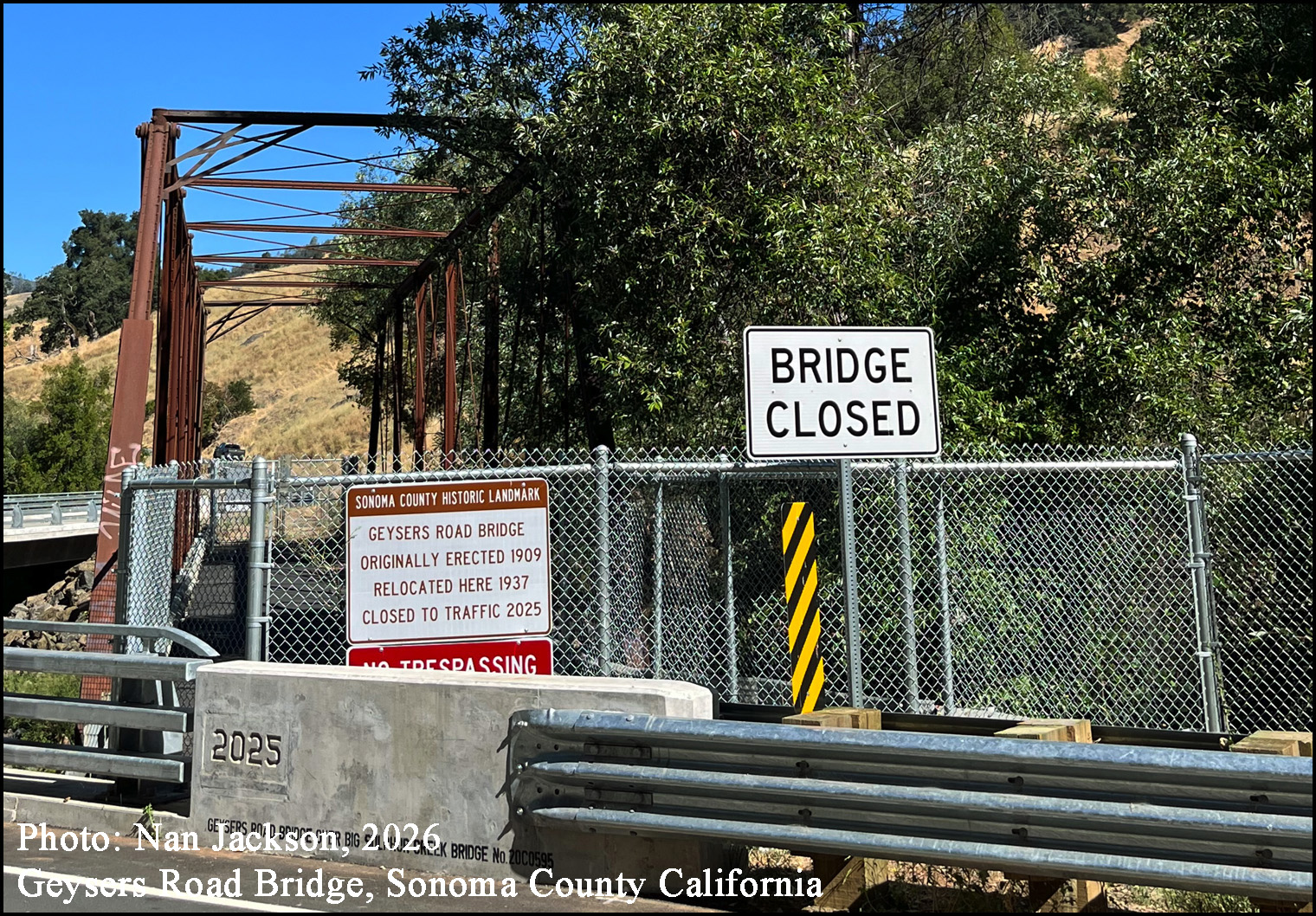
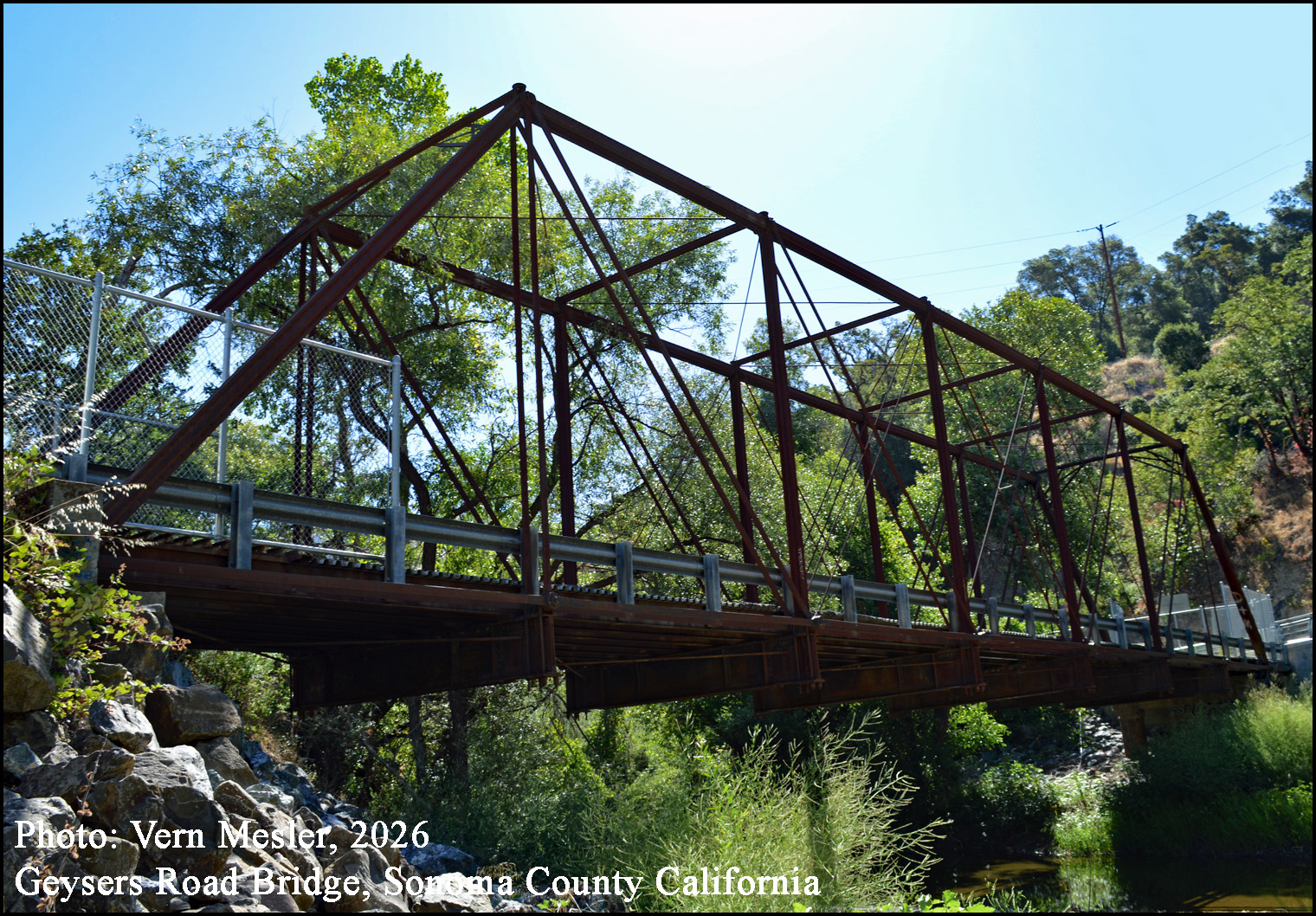
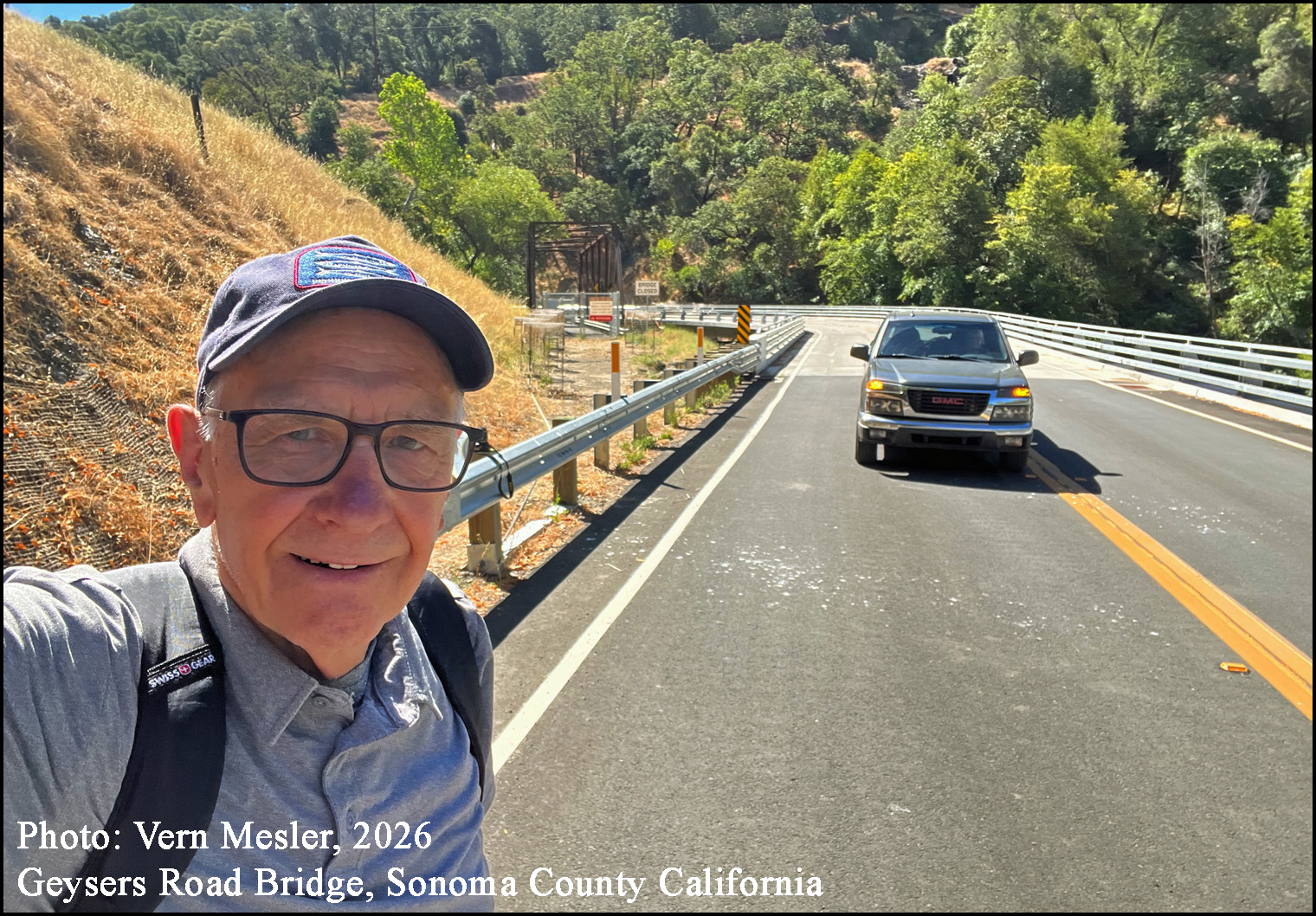
Today the bridge has been bypassed with a recently constructed two-lane concrete bridge with wide lanes and galvanized steel bridge railing, designed to accommodate pedestrians and bicycles in addition to vehicles. Alongside this contemporary concrete bridge sits the historic Geysers Road Bridge, now closed to traffic, with galvanized chain-link fence newly erected at the bridge’s approaches. Large signs are attached at each end of the bridge: “Sonoma County Landmark. Geysers Road Bridge, originally erected in 1909, relocated here in 1937, closed to traffic 2025. NO TRESPASSING.” At the western approach to the historic bridge, along the old alignment, there is a row of new plantings, small trees wire-caged with a plastic piping system for watering. This might indicate there are no immediate plans to remove the historic bridge anytime soon.
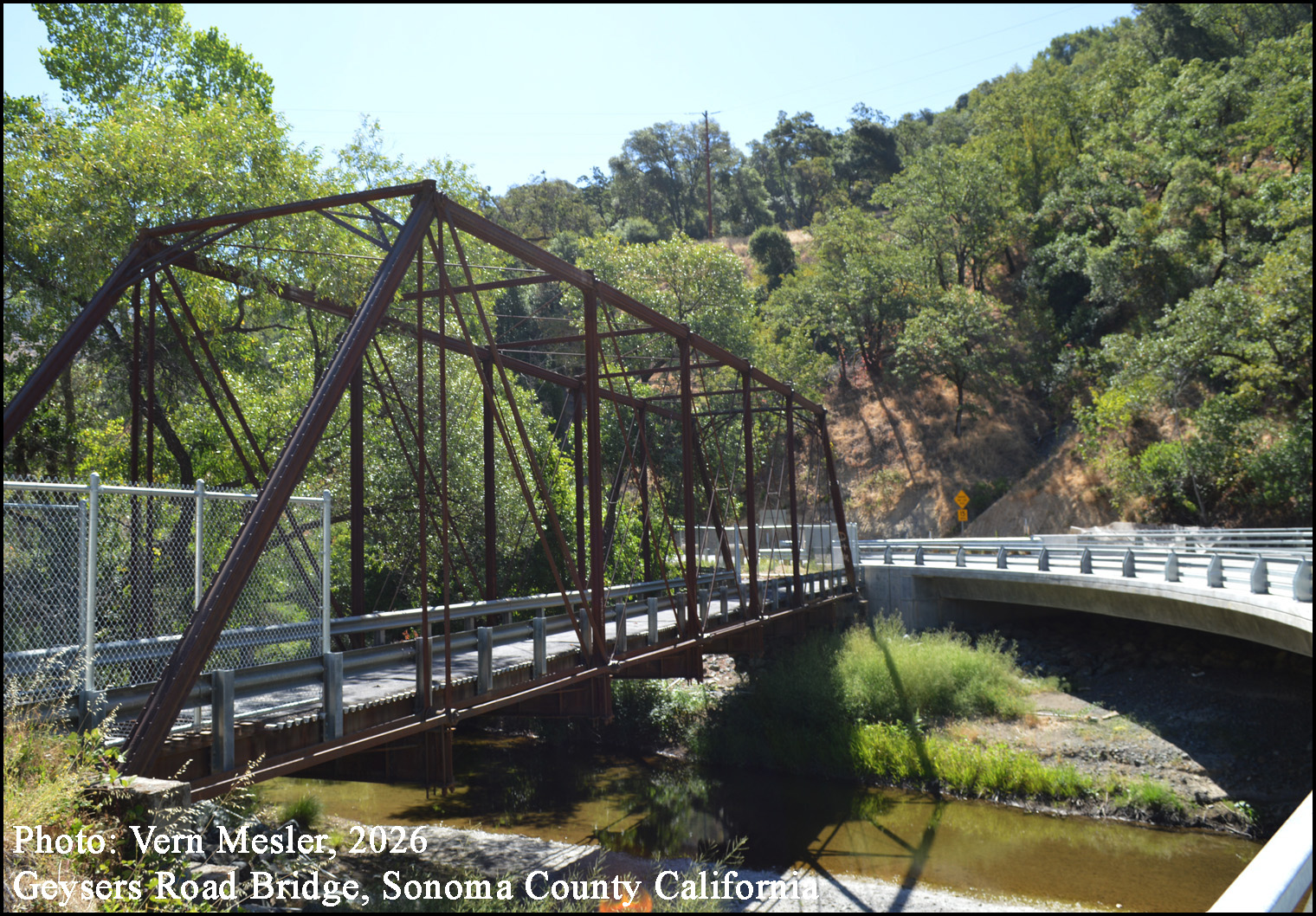
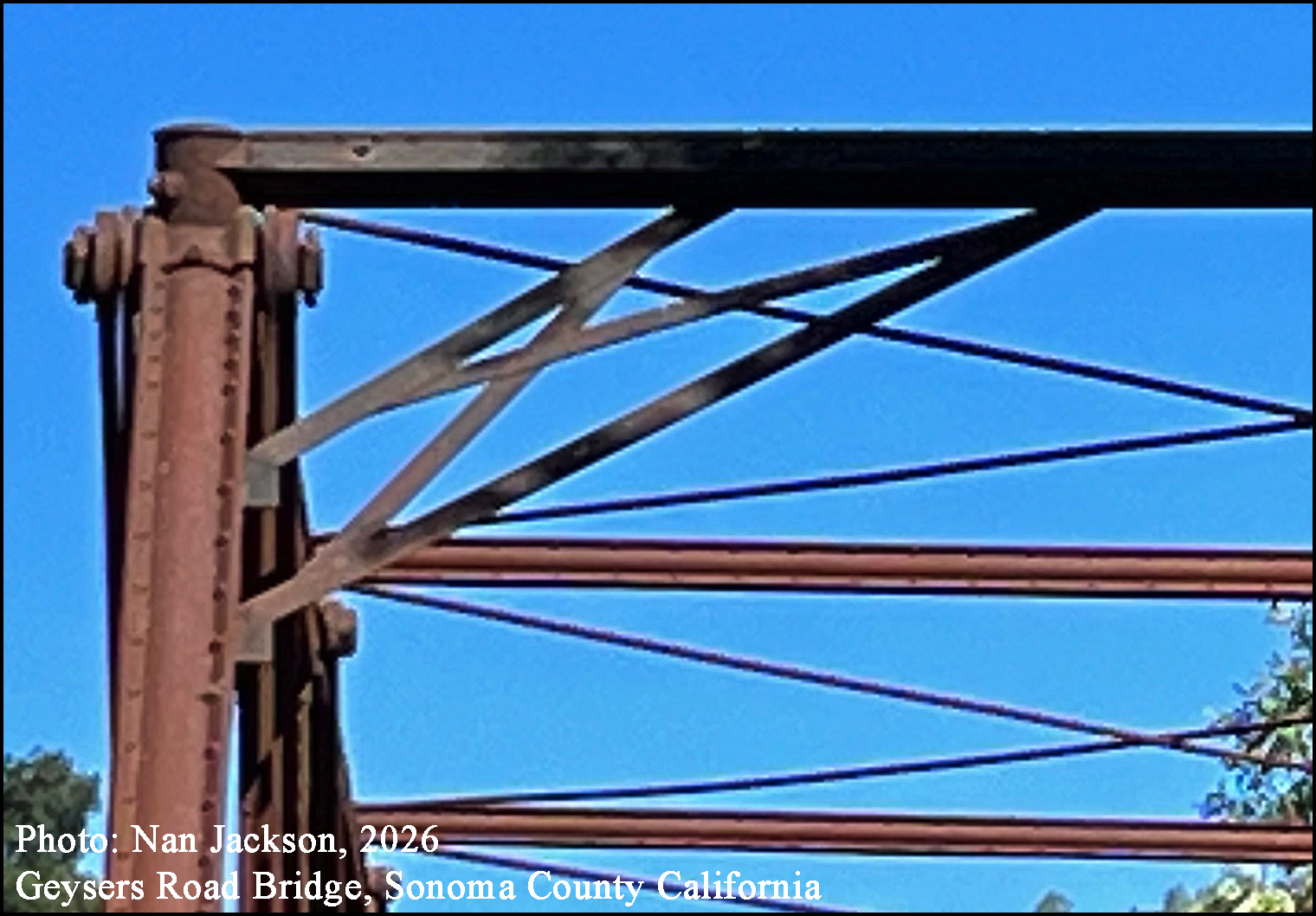
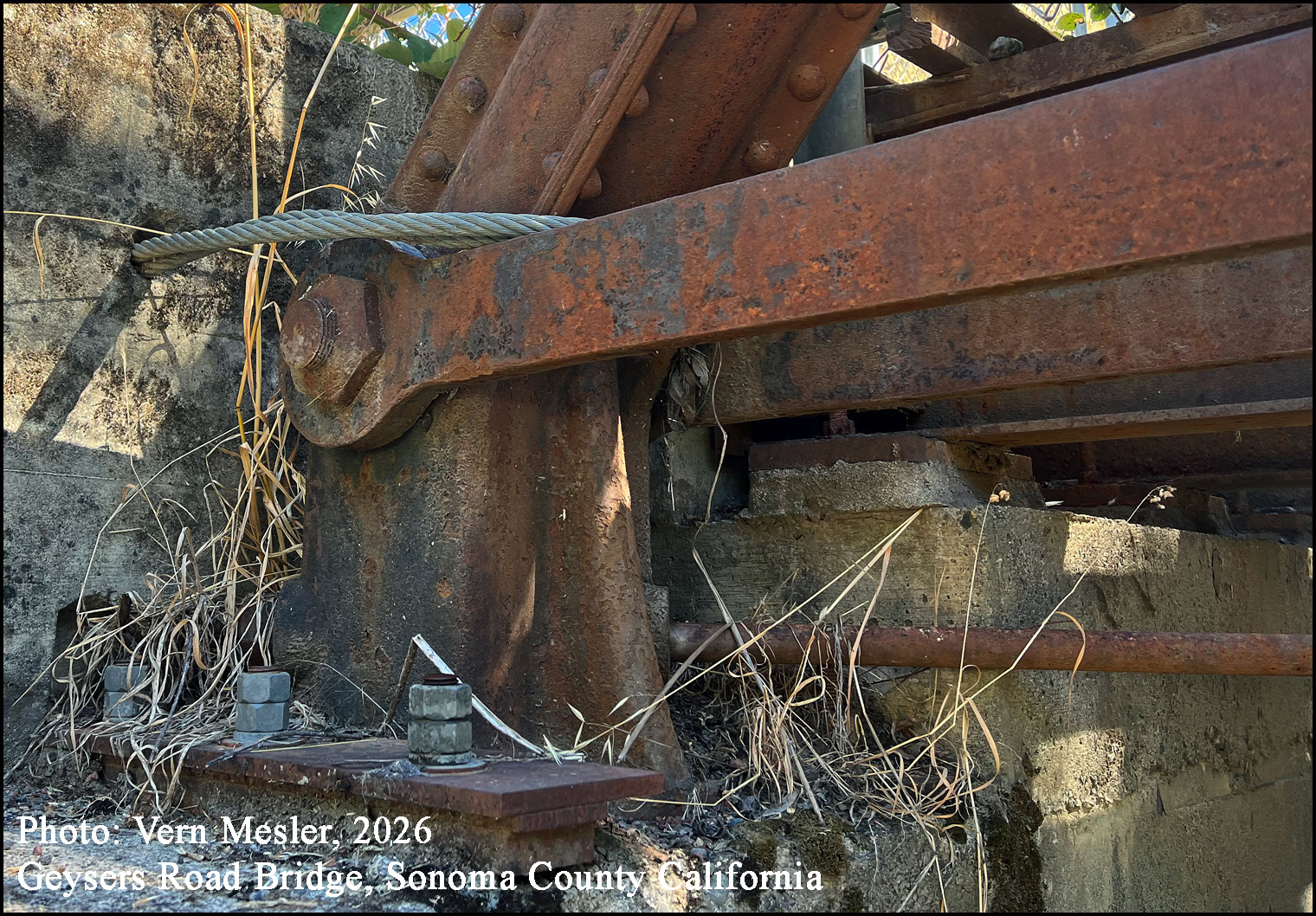
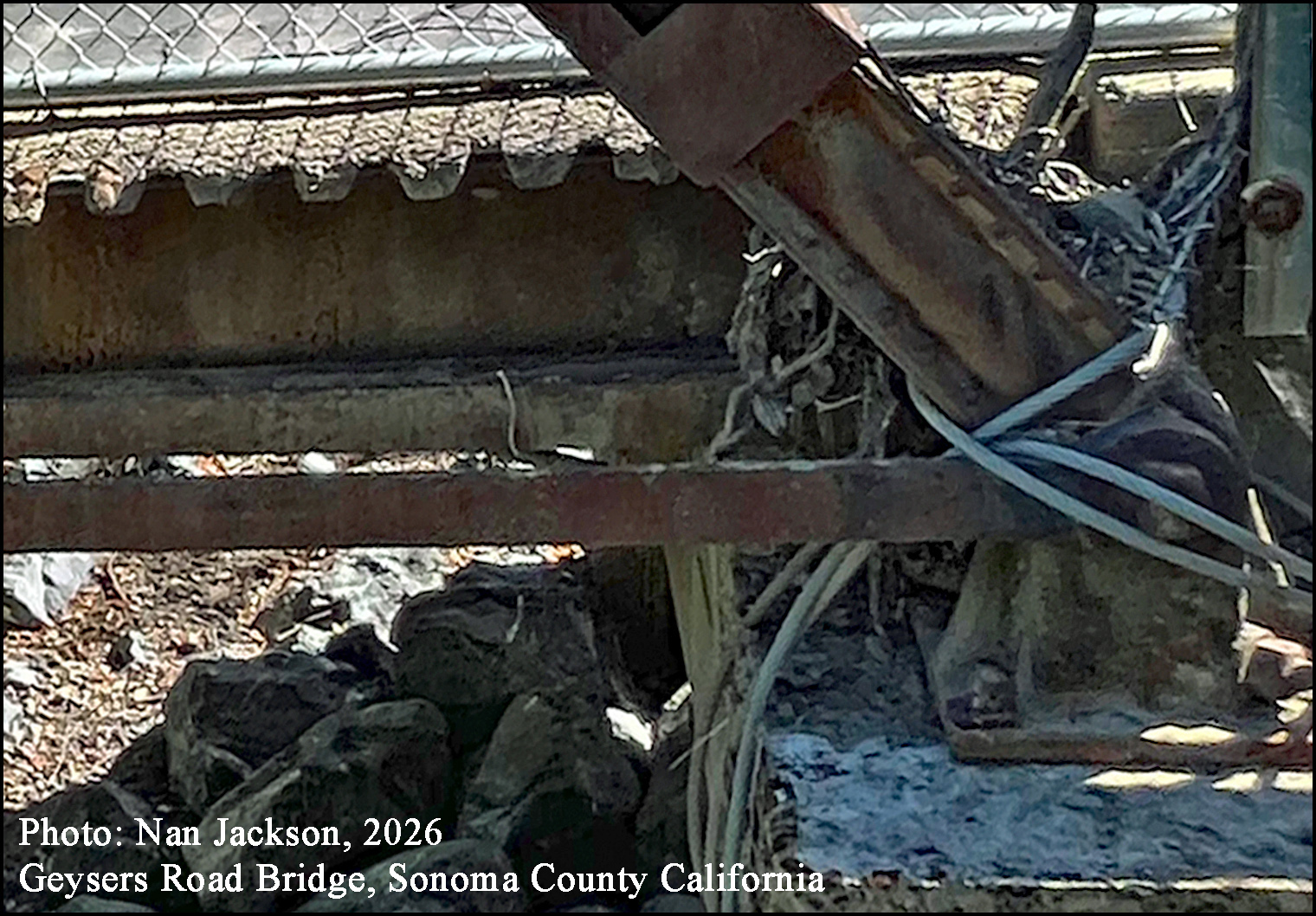
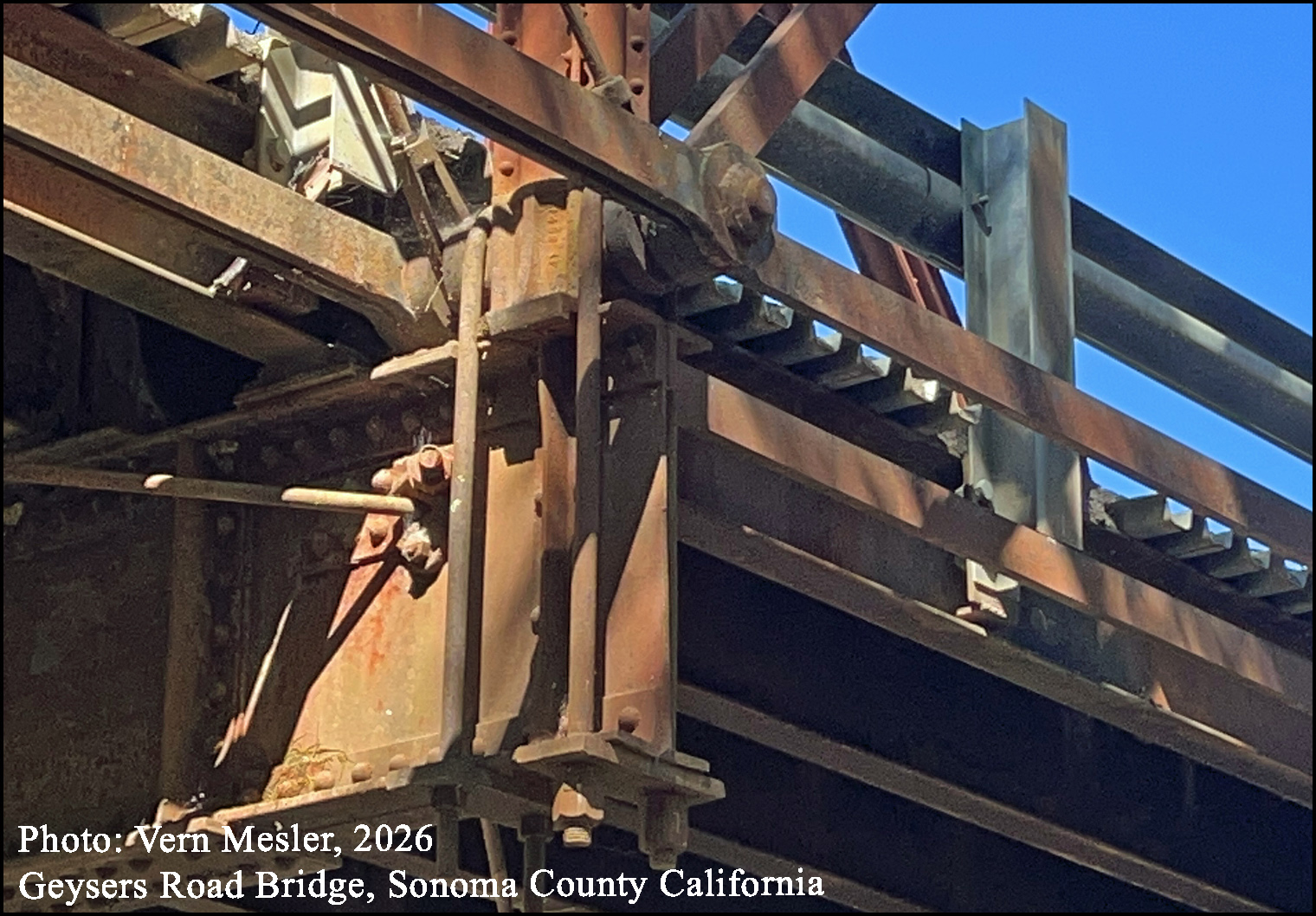
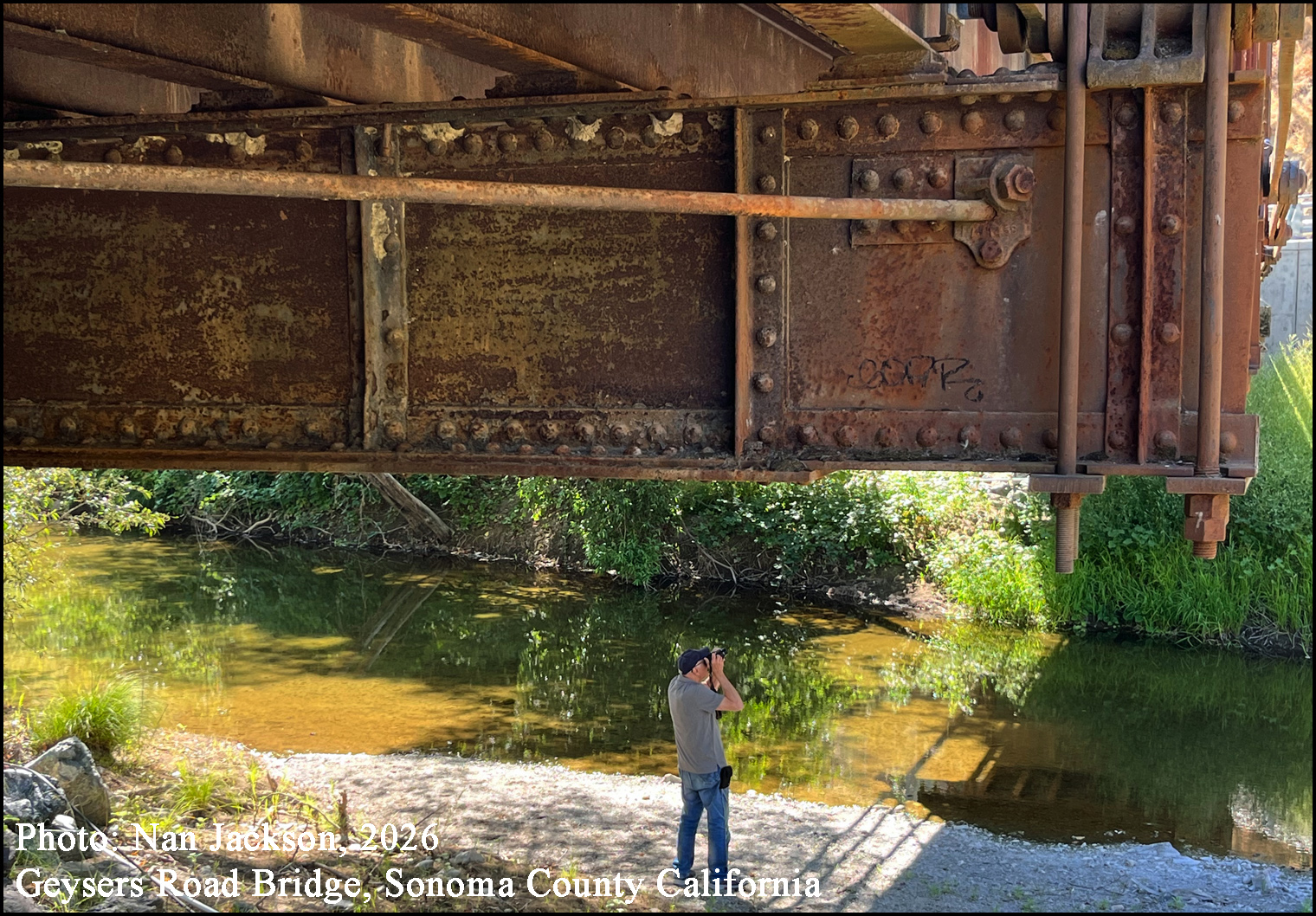
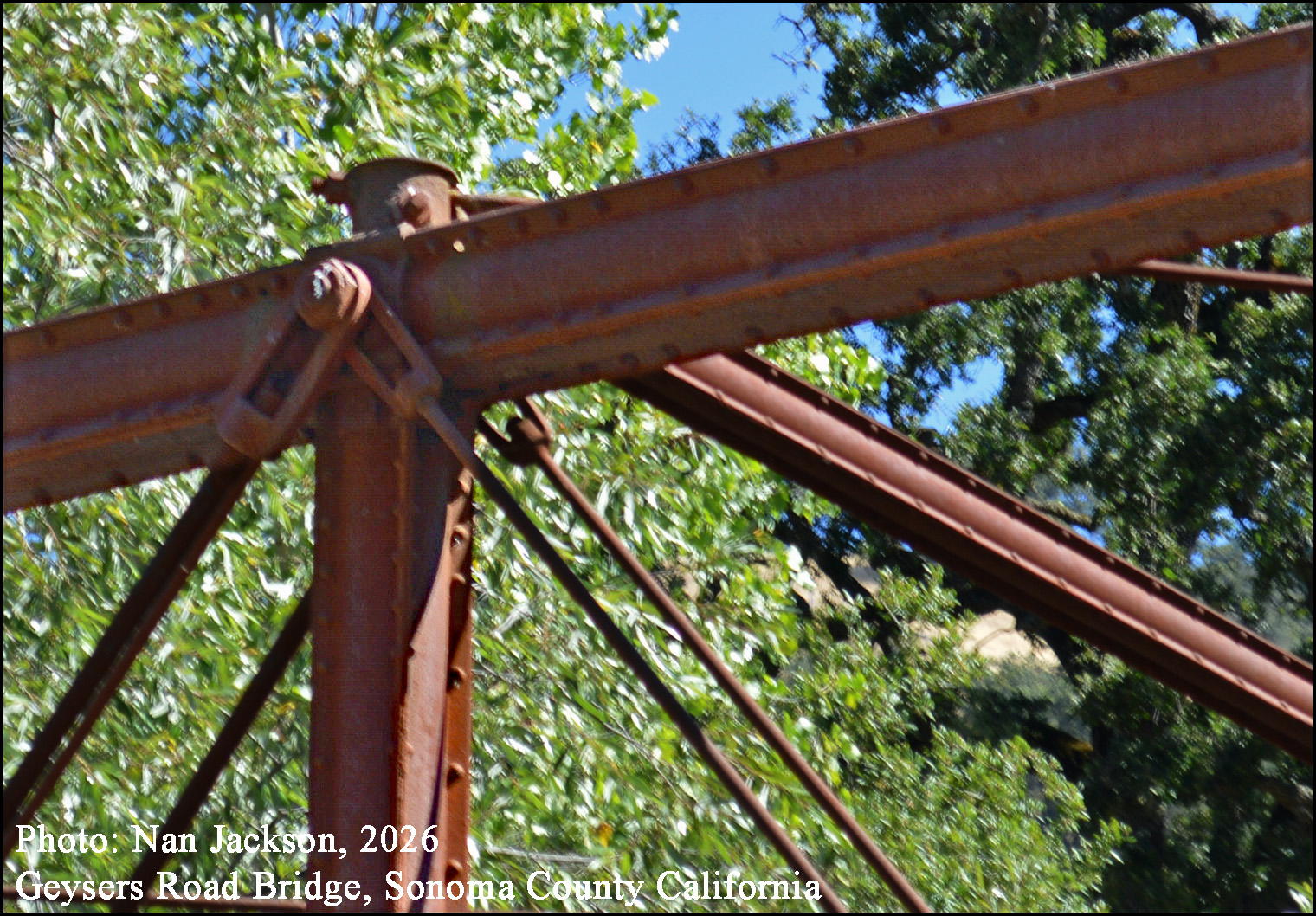
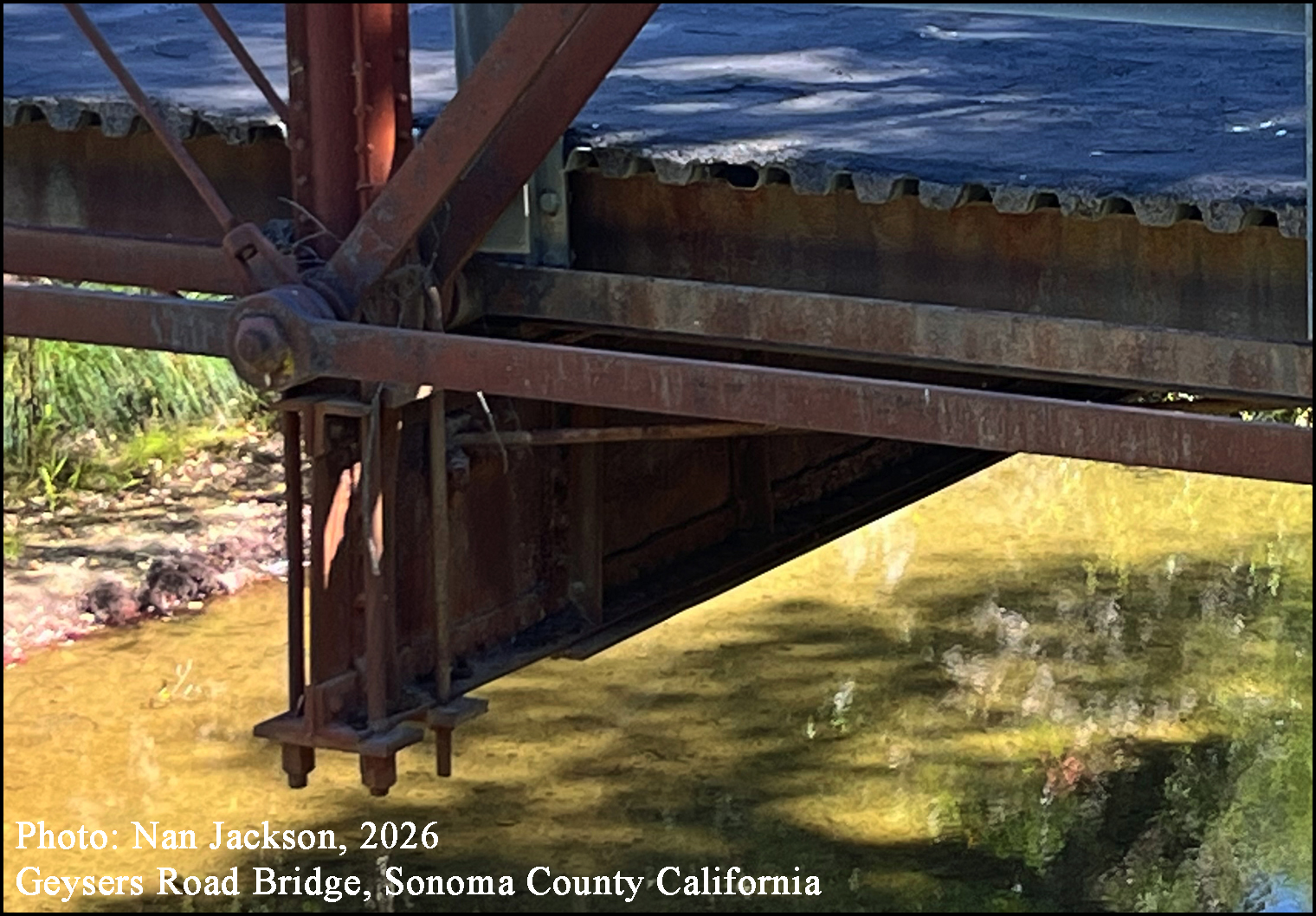
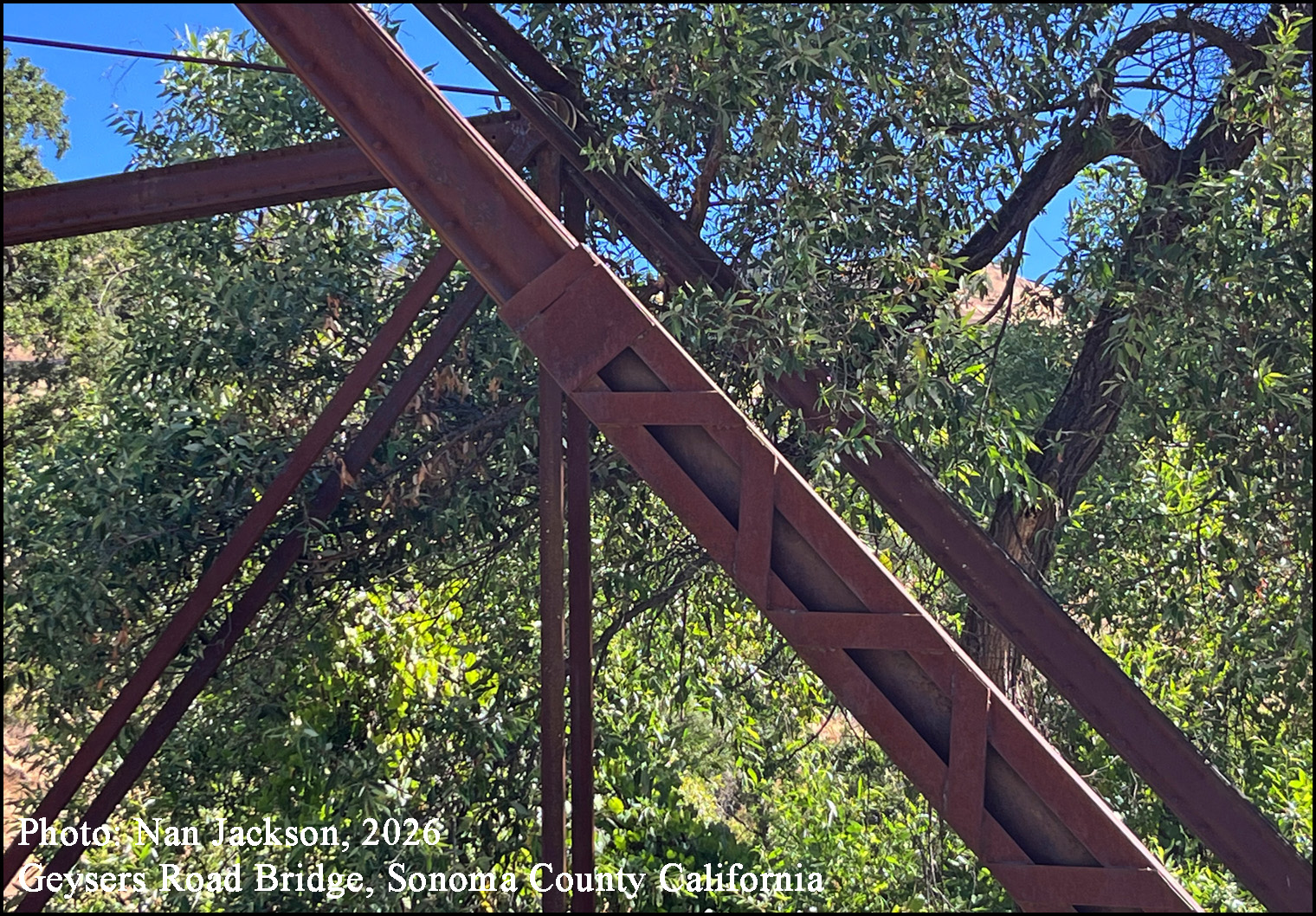
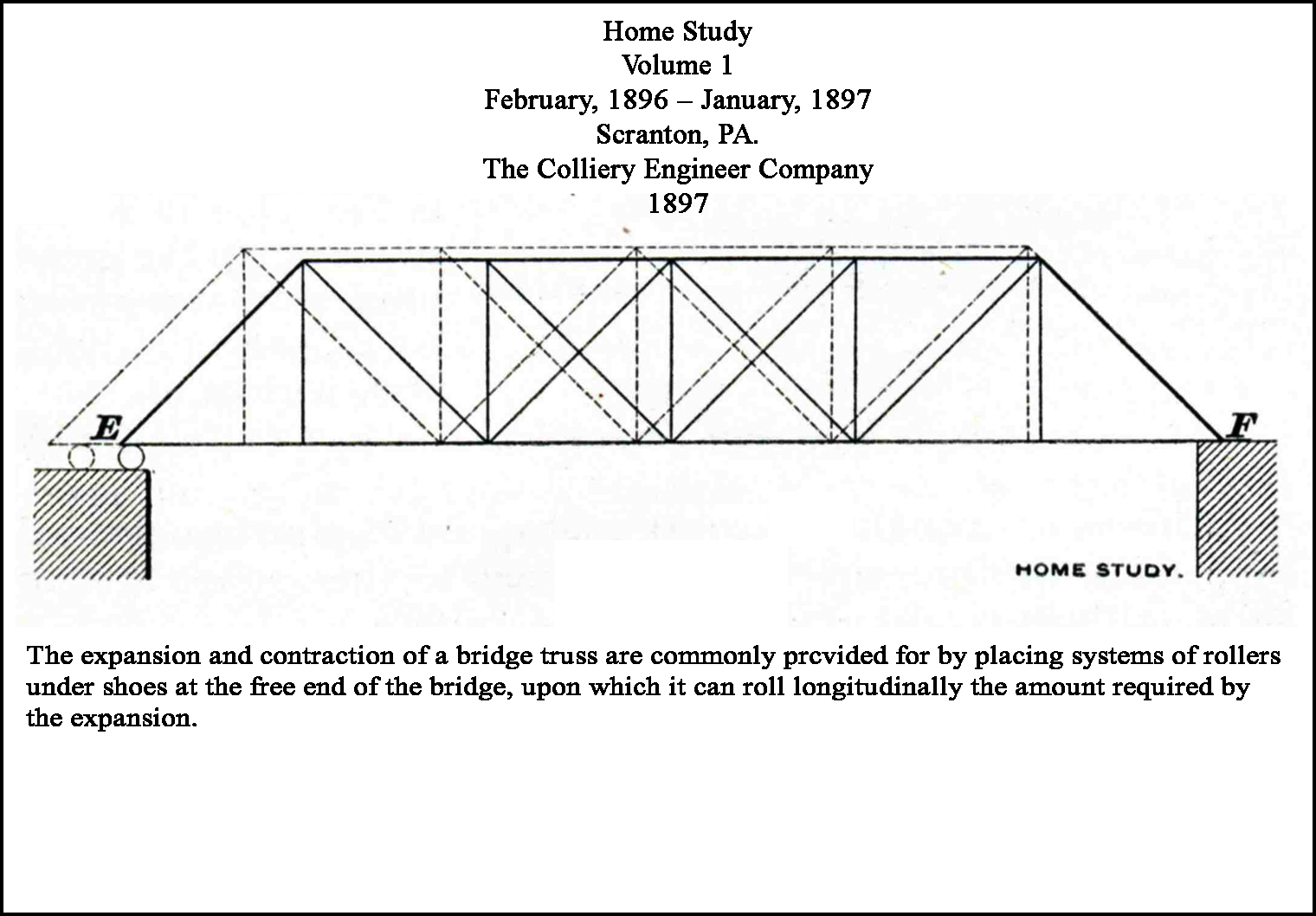
As with the Haupt Creek Bridge, the wrought iron phoenix columns and riveted floor beams of the Geysers Road Bridge are in excellent condition, although the cast iron portal knee bracket has been replaced with fabricated steel bars bolted to the phoenix columns. There is also an unusual modification to the cast iron bearing shoes where the inclined end posts are attached. The shoes have been bolted to the concrete piers, and 7/8” galvanized steel cable is wrapped around the bearing pads and embedded in the piers at both ends. To accommodate expansion and contraction for these historic truss bridges, the standard practice was to anchor bolt at one end of the bridge and, at the other end, to rest the bearing shoe on a cast iron nest of rollers. This can be observed on the identical historic Haupt Creek Bridge.
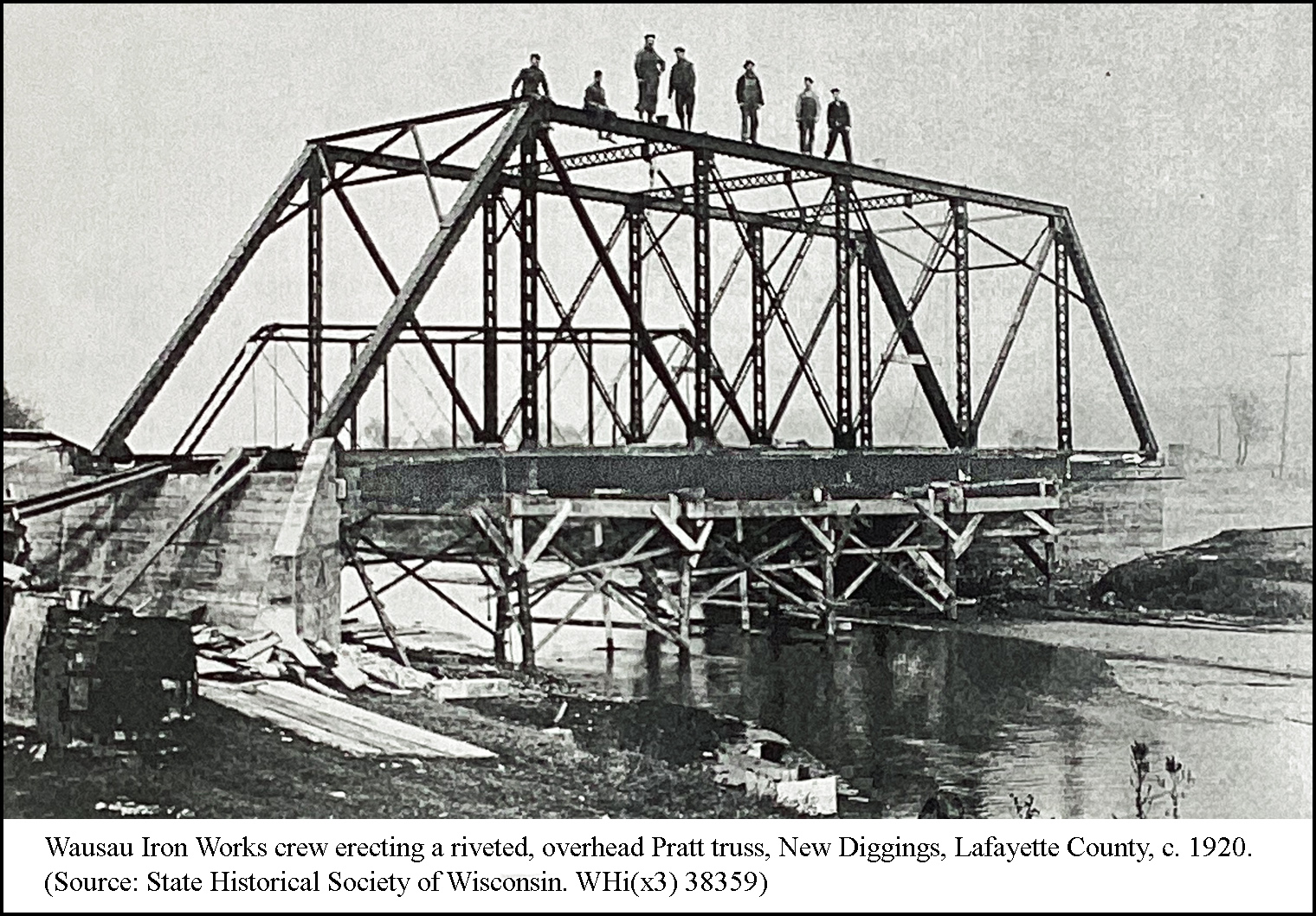
One might wonder how this nineteenth century wrought iron bridge was moved to this remote location in 1937 and erected over Big Sulphur Creek. Photographs in the Wisconsin Department of Transportation publication “Historic Highway Bridges in Wisconsin, volume 2, part 1” may provide an answer. Timber cribbing in the creek and a gin pole were typically used to erect these historic pin-connected truss bridges. (If the Geysers Road Bridge ever needed to be moved again, this could be a procedure for disassembling it to be placed in a park for pedestrian use or in a museum setting.)
Our trip ended with plans to return to Sonoma County Landmark bridges. There is an interesting historical record to discover here.
